
Why does the pressure in the liquid carbon dioxide storage tank rise?
Most people who have worked on the operation and maintenance of low-temperature equipment have encountered this situation: when inspecting the LCO2 storage tank in the morning, they found that the gauge pressure was a little higher than yesterday. Novice operators tend to get nervous and think that something is wrong with the equipment. In fact, most of the time, this has nothing to do with a fault and is directly related to the physical temperament of liquid carbon dioxide, the ambient temperature, and daily operation habits. Understanding these underlying principles will give you confidence and you won’t need to stop the machine to troubleshoot frequently.
1. Liquid carbon dioxide is inherently “unstable”
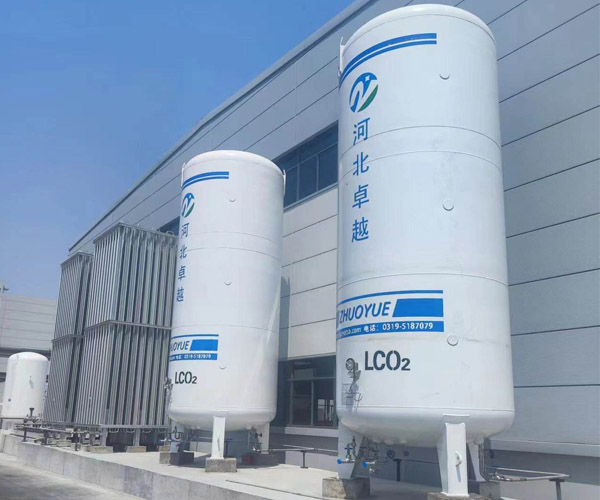
Carbon dioxide is a special substance. It is in a gaseous state at normal temperature and pressure. To turn it into a liquid, it must be pressurized or cooled. In the storage tank, liquid and gaseous states coexist, and the two phases are constantly in a state of balance.
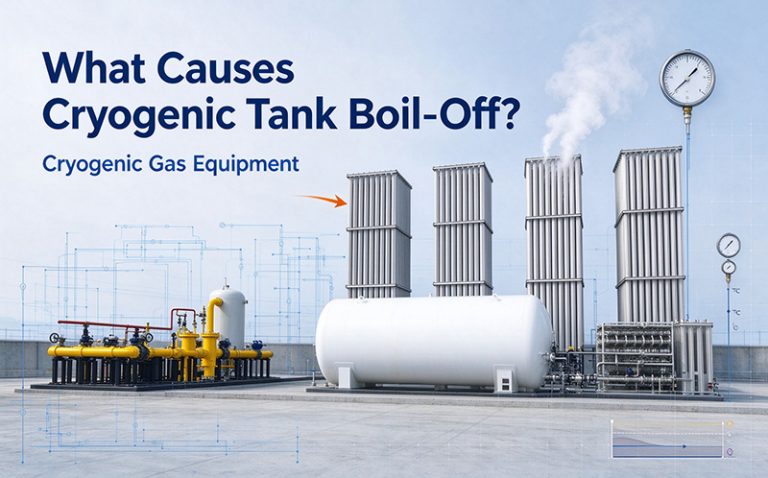
As long as a tiny bit of heat enters the tank – even if the insulation layer is very good, it cannot prevent 100% heat transfer – some of the liquid carbon dioxide will absorb heat and turn into gas. The tank is sealed, and the space is so limited that the extra gaseous molecules have nowhere to go, and the pressure naturally rises.
So, a slow increase in pressure is a “normal physiological phenomenon” of the liquid carbon dioxide storage tank, not a problem. As long as the rising speed is within a reasonable range and the safety valve does not frequently activate, there is no need to worry too much.
2. The external environment is “secretly heating up”
Often, the pressure rises faster than usual. The problem is not with the tank itself, but with the installation environment that is not well-maintained.
If the tank is exposed to direct sunlight in the hot summer, the tank wall temperature rises rapidly, and the heat seeps into the interior along the structure. The internal gasification speed increases, and the pressure naturally goes up faster. Some factories place the storage tank next to a boiler or reaction vessel, and they are constantly affected by heat radiation. The pressure performance will be much worse than in a normal environment.
Another common situation is to place the tank in a small, poorly ventilated room. The equipment’s heat cannot be dissipated, and the local temperature accumulates higher and higher. The tank is like being soaked in “warm water”, can it not rise in pressure?
3. Poor operation details can also cause trouble
Some pressure increases are caused by human factors. With a little attention to the operation, they can be avoided.
For example, if the vacuum insulation layer has aged and the vacuum degree has decreased, the insulation capacity is greatly reduced. The outside heat seeps in, and the gasification speed will significantly increase. Another example is that when new liquid carbon dioxide is added, the temperature is higher than the low-temperature medium inside the tank. When mixed, a large amount of gas will be released in a short period of time, and the pressure will have a relatively obvious fluctuation.
Another situation that is easily overlooked is: the pressure regulating valve for downstream gas use is not opened or blocked. The gas cannot escape, and the pressure in the tank can only keep rising. In this case, it is not the tank’s problem, but the pipeline is blocked.
4. How to keep the pressure stable
To control the pressure from running wild, there is no need for complex renovations. Just do a few things well every day will be enough.
Maintain a small amount of continuous gas use, don’t let the tank remain idle for a long time, and the gas-liquid balance will dynamically adjust, making it less likely for the pressure to rise too high. Check the state of the vacuum layer before the hot season, and if possible, build a shade for the tank. The effect will be immediate. After adding new liquid carbon dioxide, confirm that the temperature of the new medium is appropriate. After adding, don’t rush to close the exhaust port immediately. Let the pressure gradually fall on its own. Regularly calibrate the pressure gauge, safety valve, and pressure regulating valve accessories. Don’t wait until something goes wrong to realize that they should have been replaced earlier.
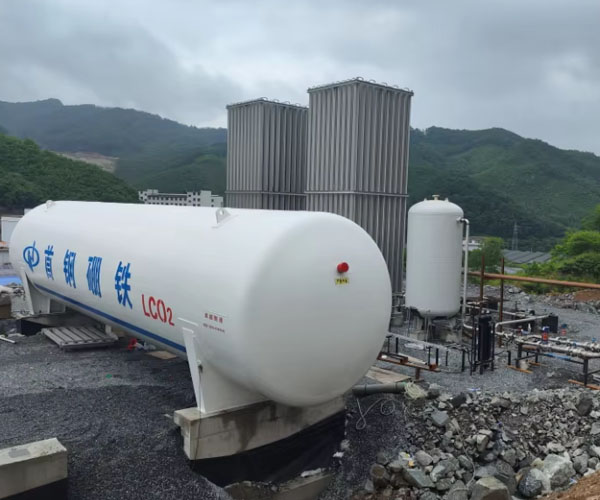
If you encounter pressure abnormalities when using the LCO2 storage tank and can’t solve them, or if you want to select a new tank with excellent insulation performance and stable operation, contact Zhuoyue Gas Equipment at any time. We can give you targeted suggestions based on your actual working conditions.