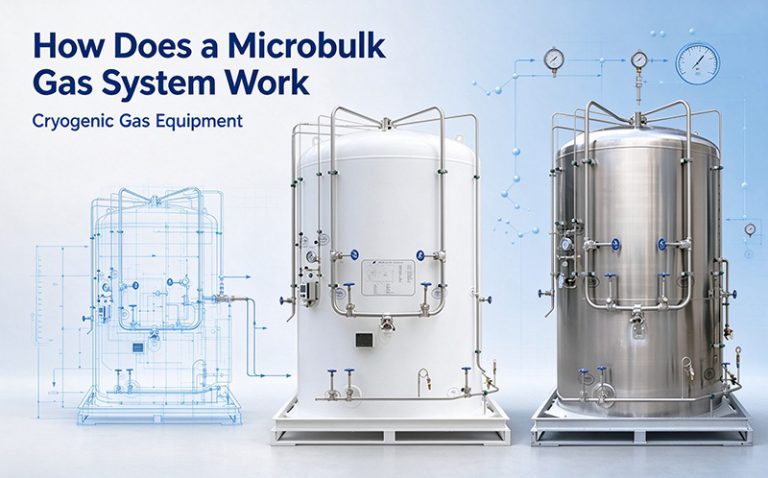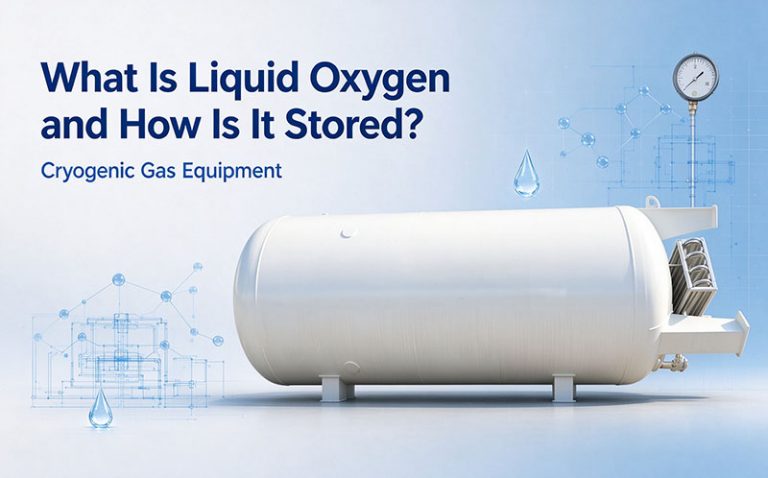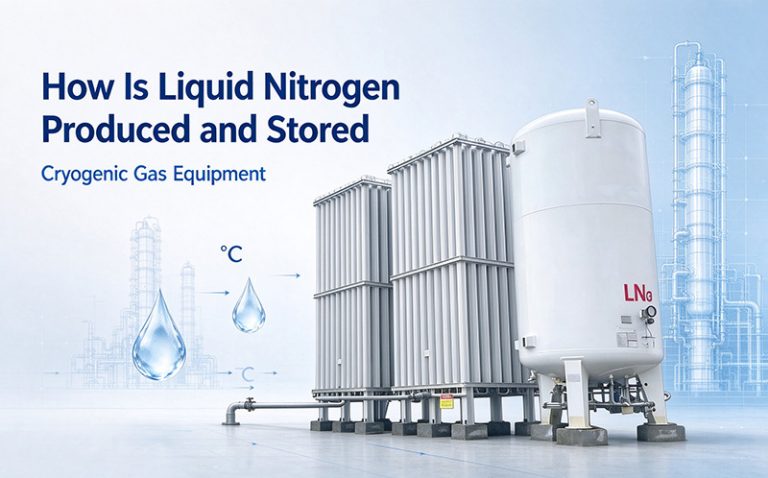
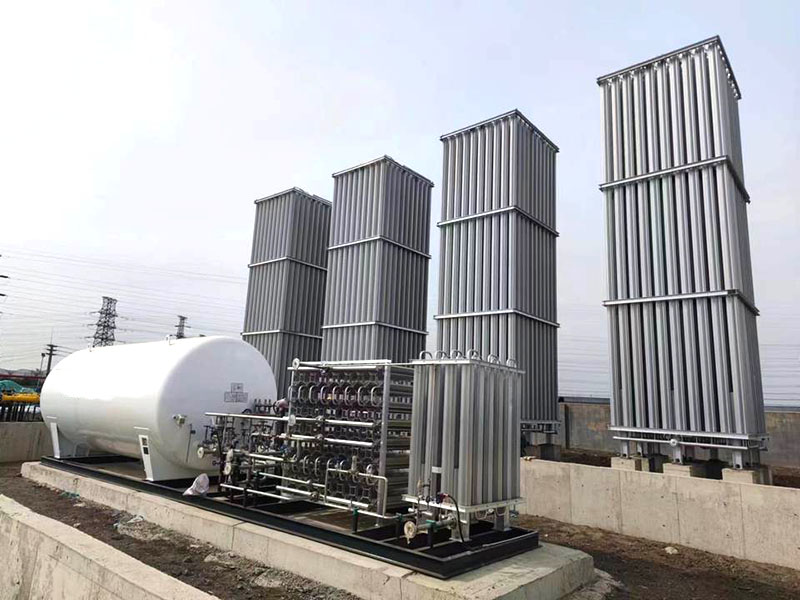
For overseas customers of low-temperature gas equipment, the vapor (BOG) from the low-temperature storage tanks is one of the most common problems encountered in daily operations. In many scenarios of LNG, liquid oxygen, liquid nitrogen, and liquid hydrogen storage and transportation, users will find that even when the tanks are sealed, the internal pressure will slowly rise, and some gas has to be discharged through the vent valve, which is what is commonly referred to as evaporation loss in the industry. For scenarios with long-term continuous operation such as industrial production, shipping refueling, and new energy hydrogen storage, excessive evaporation rates not only cause medium loss but also bring additional equipment operation costs, and even affect the operational stability of the entire system.
I. The core root cause of evaporation is the intrusion of environmental heat
The boiling points of low-temperature media are generally below minus 150℃. However, the temperature difference between the environment outside the tank and the inside of the tank can exceed 180℃. Such a significant temperature difference means that heat will constantly seep into the tank through various pathways. Therefore, evaporation cannot be completely avoided no matter what.Even though the current mainstream cryogenic storage tanks adopt multi-layer insulation and high-vacuum double-layer structure designs, they can only delay the speed of heat entry as much as possible, but cannot completely block heat conduction.
From the specific paths of heat intrusion, first, the outer wall of the tank transmits heat through conduction to the double layer, then the heat radiation from the environment directly penetrates the insulation layer and reaches the surface of the container, and finally, the metal components such as supports and pipe interfaces form “heat bridges”, directly introducing external heat to the cryogenic liquid area. These heat that enters the tank will eventually be converted into latent heat of vaporization, causing some cryogenic liquids to change from liquid to gas, directly increasing the amount of medium in the gas phase space.
II. Performance degradation of tank structure and insulation system
Many long-term operating tanks experience a sudden increase in evaporation rate, which is mostly directly related to the performance changes of the insulation system. New factory-qualified cryogenic storage tanks can maintain a high-vacuum level in the double layer, and the reflective layer of the multi-layer insulation material can effectively block heat radiation. At this time, the daily evaporation rate can be controlled at a relatively low level in accordance with industry standards.
However, with the increase in usage time, the adsorption materials in the double layer gradually become saturated, and the vacuum level will slowly decrease. The convective heat transfer formed by the air entering the double layer and the surrounding environment will significantly increase the efficiency of heat entry. If the tank has ever experienced impacts, external pipes have been pulled by force, or there are micro leaks in the sealing welds of the double layer, the rate of vacuum failure will further accelerate. In addition, during the long-term alternating cycle of cryogenic and normal temperature, the insulation layer may shift, settle, and the originally uniform insulation structure may develop local weak points. The heat flux density in this area will be much higher than other positions, becoming an incentive for local evaporation to intensify.
III. Dynamic intensification effect caused by self-pressure and thermal stratification
In a non-pressure release operating state, the evaporation process in the tank will not remain uniform and will exhibit a “self-pressure” dynamic effect. As the gaseous medium produced by evaporation continuously accumulates in the gas phase space, the pressure in the tank continues to rise, and the corresponding saturation temperature of the medium will also increase simultaneously. The previously stable liquid phase and gas phase balance is broken.
More importantly, a distinct thermal stratification phenomenon will form in the tank: the liquid near the tank wall and the liquid surface will absorb heat and warm up first, with a reduced density and remaining in the upper layer of the liquid phase, not forming natural convection with the bottom cryogenic liquid. The temperature of the upper layer of liquid will continue to rise, and the evaporation rate will also continue to accelerate. Many users have experienced this: the pressure in the tank rises rapidly in the first few days after being filled with medium, and then enters a relatively stable period. This is a typical manifestation of the formation and stabilization of thermal stratification. And if the tank has undergone venting and pressure release and then been resealed, the low-pressure environment in the gas phase space will amplify the thermal stratification effect, and the evaporation rate will significantly increase within a short period of time.
IV. Additional Evaporation Increase Caused by Operations and Operating Conditions Changes
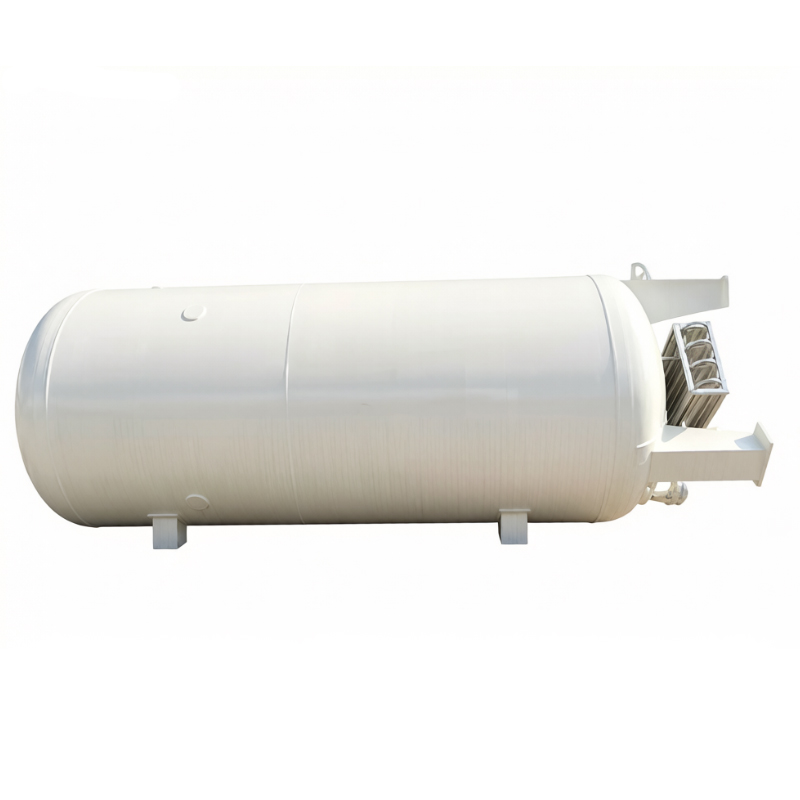
Apart from the inherent properties of the equipment, the operational details during daily operations also have a significant impact on the evaporation rate. For instance, when replenishing the medium into the cryogenic storage tank, if the filling pipeline has not been pre-cooled in advance, a large amount of the ambient temperature pipeline walls will absorb a considerable amount of heat during the filling process. This directly causes some of the cryogenic liquid entering the tank to vaporize, resulting in a large amount of instantaneous evaporation gas.
Some users also have the habit of replenishing the medium when the liquid level in the storage tank is very low. At this time, the gas phase space in the tank is very large, and the inner wall temperature of the entire gas phase area has already risen to a relatively high level. The newly injected cryogenic liquid will undergo intense flash evaporation upon contact with the hot tank wall, resulting in evaporation losses far exceeding the normal level. Additionally, if the pressure regulation system of the storage tank is improperly configured and frequent overpressure venting occurs, the ambient temperature gas will be backflowed into the tank when the pressure drops. The subsequent re-cooling of these invading ambient temperature gases will also consume a large amount of cooling capacity, indirectly increasing the evaporation rate of the liquid.
For the evaporation gas issues in different application scenarios, reasonable insulation system maintenance, optimized operation procedures, and suitable BOG recovery supporting solutions can all control the evaporation loss at the lowest level acceptable in the industry, avoiding unnecessary medium waste and operational risks. If you are looking for solutions to the problem of excessively high evaporation rate and unstable pressure control in cryogenic storage tanks, please feel free to contact Zhuoyue Gas Equipment. We will provide customized cryogenic storage and distribution system optimization solutions based on your medium type, operating conditions, and site conditions.