
For practitioners and industrial users in the low-temperature gas equipment industry, the gas pressure regulating skid is the core equipment that ensures the stable and safe operation of the entire gas supply system. Many people only know that it can regulate the gas pressure, but they do not understand the complete working logic of the multiple links within it. In actual industrial operations, how does the gas pressure regulating skid equipment transform a high-pressure gas source into stable, safe gas that downstream equipment can directly use? This article intends to break down the entire workflow step by step.
I. Preconceived Understanding: The Core Position of the Gas Pressure Regulating Skid Equipment
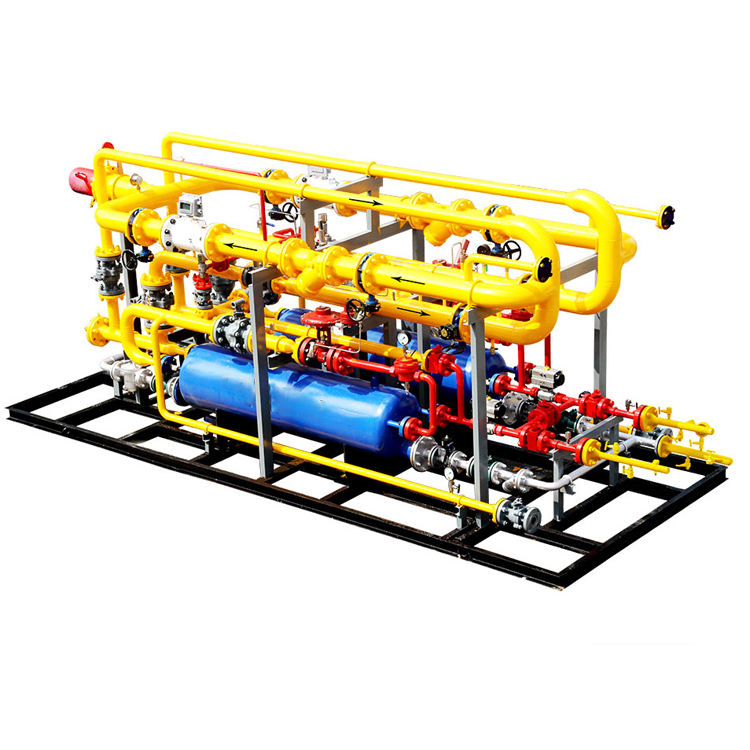
Unlike scattered installed pressure regulating valves, the integrated gas pressure regulating skid is a complete system that integrates multiple functional units such as filtration, pressure regulation, measurement, and safety interlock onto a unified steel base. Its core function is not simply “reducing pressure”, but it can continuously output stable and impurity-free gas even under extreme conditions, and immediately cut off the gas source in case of abnormal pressure, avoiding irreversible damage to downstream gas turbines, industrial burners, and low-temperature gas-using equipment.
In actual industrial scenarios, the natural gas sent from the long-distance pipeline is often at a high pressure. Directly connecting it to the downstream gas-using equipment will not only cause unstable combustion and overpressure operation of the equipment, but also may trigger sealing component damage, explosion, and other safety hazards. The gas pressure regulating skid is the key buffer zone that connects the high-pressure gas source and the low-pressure gas-using end, and is also the most core safety barrier in the entire gas supply chain.
II. Step-by-step Disassembly: The Complete Working Process of the Gas Pressure Regulating Skid
The operation of the standard gas pressure regulating skid equipment is not dependent on the efforts of just one device alone. The entire system constitutes a closed loop, with multiple units sequentially taking turns to complete their respective tasks. Each stage has a clear division of labor, and none can be omitted.
1. Inlet and Pre-buffering Stage High-pressure gas first enters the dedicated inlet interface of the gas pressure regulating skid and then reaches the buffer intake chamber. This stage aims to eliminate the intense pulsation caused by the direct influx of gas. The buffer chamber reduces these impacts one by one. Thus, the subsequent filtration elements and pressure regulating valve cores will not be damaged by sudden loads. Many users often overlook the design at the inlet, but it precisely relates to the shock resistance of the entire skid assembly system. Once the gas source fluctuates frequently, a reasonable inlet buffering structure can make a significant difference in the overall lifespan of the equipment.
2. Multi-stage Filtration and Impurity Separation Stage After leaving the buffer tank, the gas enters the filtration separation unit. This unit serves as the first line of defense for the downstream precision components of the entire system. Here, the high-precision filter performs two layers of treatment: the first layer blocks solid particles such as welding slag and rust that may have mixed into the pipeline during transportation; the second layer uses a coalescence structure to collect liquid water, light oil, and tiny droplets in the gas. If this step is omitted, solid impurities will directly wear down the sealing surface of the pressure regulating valve core, and the regulating accuracy will quickly drop. Liquid impurities, once sent to downstream gas turbines and other precision equipment, will cause serious failures such as nozzle blockage and blade corrosion one after another. For low-temperature gas application scenarios, this filtration unit will also be equipped with a heating structure to prevent impurities and water vapor from freezing and blocking the flow path in the low-temperature environment.
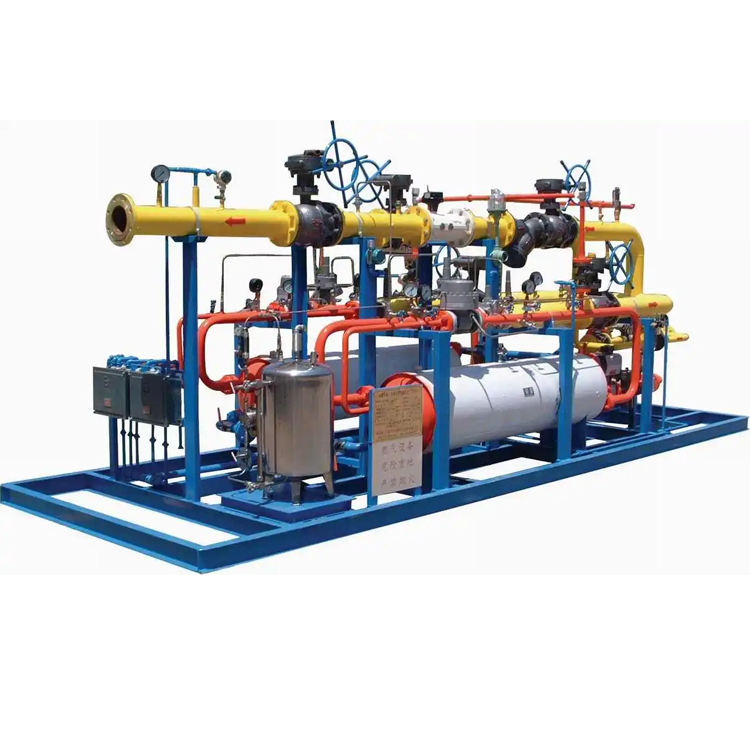
3. Precise Pressure Regulation Stage After purification, the gas then enters the core pressure regulation unit, which is the functional core of the gas pressure regulating skid. Industrial-grade pressure regulating skids mostly adopt a “main line + backup line” one-use-one-backup design. When the main-line pressure regulating unit fails, the backup line can seamlessly switch, completely without interrupting the continuous gas supply to the downstream. The pressure regulation process is accomplished through the coordinated action of the control valve and the main regulating valve: a target pressure for the downstream is pre-set. When the upstream pressure is too high, the control valve will drive the valve disc of the main regulating valve to automatically close, reducing the flow area and lowering the pressure of the high-pressure gas through throttling. When the upstream pressure is too low or the gas consumption load in the downstream suddenly increases, the valve disc will automatically open wider to ensure that the output pressure remains within the preset error range. Even if the upstream pressure fluctuates by more than 30% of the design value, a qualified industrial-grade pressure regulating skid can control the fluctuation of the downstream pressure within ±1%.
4. Safety interlock cut-off stage To prevent downstream overpressure caused by a failed pressure regulation, the pressure regulating skid has a dedicated independent safety cut-off valve downstream of the pressure regulation unit. This component is completely independent of the pressure regulation system and does not rely on external power supply. It is driven by the pressure of the gas itself. Once the pressure regulating valve fails or the downstream pressure exceeds the pre-set safety threshold, the cut-off valve will close rapidly within 1 second, completely cutting off the gas source, fundamentally preventing overpressured gas from entering the downstream gas-consuming equipment and avoiding potential safety accidents. Many customized low-temperature scene pressure regulating skids also have an additional low-pressure cut-off protection. When the downstream pressure unexpectedly drops below the safety limit, the cut-off valve will also act, preventing air from backflowing into the pipeline due to low pressure, forming explosive gas mixtures.
5. Flow measurement and real-time monitoring stage After the gas has passed through pressure regulation and safety protection, it will enter the flow measurement unit. The high-precision flow measurement instrument will record the instantaneous flow and cumulative usage volume of the gas, and simultaneously transmit the core operating data including pressure, temperature, and flow to the on-site control instrument panel, or remotely to the user’s central control room. This stage is not only for completing gas consumption measurement and accounting, but more importantly, maintenance personnel can use the long-term flow-pressure curve changes to detect hidden faults such as wear of the pressure regulating valve core or blockage of the filter, and complete maintenance before equipment failure, avoiding unplanned shutdowns.
6. Stable output to the downstream system After all the previous processing of the gas, it will be sent through a dedicated outlet interface to the downstream distribution network or directly connected to the gas-consuming equipment. At this point, the gas has fully met the standards. The downstream equipment has fully met all the requirements for pressure stability and cleanliness. The combustion system can operate stably, and the low-temperature gas-consuming equipment will no longer be damaged due to pressure fluctuations.
Ⅲ. Special Design Logic for Cryogenic Gas Scenarios
For low-temperature industrial gas applications, the structure of ordinary gas pressure regulating skids will be optimized specifically: all components in contact with low-temperature media will use special steel materials resistant to low temperatures, the seals will use specialized materials resistant to low temperatures, and at key positions, heat tracing and insulation structures to prevent condensation and freezing blockage will be configured to avoid problems such as component cracking and flow channel icing and blockage in low-temperature environments. This is why many ordinary pressure regulating equipment frequently fail in low-temperature conditions, while specially customized low-temperature pressure regulating skids can operate stably for many years.
When choosing gas pressure regulating equipment, many industrial users only focus on the rated pressure and diameter parameters, while often neglecting the collaborative design logic of the internal units of the system. But the truth is not so simple. Only when the performance of each link meets the requirements of the working conditions can the entire equipment be said to operate stably for a long time. Once the gas supply is stable, the safety risks will naturally be minimized.
If your factory is planning to upgrade the gas supply system, or if the existing pressure regulating equipment has problems such as unstable pressure and excessive noise, you can definitely use this working logic to troubleshoot. Following this approach, you will eventually be able to match the most suitable solution for your specific conditions.
You can also consult the engineers of Zhuyue Gas Equipment, and we will provide reference suggestions or solutions for you.