
Here is the conclusion. The media that an ambient air vaporizer can process are: liquid nitrogen, liquid oxygen, liquid argon, liquefied natural gas, liquefied petroleum gas, liquid carbon dioxide, and liquid ethylene. Liquid hydrogen and liquid helium are not included in this list. To determine if a certain gas can be used, only two parameters need to be considered: boiling point and vaporization latent heat.
1. The equipment obtains heat from the air and does not consume electricity
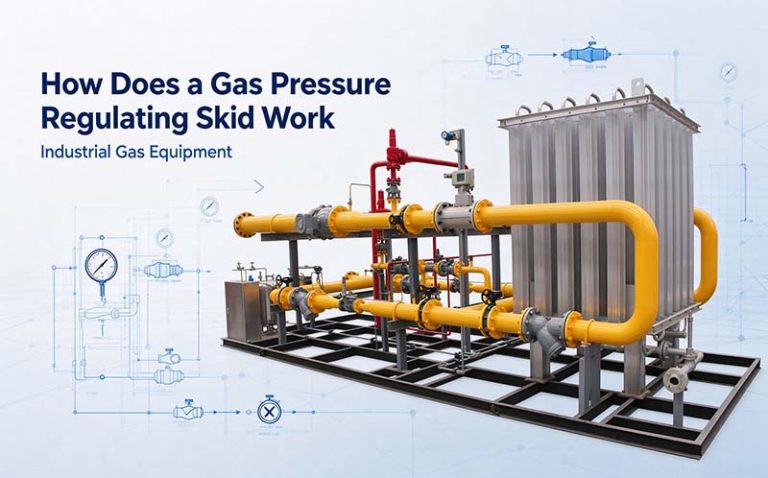
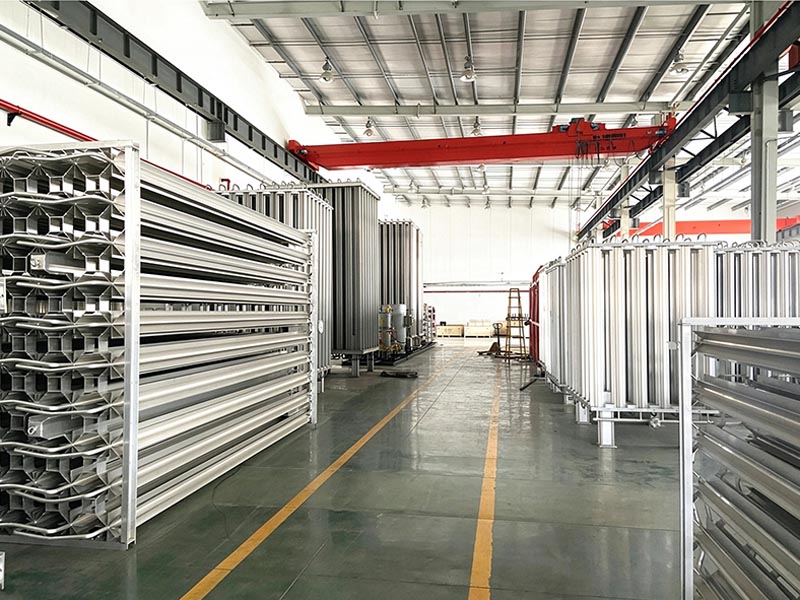
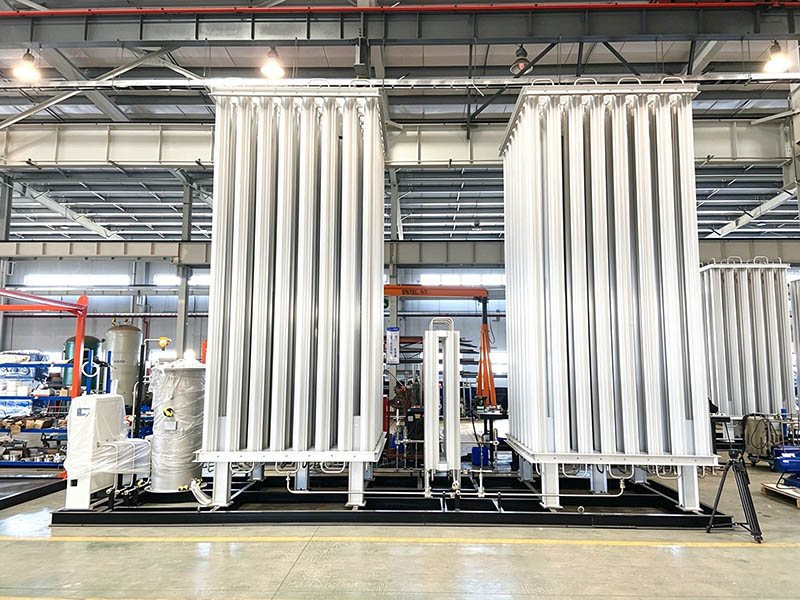
The ambient air vaporizer (Ambient Air Vaporizer), which is commonly referred to as an air-cooled vaporizer by domestic counterparts, or an air bath vaporizer. What is seen on site is a row of aluminum finned tube racks, standing in the open air, not plugged in, without heating rods, nor steam pipelines.
All its heat comes from the surrounding air. The liquid at low temperature flows through the finned tubes, and the temperature of the tube wall drops sharply to minus one hundred and something degrees Celsius. There is a large temperature difference between the outside air and the tube wall, and the heat is transferred along the tube wall to the inside liquid. The liquid absorbs enough heat and turns into a normal temperature gas and is sent out.
After the air absorbs the heat and becomes cold and sinks, the warm air on the side comes up and circulates by natural convection. The entire heat exchange process does not require a fan, and there is no energy consumption during operation.
2. Can it be used? It depends on two parameters
The amount of heat provided by the air is limited. Whether a certain liquid can be vaporized depends on two parameters.
Boiling point. The lower the boiling point, the greater the temperature difference between the tube wall and the air, and the better the heat exchange; but the tube wall is also colder, and frost forms on the surface faster.
Vaporization latent heat. It indicates how much heat is absorbed by each kilogram of liquid to turn into gas. The greater the latent heat, the less the amount that the same equipment can handle.
3. List of applicable media
After screening according to the above two standards, the following media are within the applicable range.
Liquid nitrogen (LIN). Boiling point -196℃, vaporization latent heat approximately 199 kJ/kg. The largest usage, used in medical cold chain, food quick freezing, and electronics industry.
Liquid oxygen (LOX). Boiling point -183℃, latent heat approximately 213 kJ/kg. The equipment needs to be treated for deoxygenation, and production should follow the oxygen service standards.
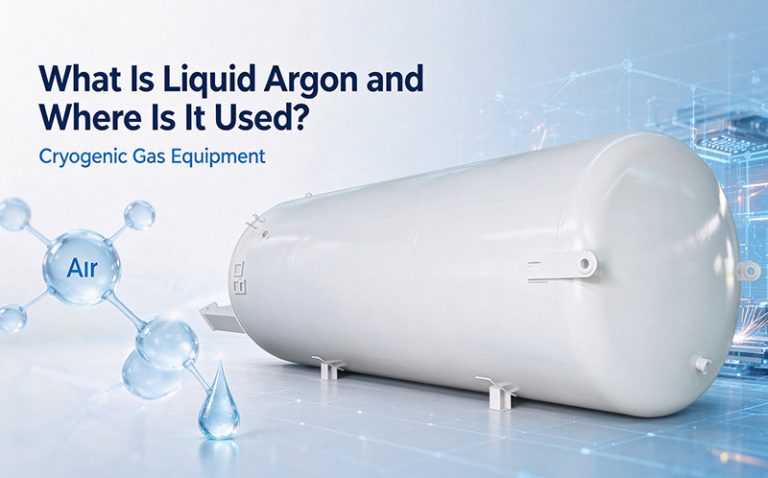
Liquid argon (LAR). Boiling point -186℃. Commonly used in welding protection and metal smelting.
Liquefied natural gas (LNG). Boiling point approximately -162℃, latent heat approximately 510 kJ/kg. This is the highest among these media.
Liquefied petroleum gas (LPG). A mixture of propane and butane, boiling point varies with the ratio.
Liquid carbon dioxide (LCO2). Boiling point approximately -78℃. The heat exchange conditions are more relaxed than the previous ones, but pay attention to the pressure of the pipeline.
Liquid ethylene (LC2H4). Common medium in petrochemical plants.
In addition, small-quantity media such as krypton, neon, and nitrous oxide can also be customized according to specific working conditions.
4. Liquid hydrogen and liquid helium cannot be handled
The boiling point of liquid hydrogen is -253℃, and that of liquid helium is -269℃. In this temperature range, the heat from the air cannot keep up with the vaporization demand. As soon as the finned tubes come into contact, they freeze into a white frost, and the heat exchange capacity collapses in a few minutes.
Such media need to be handled by specialized hydrogen heat exchangers, helium heat exchangers, or systems with supplementary heat sources. Failing to handle them with an air-cooled type will have poor results.
5. Different media require a significant difference in output from the same equipment
This is the easiest to be overlooked when selecting.
The vaporization latent heat of LNG is approximately 2.4 times that of liquid oxygen. With the same vaporizer, the output for vaporizing LNG is approximately only 40% of that for vaporizing liquid oxygen. So when using liquid nitrogen-specific specifications to handle LNG, the flow rate usually needs to be increased by 2 to 3 times.
Liquid nitrogen has the lowest boiling point and the largest temperature difference. Under the same conditions, the gasification volume is the easiest to increase; LNG, on the contrary, is the most challenging.
6. Four Things to Be Careful About When Selecting the Type
Environmental temperature and humidity. In the industry, the gasification volume is usually calibrated based on an environmental temperature of -10℃, a relative humidity of 70%, and continuous operation for 8-12 hours. In the south, where it is humid, and in the north, where it is extremely cold, the actual performance is much worse.
Continuous or intermittent. The air-cooled type is suitable for peak shaving, backup, and intermittent gas supply. To provide 24-hour full-load supply, generally two sets are equipped for use and backup, or a water bath type vaporizer can be replaced.
Frosting and defrosting. In humid areas, the fins will gradually freeze and gradually consume the heat exchange area. Therefore, it is necessary to have a defrosting measure.
Installation site. The equipment relies on natural convection for heat absorption, and a ventilation distance should be left around it. It should not be blocked by walls or plants.
7. Flow Range
A single unit can achieve 10-10000 Nm³/h. If the volume is larger, it can be solved by using multiple units in parallel or a switched layout.
Medium selection, gasification volume calculation, and handling of extreme conditions are best handled by those who have experience in the field.
If your medium is not among the above categories, or if the environmental temperature and flow requirements are particularly special, please contact Zhouyue Gas Equipment and clearly describe the conditions. We will work together to come up with a solution.