
How to Select LNG Storage Tanks: A Practical Guide for the Entire Process of Foreign Trade Procurement
For foreign buyers of cryogenic gas equipment, choosing the right LNG storage tanks is the key to ensuring the long-term stable operation of the project. Many overseas customers often encounter problems such as the storage tanks not meeting the local installation standards or excessive operating energy consumption after delivery when they make their first purchase, due to their lack of familiarity with the compatibility standards for different working conditions. Based on years of foreign trade service experience and starting from practical application scenarios, this article dissects the core points for selecting LNG storage tanks and helps you avoid purchasing mistakes.
First, clearly define the core usage scenarios and volume requirements.
The first step in choosing a storage tank is not to directly compare parameters, but to first clarify the actual usage scenario of your own.
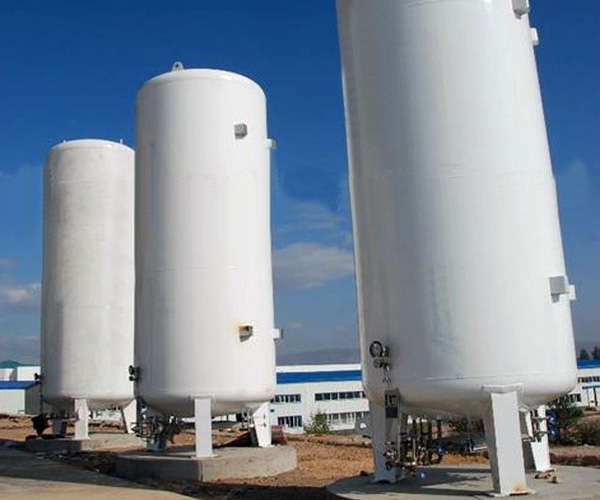
Small gas filling stations, backup gas supply scenarios in remote areas: Preferentially choose vertical LNG storage tanks with a capacity of 5-20 m³. These tanks have a small footprint, short installation and commissioning cycle, and are suitable for meeting the demand of daily gas consumption lower than 1000 Nm³.
Urban peak shaving stations, industrial concentrated gas usage parks: It is recommended to select horizontal atmospheric pressure LNG storage tanks with a capacity of 50-200 m³. This can reduce the construction cost per unit volume and facilitate the subsequent connection to multi-pipe diversion systems.
Special scenarios such as ocean transportation and offshore platforms: Special storage tanks with anti-vibration reinforcement structures must be selected to avoid the damage to the insulation layer caused by liquid fluctuations.
Many overseas customers often make the mistake of blindly increasing the tank volume, resulting in the storage tanks operating at a low load for a long time, which instead increases the daily evaporation loss.
2.Focus on verifying the compliance of insulation and materials
The storage temperature of LNG is as low as -162℃. The insulation performance of the storage tanks directly determines the long-term operating costs, and this is the key factor that distinguishes high-quality products from cheap and inferior ones.
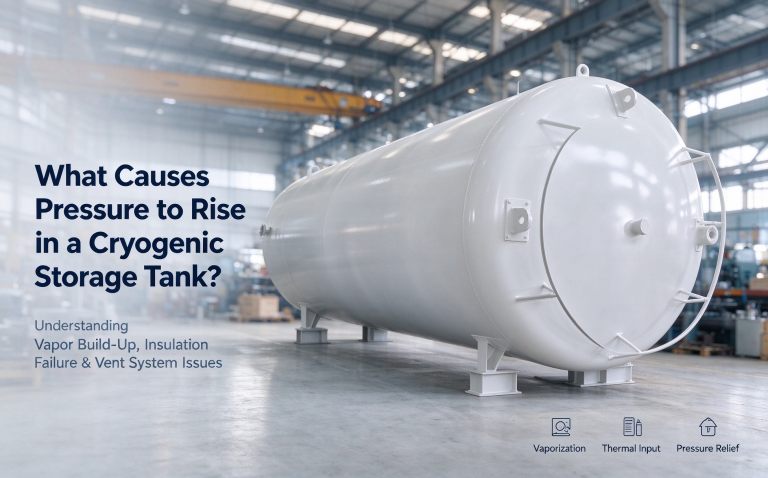
Regular export-grade LNG storage tanks will adopt a “double-layer inner and outer tank structure”. The inner layer uses 304/316L austenitic stainless steel, and the outer layer selects Q345R pressure vessel steel plates. The middle layer is filled with high-vacuum multi-layer insulation materials, and the static evaporation rate can be controlled within 0.2%/d.
During the procurement process, it is necessary to ensure that the products comply with ASME, CE or local pressure vessel certification standards to avoid the situation where the goods cannot pass the installation acceptance inspection by the local safety supervision department upon arrival at the port. Some low-priced products use thinner inner steel plates and ordinary insulation cotton instead of the dedicated multi-layer insulation paper, which leads to problems such as frosting and abnormal pressure increase within just half a year after they are put into use.
3.Match and integrate the security and operation management systems
A qualified LNG storage tank should not only focus on the tank itself; the accompanying safety components directly affect the safety during the entire life cycle of the use.
The standard configuration should include dual safety valve groups, emergency shut-off valves, and a real-time liquid level and pressure monitoring system. For some projects in high-altitude or high-temperature areas, additional facilities such as sunshade and sun protection shelters, and pressure automatic regulation devices may also be required.
For overseas customers who purchase in large quantities, priority should be given to suppliers who can provide full English operation manuals and remote technical guidance to avoid being unable to find corresponding operation instructions for subsequent daily maintenance. At the same time, the supply cycle of spare parts should be confirmed in advance to ensure that sealing parts, valves, and other vulnerable components can be replenished within 72 hours, and the entire gas supply system will not be shut down due to small component failures.
4.Comprehensive assessment of the total procurement cost throughout the entire process
Many foreign trade customers merely compare the purchase price of the tank body, but overlook the comprehensive costs including transportation, installation and subsequent operation and maintenance.
For instance, the split transportation plan for large-volume storage tanks can significantly reduce the excessive logistics costs in remote areas overseas; confirming the local reference standards for foundation construction with the supplier in advance can avoid the rework costs caused by incorrect foundation design.
Choosing a cryogenic equipment manufacturer with mature delivery experience for foreign trade projects not only helps you avoid common risks in certification and customs clearance procedures, but also can customize a more suitable storage tank solution based on the climate and gas supply characteristics of your project location, ensuring the stable service life of the entire equipment to reach over 20 years.
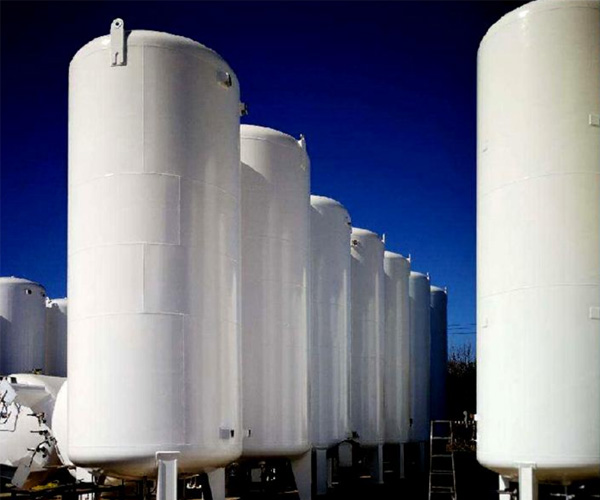
For the overseas LNG storage tank procurement project, the ideal product is never the one with the highest parameters, but rather the one that perfectly suits your working conditions, complies with local regulations, and has controllable total operation costs throughout the entire period. Before placing the official order, you can contact Zhuoyue Gas Equipment to clarify the three points of scenario requirements, certification requirements, and operation support with us. We can then provide you with a customized solution and help you select a truly reliable liquefied natural gas storage tank.