
In industrial production, medical institutions’ centralized oxygen supply, metal processing and welding, as well as special gas filling stations, liquid oxygen storage tanks are the core cryogenic equipment that ensure the safe and stable storage of liquid oxygen. Many foreign buyers often find it difficult to make a judgment when initially selecting a tank, as they encounter products with different volumes, pressure ratings, and insulation structures. They either choose a tank with insufficient capacity, resulting in frequent restocking and supply disruptions, or blindly pursue overly high parameters, increasing unnecessary procurement and operation costs. This guide, based on actual working conditions, breaks down the core selection logic of liquid oxygen storage tanks step by step, helping you avoid common purchasing mistakes and select cost-effective equipment that suits your production rhythm.
The first core dimension to clarify is the calculation of the tank’s volume, which directly determines the daily oxygen storage capacity and replenishment cycle. Currently, the mainstream liquid oxygen storage tanks have a regular volume range of 3m³ to 200m³, and also support non-standard customization for special specifications. When selecting, one cannot simply estimate based on experience; it is necessary to combine the daily average oxygen consumption and the liquid oxygen vaporization ratio to calculate: The effective volume of the tank should be greater than or equal to the daily gas oxygen consumption divided by approximately 800 times the liquid oxygen vaporization ratio, and then multiplied by the planned safety reserve days. For example, if a factory has a daily average gas oxygen consumption of 5000m³, the daily liquid oxygen consumption is approximately 6.25m³. To maintain a 7-day safety reserve, considering the industry standard that the filling rate is usually no more than 95%, a 50m³ liquid oxygen storage tank can fully meet the requirements. In addition, it is necessary to take into account transportation conditions. For remote factory areas or regions with winter road transportation limitations, the volume can be appropriately increased to avoid supply interruptions in extreme weather; if the gas consumption fluctuates greatly, a two-tank solution with a large and small tank can be adopted, flexibly adapting to the gas consumption needs of different production periods.
The second key selection point is the matching of working pressure. Many buyers mistakenly believe that the higher the pressure, the better the equipment. In fact, the pressure selection must be adapted to the downstream gas consumption system. Common working pressures of liquid oxygen storage tanks on the market are 0.8MPa, 1.6MPa, 2.3MPa, and 3.3MPa. Each level corresponds to a completely different usage scenario: The 0.8MPa tank is suitable for conventional industrial gas supply and hospital central oxygen supply scenarios with medium and low pressure, and can be directly connected to the gas supply system with an evaporator and pressure regulator; 1.6MPa is currently the most widely used level in industrial production lines, capable of meeting the requirements of most production processes with certain gas pressure requirements; 2.3MPa and above high-pressure tanks are more suitable for gas filling stations and high-pressure process lines that require direct high-pressure supply or are equipped with low-temperature pumps for filling. When purchasing, pay attention that the design pressure of the liquid oxygen storage tank is slightly higher than the marked working pressure. Do not blindly choose a high-pressure model that exceeds your own needs, otherwise it will only increase the equipment procurement cost and the burden of daily safety management.
Next, the focus should be on the insulation structure of the tank, which directly determines the static evaporation rate of liquid oxygen, that is, the natural loss rate of liquid oxygen during daily use. Currently, the mainstream insulation methods in the industry are divided into two types: One is high-vacuum multi-layer wound insulation, where aluminum foil and glass fiber paper multi-layer insulation materials are alternately wound on the inner wall of the tank, with the inner cavity evacuated to a high vacuum, and the factory vacuum degree can be controlled within 0.01Pa. This structure has excellent insulation performance and a very low static evaporation rate. For a 10m³ tank, the daily static evaporation rate can be controlled within 0.4%. It is the preferred solution for small-capacity tanks. Another type is vacuum powder insulation. After filling the inner space with insulating powder such as pearlescent sand, a vacuum is then applied. This is more commonly used in large-volume storage tanks with a capacity of 50m³ or more. Although the insulation performance is slightly lower than the multi-layer winding scheme, the manufacturing cost is more controllable. In scenarios with large storage volumes, the cost-effectiveness is very prominent. No matter which insulation method is chosen, vacuum degree is the core performance indicator. Industry standards require that the leakage rate of the vacuum layer should not exceed 1×10⁻⁸ Pa·m³/s. After long-term use, the vacuum degree will gradually decrease, which directly leads to an increase in evaporation rate. Therefore, regular detection of the vacuum degree during subsequent operation is an indispensable step.
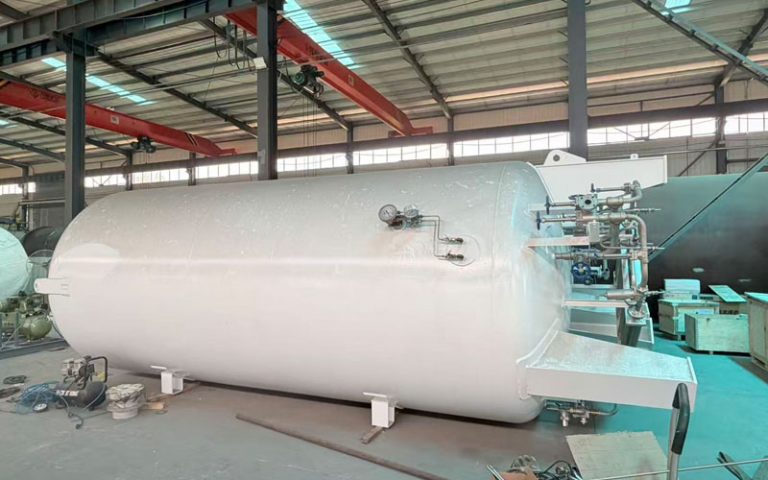
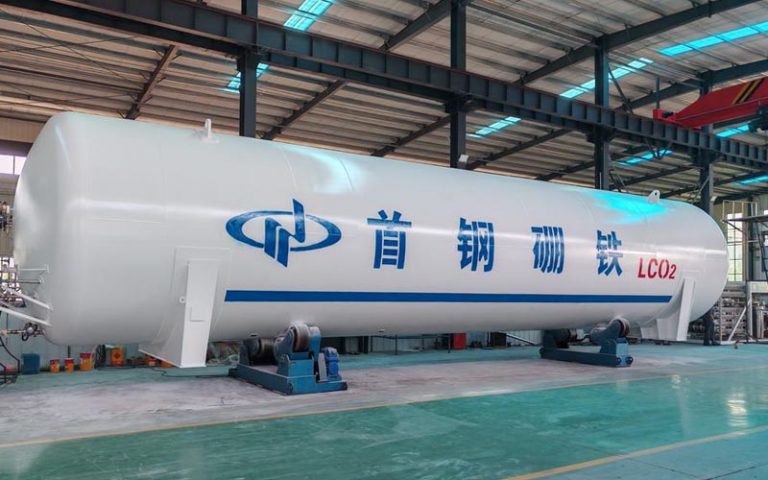
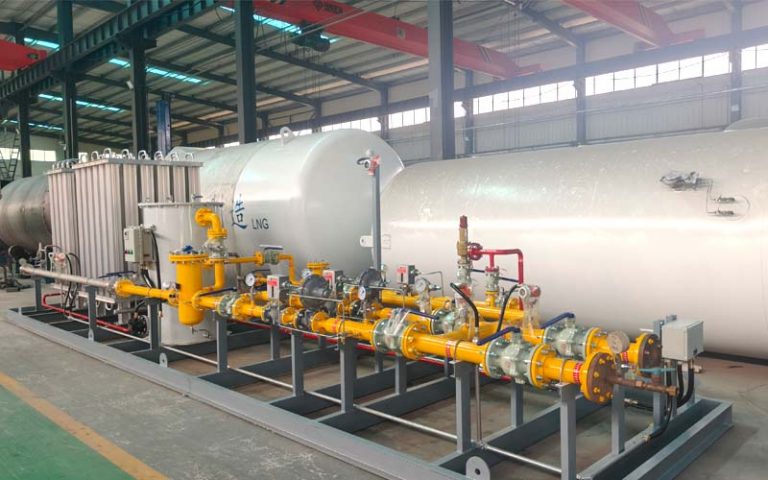
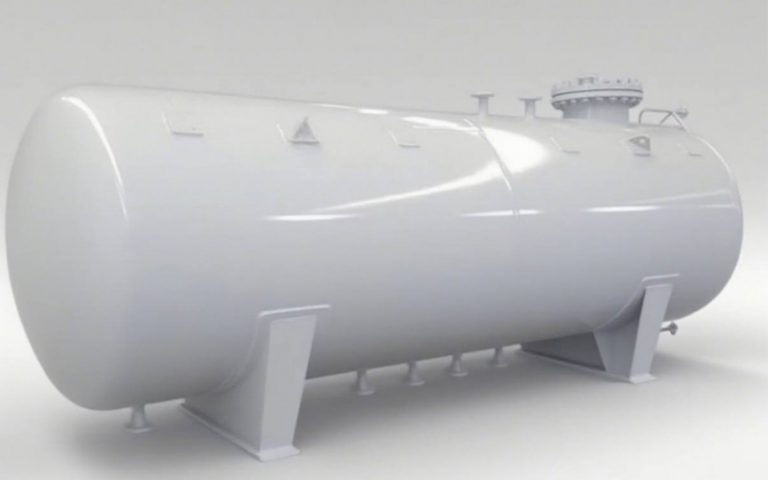
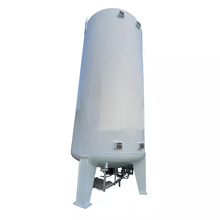
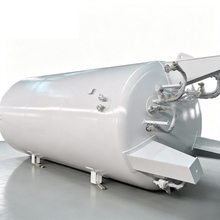
Finally, the final confirmation should be made in combination with the site conditions and detailed safety configuration. Liquid oxygen storage tanks are classified into two types based on their placement: vertical flat-bottom and horizontal saddle. Vertical storage tanks have a small foor area and are suitable for factory areas and hospitals with tight space; horizontal storage tanks have a lower center of gravity and better operational stability, and are suitable for scenarios with frequent transportation stops or limited ratios of length to width of the site. Before selecting the type, it is necessary to confirm the supporting conditions such as foundation bearing capacity and fire protection distance in advance. Liquid oxygen is a strong oxidizing medium, and the safety distance between the storage tank and buildings, open flames, and combustibles must fully comply with special equipment safety regulations and architectural fire protection requirements. In terms of material and safety accessories, qualified liquid oxygen storage tanks must use S30408 stainless steel pressure vessel special plates for the inner liner. All pipes and valves in contact with liquid oxygen must undergo strict degreasing and oil removal treatment to avoid safety hazards caused by contact with oil. The accompanying non-oil pressure gauges, liquid level gauges, safety valves, and emergency shut-off valves must also be complete. Some intelligent models can also be equipped with remote monitoring systems to upload pressure, liquid level, and temperature data in real time, significantly reducing the labor cost for daily operation.
If you are choosing an appropriate liquid oxygen storage tank for your working conditions or want to obtain a customized selection plan, please feel free to consult Zhuoyue Gas Equipment. We will provide you with a complete low-temperature equipment solution from design, manufacturing to on-site installation based on your actual gas usage requirements, site conditions, and budget.