

Selection of low-temperature storage tanks: How to choose the appropriate capacity
For foreign trade enterprises in the low-temperature gas equipment industry, the selection of the capacity for low-temperature storage tanks is by no means a simple “the larger, the better”. Many overseas customers have fallen into the trap of “selecting the model based on experience” during the procurement process: either the storage tank volume is too small, causing frequent material replenishment to disrupt the production rhythm; or they blindly choose an extremely large tank, not only wasting the floor space but also increasing unnecessary procurement and static vaporization loss costs. As a service provider with a long history in the low-temperature equipment field, we have encountered hundreds of selection cases in industrial, medical, and laboratory scenarios worldwide. We have summarized a set of capacity selection methods that balance supply stability, usage cost, and long-term scalability to help customers avoid 90% or more of the selection mistakes.
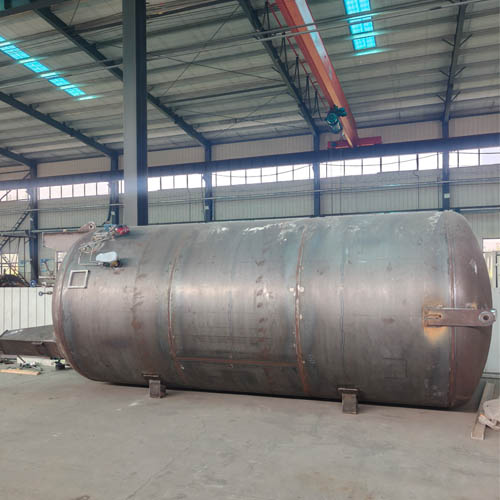
The first step: Based on actual gas consumption requirements, calculate the core basic capacity
The first core basis for selection is always the actual daily consumption of the low-temperature medium, rather than the estimated peak usage. We usually recommend that customers first collect the actual gas consumption data for 7 consecutive days instead of referring to the theoretical values on the equipment nameplate. The actual production fluctuations of many customers can cause a 20% or more deviation in theoretical calculations.
For different production modes, we have verified through numerous projects with general reserve cycle references:
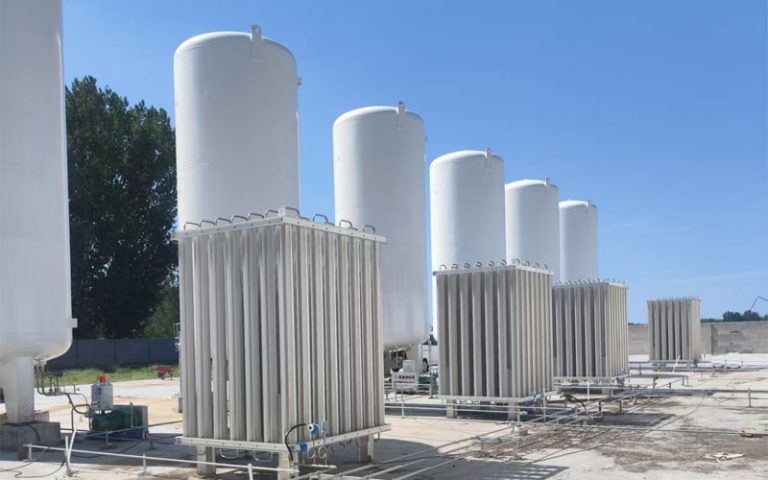
For 24-hour continuous production scenarios, such as chemical smelting, precision electronic manufacturing, and large welding processing plants, it is recommended to calculate the total reserve volume based on the daily consumption × 5 days. In such scenarios, a complete supply interruption will directly lead to the shutdown of the entire production line. Choosing a 50m³ or 100m³ vertical large-capacity storage tank can ensure stable supply pressure and reduce the daily vaporization loss.
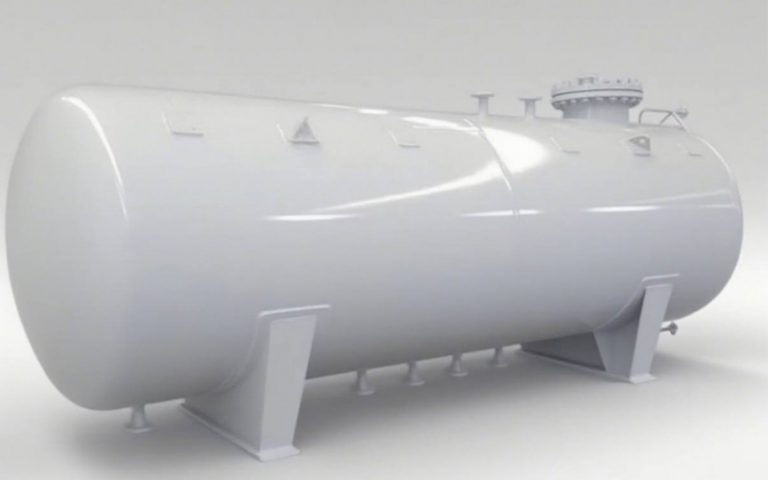
For intermittent production scenarios, such as small factories, local distribution stations, and ordinary research laboratories, it is sufficient to select based on the daily consumption × 3 days. 5-30m³ horizontal medium-sized storage tanks have greater flexibility and lower natural evaporation loss when idle, and will not cause medium waste.
When calculating the total capacity, it is necessary to reserve a reasonable safety margin. The general effective filling coefficient is 90%, that is, a nominal 100m³ storage tank can actually safely fill the medium volume of approximately 90m³. It is not allowed to directly match the demand with the nominal capacity, nor to compress the reserve days to save a little upfront cost for the sake of a small reduction in procurement expenses. In the long run, the logistics cost of frequently calling in low-temperature medium transportation vehicles is much higher than the initial procurement cost of choosing a larger model.
The second step: Based on the site and installation conditions, lock in the compatible size range
Many customers find after calculating the capacity that the selected storage tank cannot smoothly enter the installation workshop or there is not enough space for operation and maintenance around. Such problems occur extremely frequently in small laboratories and old factory renovations.
When selecting, one cannot only look at the nominal capacity of the tank, but must simultaneously confirm three key installation parameters:
The first is the overall size of the tank. A 100-liter small vertical liquid nitrogen storage tank usually has a diameter of about 50cm and a height of approximately 80cm, suitable for ordinary laboratories with limited space; if the vertical space reserved in the factory is insufficient, it can be replaced with a horizontal low-temperature storage tank, reducing the overall height while maintaining the same capacity, and adapting to low-rise factory environments.
The second is the operation reserved space. The top of the storage tank must have at least 30cm of space for subsequent valve maintenance and liquid replenishment operations, and the surrounding passage must have a width of at least 50cm, which can avoid daily production collisions with the tank by forklifts and materials, and can also be quickly evacuated and operated in emergency situations.
The third is the environmental adaptability. If the storage tank is placed in an open-air factory, the local extreme temperature impact must be considered. In the same capacity, it is recommended to choose a model with a thicker insulation layer to avoid abnormal pressure rise in summer and increase the medium loss during safe discharge.
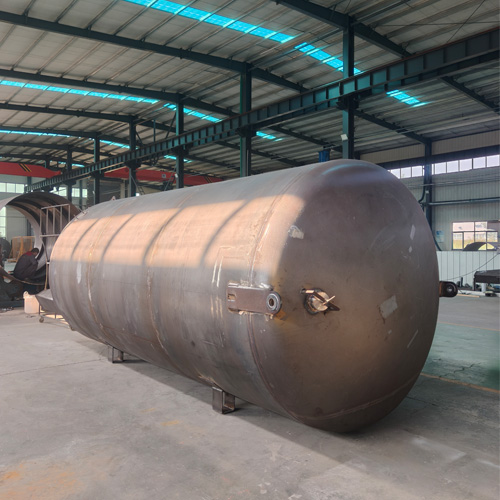
Step 3: Match specific usage scenarios and adjust the capacity configuration plan
The usage scenarios in different industries have completely different priorities for the storage tank capacity requirements. General standards cannot cover all special cases. We have compiled exclusive selection logic for several frequently-occurring sub-scenarios:
Scenarios such as biological sample libraries and stem cell storage require multiple adjustable sample storage racks inside the tank. We cannot only focus on the external nominal volume but also need to carefully confirm the height of the effective storage area and the internal space utilization. Special storage tanks with 500-2000 liters and tiered racks are the mainstream choice for these scenarios, ensuring both the stability of sample cryogenic storage and the maximization of internal space utilization.
For sites with restricted distribution, such as remote mining areas and oil and gas fields in the wild, due to weather and road restrictions, the probability of transporting low-temperature media vehicles arriving on time is very high. We recommend extending the reserve period from the usual 3-5 days to 7 days, moderately increasing the tank capacity to avoid supply disruptions in extreme situations.
For factories with significant seasonal production fluctuations, there is no need to purchase ultra-large capacity storage tanks all at once. A combination of “small and medium-sized storage tanks + later expansion” is more cost-effective: during peak production seasons, an auxiliary storage tank can be added to supplement the reserves, and during slow production in the off-season, only the main storage tank is operated to avoid unnecessary vaporization losses caused by the long-term low-level operation of large capacity storage tanks.
If there is a need for outdoor sampling and short-distance transportation, a 10-50 liter portable low-temperature storage tank would be a more suitable choice. It is lightweight, easy to move, and does not require purchasing large industrial storage tanks for portable scenarios.
Many customers often fall into two extreme misunderstandings when selecting: either blindly pursuing large capacity, ignoring the site and idle losses; or excessively controlling the initial cost, choosing a small storage tank that just fits the daily usage, which then slows down production efficiency due to frequent replenishment. A reasonable capacity selection plan for low-temperature storage tanks ultimately aims to achieve not “selecting the largest tank”, but to find the optimal balance point for supply stability, long-term operation costs, and future scalability within the current site, budget, and production mode.
If you are still struggling with the capacity of the cryogenic storage tank for your specific scenario, you can directly contact our technical engineers and provide your daily gas usage data, site dimensions, and usage scenarios. We will customize a dedicated capacity selection plan for you for free.