
In various scenarios such as industrial manufacturing, food preservation, medical cold chain, and scientific research experiments, liquid nitrogen is an indispensable low-temperature medium. When many purchasers plan the storage solution for liquid nitrogen, the core issue they encounter first is: How much storage capacity is needed? If the capacity is too small, frequent replenishment and supply disruptions will occur, directly disrupting the production rhythm; if it is blindly chosen to be too large, it will cause waste in the initial procurement cost and also bring the pressure of daily idle loss. For foreign buyers of cryogenic gas equipment, accurately matching the storage capacity according to their own needs is a crucial step to balance the usage experience and investment cost.
To calculate the appropriate storage capacity for liquid nitrogen, the first step is to clearly understand the actual daily consumption of liquid nitrogen. This is the basis for all calculations. Many purchasers often make a mistake of only referring to the theoretical marked consumption of the equipment, ignoring the additional losses in the actual scenarios. For example, users in the food freezing industry, during the daily opening of cans for material extraction and pipeline transportation, the natural evaporation of liquid nitrogen accounts for approximately 10% to 15% of the total consumption; while users in the medical industry, during sample transportation and batch distribution processes, the non-production-related consumption can even be higher. It is recommended that purchasers first continuously record the actual gas consumption for 7 to 14 days, including the peak usage during weekdays and the low usage during weekends, and then add about 15% of redundancy on the basis of the daily average consumption, so that the resulting value is the benchmark data that is close to the actual usage requirements.
After determining the daily average consumption, the next step is to adjust the final range of storage capacity based on the replenishment cycle. Different purchasers are located in different geographical areas, and the delivery capabilities of liquid nitrogen suppliers also vary greatly. If the factory is close to the liquid nitrogen production base, the supplier can make on-site deliveries once every 2 to 3 days, then the storage capacity can be set at 3 to 5 times the daily average consumption, which can avoid frequent order replenishment and will not leave the storage tank in a low liquid level idle state for a long time. If it is located in a remote area of the project or some overseas industrial parks, the liquid nitrogen delivery requires advance 7 days or more reservation, and even in extreme weather or port shutdown situations, there will be delivery delays. At this time, the storage capacity needs to be increased to 10 to 15 times the daily average consumption, leaving sufficient safety margins to prevent the risk of supply disruption and shutdown. Many foreign customers will overlook the local logistics stability and only realize that the storage tank capacity is insufficient when the distribution is congested during the peak season, which actually delays the production progress.
In addition to daily consumption and replenishment cycle, there are several factors that are easily overlooked and can also directly affect the selection of storage capacity. The first is the fluctuating demand of the gas usage scenarios, such as in the food processing enterprises during the peak season of e-commerce promotions, the order volume for freezing and preservation will double, and the liquid nitrogen consumption will also increase accordingly. At this time, it is not possible to only refer to the daily average consumption in the off-season to determine the capacity; the second is the natural evaporation rate of liquid nitrogen, different temperature insulation tanks have annual evaporation rates ranging from 1% to 5%, the vacuum multi-layer insulation tanks have a lower evaporation rate, and under the same capacity, the actual available liquid nitrogen volume will be greater; the third is the business expansion planning for the next 1 to 3 years. If the purchaser plans to expand production in the short term, it is recommended to reserve 20% to 30% of capacity redundancy in advance, which is much more cost-effective than adding new storage tanks later.
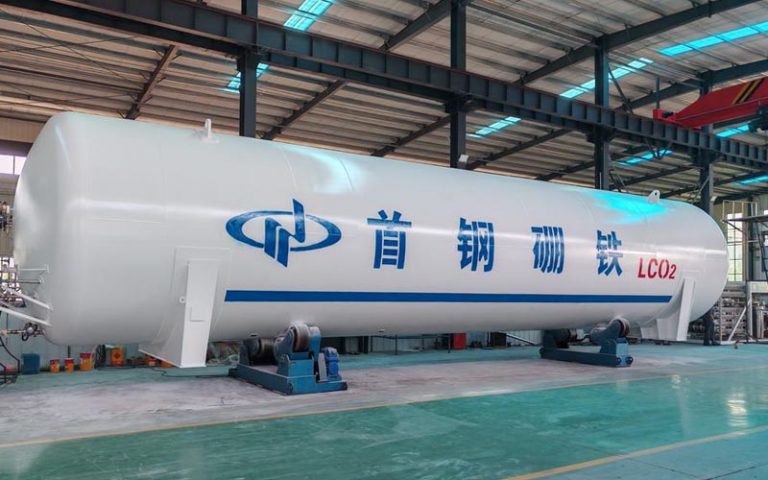
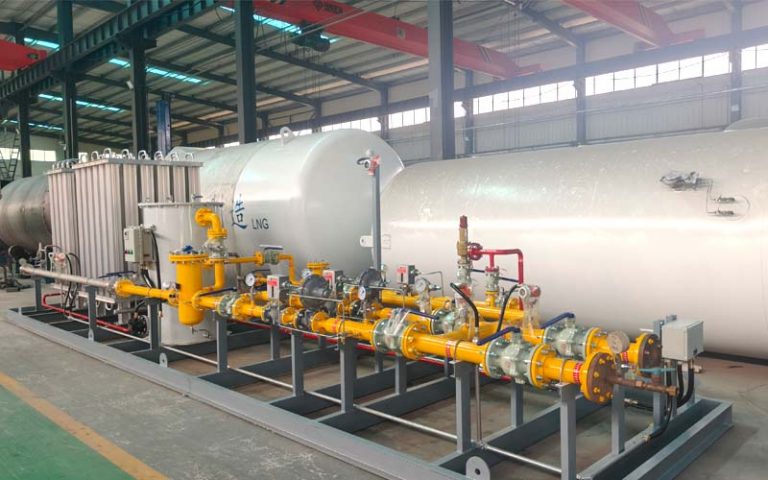
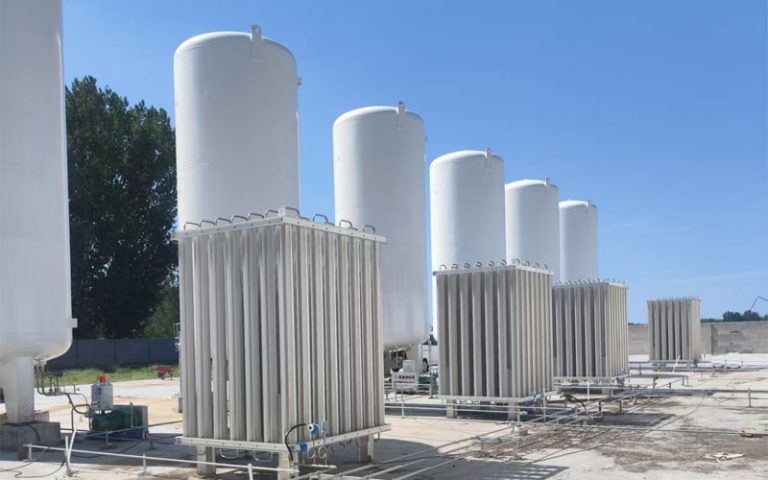
For typical users in different industries, we have also compiled reference plans that have been verified through a large number of actual projects. Small and medium-sized research laboratories, which only use liquid nitrogen for sample storage and a small amount of low-temperature experiments on a daily basis, have a daily average consumption ranging from 5 liters to 20 liters, and choosing a 100-liter to 500-liter small liquid nitrogen storage tank can fully meet the requirements; For small and medium-sized factories engaged in food controlled atmosphere packaging and metal cold treatment, the daily liquid nitrogen consumption ranges from 200 liters to 1000 liters. They should be equipped with 5 to 10 cubic meters of low-temperature storage tanks, and with weekly deliveries of 1 to 2 times, they can ensure stable production. However, for scenarios with daily consumption exceeding 2 tons, such as large chemical industrial parks and centralized oxygen supply centers for medical use, a large-capacity atmospheric low-temperature storage tank of 30 cubic meters or larger is required, along with a corresponding pipeline system for transportation. This will enable long-term and stable automated gas supply.
Finally, all overseas buyers should be reminded that the selection of liquid nitrogen storage capacity is never about the larger the better. It should be found in the optimal balance point among current usage requirements, supply conditions and future planning. If you are unsure about specific parameters during the selection process, the engineering team of Zhuoyue can, based on the delivery conditions in your region and the gas usage characteristics of the industry, customize an exclusive liquid nitrogen storage capacity solution for you. This will help you completely avoid the risk of liquid nitrogen supply interruption while controlling the investment cost.