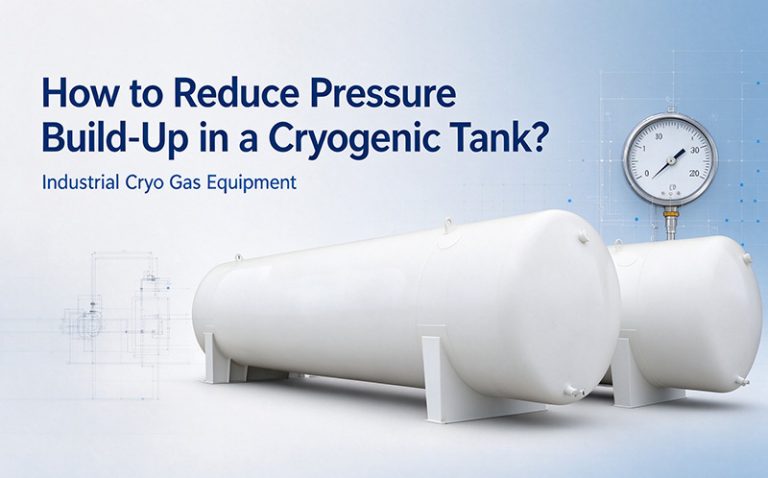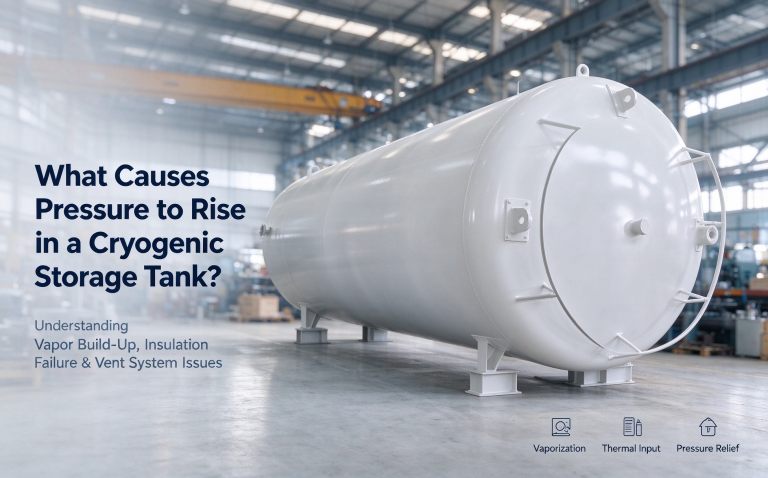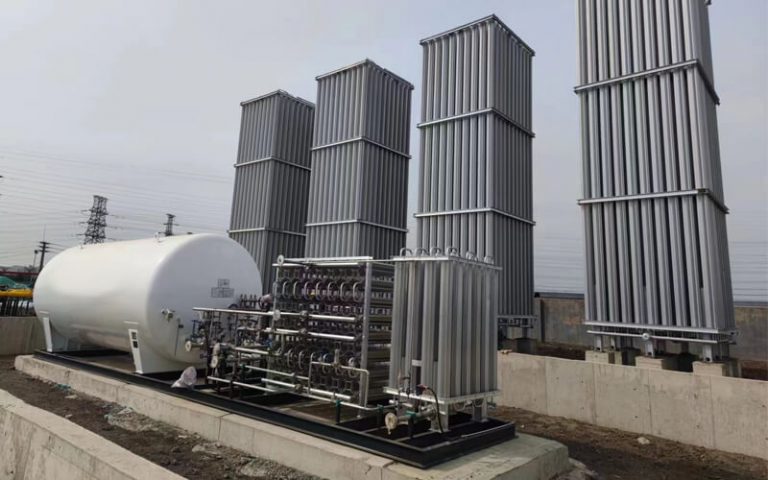

In the field of industrial gas storage at low temperatures, when many overseas customers first come into contact with cryogenic equipment, they will search for “what is a liquid oxygen tank”, hoping to quickly understand its definition, application and selection key points. As a manufacturer specializing in cryogenic gas equipment, we have rich production and export experience. We will clearly explain the core information of the liquid oxygen tank in an easy-to-understand way and help you avoid selection mistakes.
1. The basic definition of the liquid oxygen tank
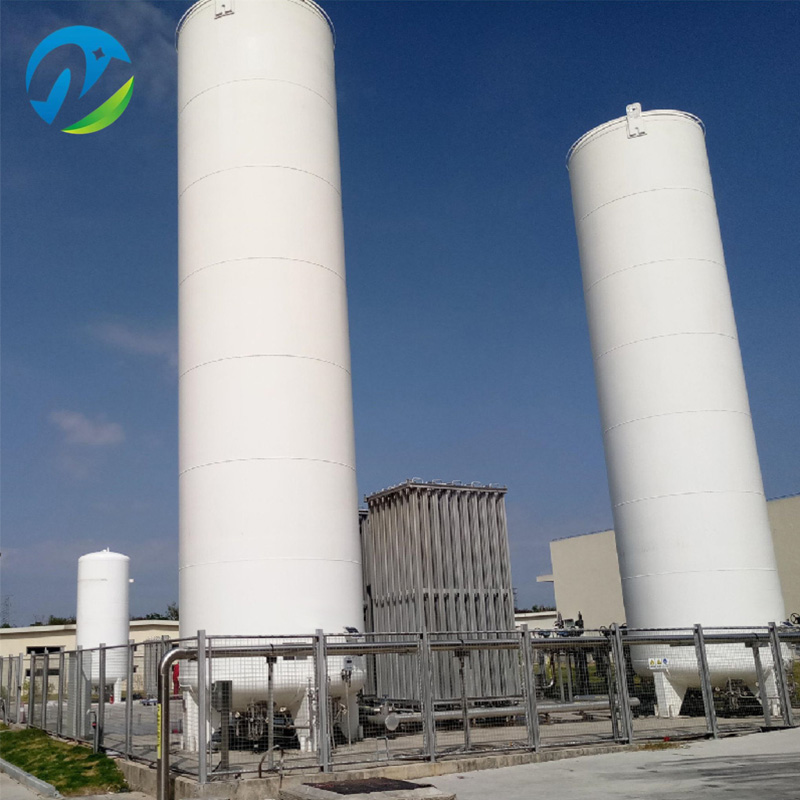
The liquid oxygen tank is an industrial pressure vessel specifically designed for storing cryogenic liquid oxygen. Its working temperature can be maintained stably below -183℃. Unlike ordinary oxygen cylinders, it adopts a double-layer structure design. The inner liner and the outer shell are filled with insulation materials, and a high vacuum environment is created inside, minimizing the entry of external heat into the tank and preventing the rapid vaporization of liquid oxygen. This design compresses the volume of liquid oxygen to 1/800 of that of gaseous oxygen. In the same storage space, the liquid oxygen tank can hold hundreds of times more oxygen than an ordinary high-pressure steel cylinder, significantly reducing the costs of transportation and on-site storage.
2. Core Structural Components
A qualified industrial-grade liquid oxygen tank is not merely a “double-layer container”, but rather a system composed of multiple precision components working together:
- Inner liner: Made of stainless steel that is resistant to low temperatures, it comes into direct contact with liquid oxygen and ensures that there is no risk of cracking in extremely low temperature conditions;
- Vacuum insulation layer: The inner layer is filled with pearl sand or multiple layers of insulation paper, combined with a high vacuum environment, to minimize heat loss and extend the static storage time of liquid oxygen;
- Safety control system: Includes safety valves, rupture discs, pressure gauges and liquid level meters, which can prevent abnormal increase in tank pressure and allow users to monitor the remaining liquid oxygen reserves and operating pressure in real time;
- Evaporation and output pipeline: The accompanying air-cooled evaporator can convert liquid oxygen into gaseous oxygen, and through pressure regulating valves, it can stabilize the output to the workshop pipelines to meet the continuous gas usage requirements.
3. Mainstream Application Scenarios
The application scenarios of liquid oxygen tanks cover the vast majority of industries worldwide that require large-scale and stable oxygen supply:
- In the metal processing industry: Steel mills and heavy machinery factories use it to continuously supply high-purity oxygen required for flame cutting and welding, replacing scattered small steel cylinders and reducing downtime for cylinder replacement;
- In the healthcare and health sector: The core storage equipment of hospital centralized oxygen supply systems, providing 24-hour uninterrupted oxygen sources for inpatient departments and operating rooms;
- In the chemical and environmental protection industries: In wastewater treatment and oxidation reaction processes, large storage tanks of liquid oxygen can ensure long-term continuous operation and reduce the frequency of frequent replenishment;
- In the food and aerospace fields: Scenarios such as food freezing preservation and rocket propellant storage also have a large demand for customized liquid oxygen tanks.
4. Key Points for Selecting Export Customers
Many overseas buyers often overlook several key parameters that directly affect the user experience when placing orders:
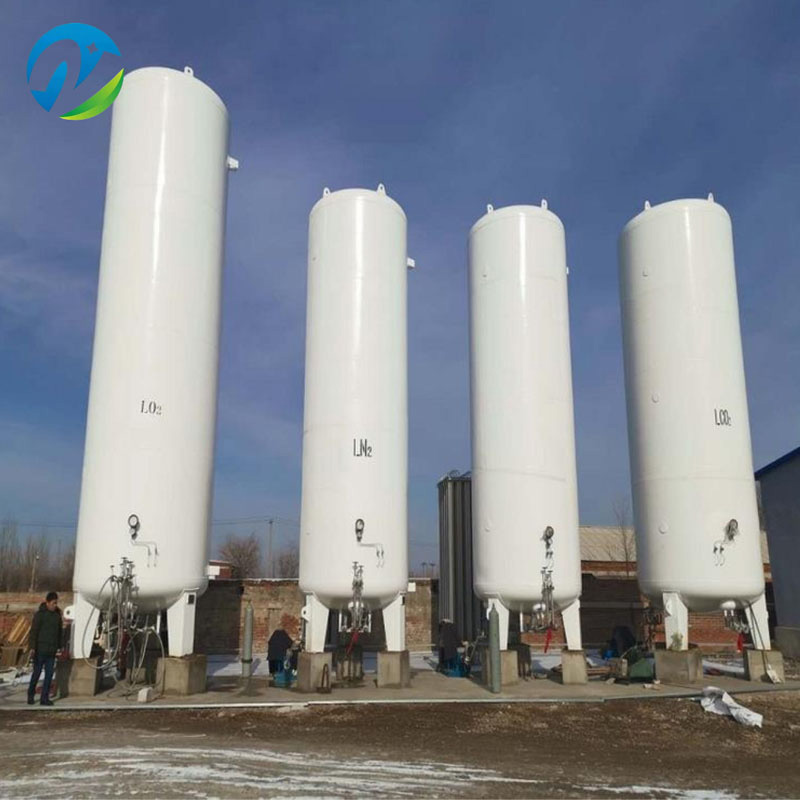
The first aspect is volume and working pressure. The common specifications range from 5m³ to 100m³. The working pressure is usually set between 0.8MPa and 1.6MPa, matching the inlet pressure of the downstream gas-using equipment.
The second aspect is evaporation rate. The daily evaporation rate of high-quality liquid oxygen tanks can be controlled within 0.3%. Even if not used for a long time, there won’t be a situation where a large amount of liquid oxygen is wasted through evaporation.
The third aspect is local compliance certification. For export to different countries, corresponding ASME, CE or GB standards need to be matched. We can adjust the design and documents for the customers in advance according to the regulatory requirements of the destination market to ensure smooth customs clearance and smooth installation and use.
For industrial users, a well-designed and sturdy liquid oxygen tank is not only a storage container but also the cornerstone for the stable operation of the entire gas supply system. If you are looking for a reliable supplier of liquid oxygen tanks for your project, Zhuoyue Gas Equipment can provide you with full-process support from scheme design, production manufacturing to on-site commissioning, helping you build a safe and efficient cryogenic oxygen storage system.