
The Core Causes of Elevated Pressure in Cryogenice Storage Tanks and On-Site Investigation Guidelines
In the industrial cryogenic gas storage scenario, many maintenance personnel have encountered the same problem: although there is no external gas output, no obvious leakage is observed at the valve, and the low-temperature gas storage tank is stationary, the pressure inside the tank continues to rise slowly, even exceeding the safety threshold and triggering an alarm within a short period of time. Many people initially believed it was a device failure and immediately initiated emergency depressurization operations, but failed to identify the root cause of the pressure increase. Subsequently, similar problems occurred repeatedly, not only causing a large amount of low-temperature gas loss but also laying the foundation for safety hazards caused by overpressure operation.
Based on the twenty or so similar failure cases I have encountered during the installation, commissioning, and on-site maintenance of low-temperature gas equipment in recent years, we can divide the reasons for the increase in pressure of the low-temperature gas storage tank into several clear dimensions, covering all situations from normal operation to abnormal faults. This helps you quickly identify the root cause of the problem.
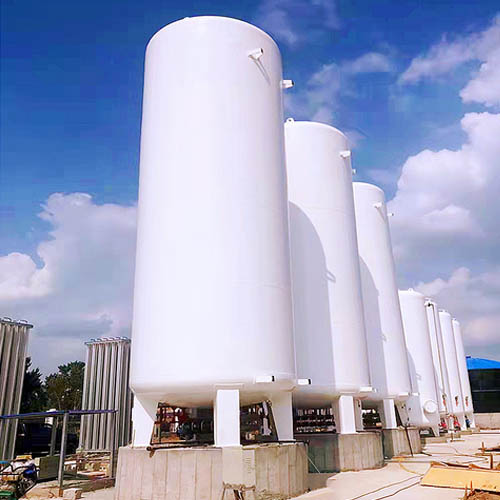
1. The most common fundamental cause: Continuous heat from the environment seeping into the storage tank
This is the core reason for the slow increase in pressure in 90% of fixed storage tanks, and it is also a common “self-pressure rise” phenomenon in the low-temperature gas transportation and storage industry. Many novice maintenance personnel tend to mistakenly believe that it is caused by equipment failure. The normal boiling point of low-temperature gas is usually below -150°C, and the temperature difference between the inside and outside of the storage tank can reach nearly 200°C. Even if the insulation system of the storage tank fully complies with the design standards, it cannot completely prevent the entry of external heat into the storage tank. A very small amount of heat will penetrate the insulation layer, structural supports, and pipe connections, entering the interior of the storage tank. First, the heated liquid near the tank wall is heated. Due to the buoyancy effect, this heated liquid then flows upward, forming a typical thermal convection stratification phenomenon inside the storage tank. The originally uniformly temperature liquid gradually transforms into a state of “lower layer temperature low, upper layer temperature high”. The liquid near the gas-liquid interface absorbs heat and continuously vaporizes, directly causing an increase in the number of gas molecules in the gas phase space, thereby directly promoting the gradual increase in overall pressure. Last year, when I was commissioning a 30-cubic-meter liquid oxygen storage tank at an industrial gas station in Tianjin Binhai, I encountered this situation. The new storage tank was already fully loaded without opening the pressurization pipeline, and the pressure rose from 0.3 megapascals to 0.58 megapascals within 24 hours. After checking all valves and sealing points, there were no abnormalities, and it was ultimately confirmed as a normal self-generated pressure rise phenomenon caused by the entry of environmental heat. In addition to the normal heat conduction of the insulation layer, some easily overlooked leakage points can significantly accelerate the rate of pressure increase: The supporting steel structure at the bottom of the storage tank is directly connected to the ground, and heat will be directly conducted into the storage tank through the metal structure; When the external environment temperature suddenly increases, such as during the summer noon when the sun shines directly on the storage tank wall, the amount of heat penetrating the insulation layer will increase by a factor of two; Moreover, many stations accidentally hit or knocked against the outer wall of the storage tank during maintenance, causing local sagging of the insulation material in the interlayer, resulting in a significant drop in insulation performance within a short period of time, and subsequently causing an abnormal and rapid increase in pressure.
2. Dynamic Operation Scenarios: Additional Pressure Increase Caused by Medium Flow
Many abnormal pressure increases in storage tanks occur during dynamic operations such as low-temperature liquid loading and unloading. The pressure increase speed in this scenario is much faster than that in the static state, and failure to handle it promptly can easily trigger overpressure alarms. The first common scenario is low-temperature liquid loading operations. When a tanker unloads liquid into the storage tank, the low-temperature liquid in the tanker, after long-distance transportation, is often already in a self-pressure state, with a temperature higher than that of the static liquid inside the tank. These temperature-laden liquids injected into the tank will directly impact the previously stable thermal stratification structure, causing a large amount of liquid to vaporize instantly, generating a large amount of flash vapor in a short period, and directly pushing the pressure inside the tank up. In the most extreme case I have witnessed, for a 50-cubic-meter LNG storage tank, the pressure rose directly from 0.2 MPa to 0.7 MPa within less than 20 minutes after the liquid unloading began, far exceeding the normal static pressure increase rate. The second scenario was improper external backfilling operation. At many stations, after completing downstream gas supply with low-temperature liquid, the remaining gas in the pipeline was directly pumped back into the gas phase space of the storage tank. These hot gases that absorbed heat through the pipeline would enter the tank and not only directly raise the gas phase pressure but also trigger intense phase change reactions at the gas-liquid interface, further accelerating the liquid vaporization and forming a vicious cycle of “pressure rising faster and faster”. Another hidden situation was internal leakage in the pressure boosting pipeline of the storage tank. Many stations, to meet the continuous gas supply requirements for downstream users, would install pressure boosting evaporators. When the valves of the pressure boosting pipeline failed due to long-term use and lost their sealing, the hot gas from the external environment would reverse through the leakage point into the gas phase space of the storage tank. This leakage flow was often very small and was difficult to detect during routine inspections, and the resulting characteristic was that the pressure of the storage tank rose uncontrollably slowly and then quickly rebounded after depressurization.
3. External Environmental Interference: Abnormal Pressure Rise Caused by Mechanical Vibration
This factor is rarely given much attention in land-based fixed storage tanks, but in maritime transportation, vehicle-mounted mobile storage tanks, and industrial scenarios with frequent external vibrations, it is the core cause of sudden overpressure. When the storage tank is subjected to external vibrations, jolts, or impacts, the originally stable liquid inside will experience violent shaking, which is known in the industry as “liquid swaying”. The originally thermally stratified low-temperature liquid is vigorously stirred, and the low-temperature liquid at the bottom of the tank and the upper layer of higher-temperature liquid quickly mix. The temperature of the liquid throughout the tank’s interior rises uniformly, and a large amount of liquid vaporizes simultaneously within a short period of time, causing an unexpected and rapid surge in the gas phase pressure. I once encountered a case from a coastal shipping enterprise where a cargo ship carrying a low-temperature liquid ammonia storage tank encountered a 8-level strong wind during its voyage. After the storage tank continued to shake for 3 hours, the pressure rose directly from 0.4 MPa to the upper limit of the design pressure. The on-site maintenance personnel urgently initiated remote depressurization to avoid a safety accident. This kind of pressure rise caused by shaking is completely different from the normal self-pressure increase. It does not have a gradual transition period and often erupts suddenly after a period of continuous shaking. Many maintenance personnel without relevant experience find it difficult to predict it in advance.
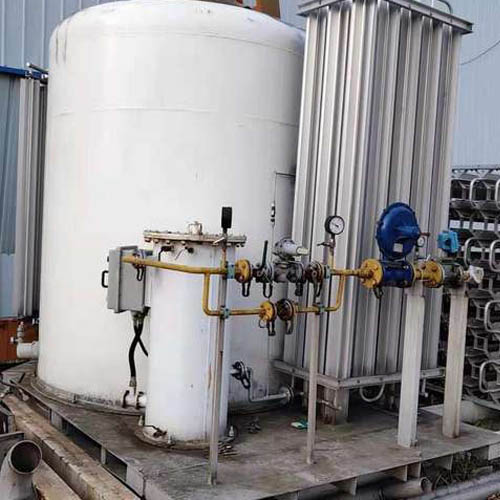
IV. Hidden Equipment Failures: Pressure Rise Inducing Factors Easily Missed During Inspections
In addition to the three common scenarios mentioned earlier, there are several concealed equipment failures that can cause abnormal pressure increase in the storage tank. The conventional inspection methods are difficult to detect them in time. The first type is the failure of the vacuum degree in the storage tank’s inner layer. For low-temperature storage tanks using vacuum powder insulation, the vacuum degree in the inner layer is the core indicator determining the insulation performance. When the vacuum system of the inner layer leaks, the vacuum degree gradually decreases, and the convective heat exchange of the gas inside the inner layer will rapidly intensify, resulting in an increase in the heat entering the tank by a factor of two or more. The normal self-pressure increase rate will directly increase several times. The most typical characteristic is that the pressure rise speed of the storage tank suddenly becomes 2-3 times faster than usual, and the outer shell of the tank begins to show large-scale condensation or even frost formation. The second type is the failure of the bypass seal of the safety valve. Many storage tanks have a maintenance bypass valve before and after the main safety valve. If this valve leaks internally, the high-pressure gas from the external environment will reverse through the leakage point into the gas phase side of the storage tank. This leakage point is very small, and conventional soap water leak detection is difficult to find it. The final manifestation is that the pressure of the storage tank rises slowly and then quickly rebounds after depressurization. The third type is the display deviation of the level gauges. Many operation and maintenance personnel only rely on the local level gauge readings to assess the status of the storage tanks. When the level gauge shows a high reading, the operators may mistakenly believe that there is still a large amount of liquid in the tank. In fact, the remaining liquid volume in the tank has already been very low, and the proportion of the gas phase space is too large. A small amount of vaporization will cause a very significant increase in pressure. This misjudgment-induced overpressure problem has occurred too many times in the industry.
The pressure management of cryogenic storage tanks is never a problem that can be solved simply by frequently releasing pressure. To find the core cause of the pressure increase and take targeted measures for insulation maintenance and optimization of operation procedures, it is possible to minimize the loss of cryogenic media while ensuring safety.