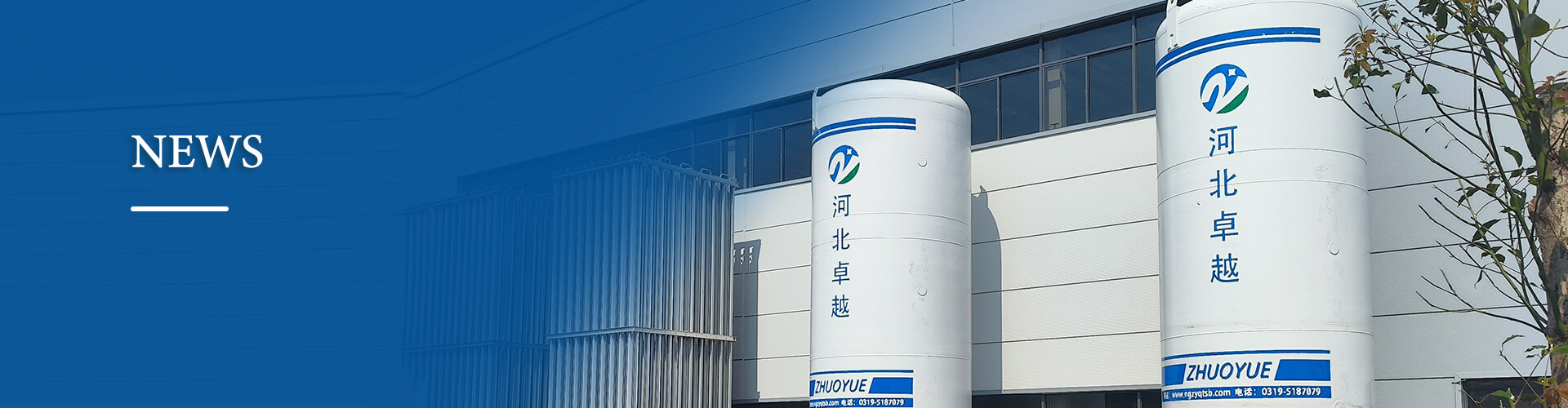
In the field of cryogenic gas equipment, Cryogenic Storage Tank is the core equipment for storing cryogenic media such as liquid nitrogen, liquid oxygen, liquid argon, and LNG. The rationality of the selection directly affects the operation cost, space utilization rate, and long-term safety of the project. Many foreign customers often fail to distinguish the applicable scenarios of vertical and horizontal cryogenic storage tanks during the procurement stage, and they place orders solely based on experience. Subsequently, they often encounter problems such as exceeding the land area limit, difficult maintenance, and unsatisfactory operation efficiency. This article, based on the actual implementation experience of industrial projects, decomposes the selection logic from the core differences and helps overseas customers quickly match the most suitable storage tank products for their own working conditions.
I. Differences in Core Structure and Spatial Adaptation
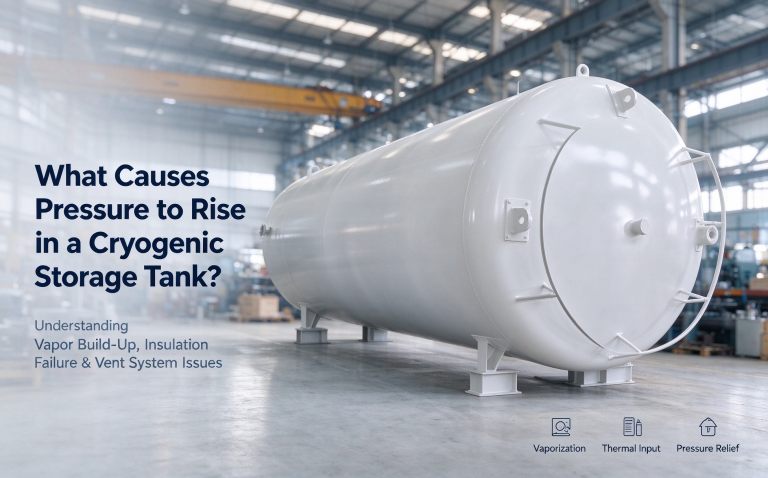
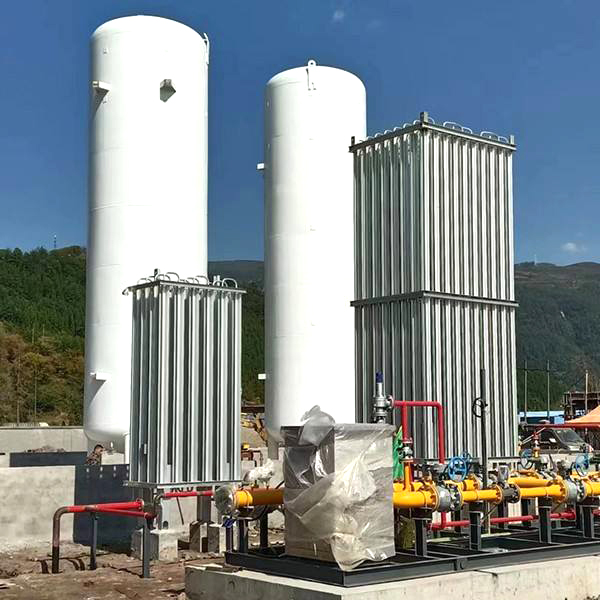
The vertical cryogenic storage tank adopts a double-layer vacuum insulation design with a vertical landing structure. The tank body extends vertically, and under the same volume, its floor area is much smaller than that of the horizontal type. The conventional volume of this type of tank ranges from 2 cubic meters to 200 cubic meters. It is particularly suitable for scenarios where the ground space in the factory is limited, such as small gas stations in urban centers, hospital oxygen supply systems, and centralized gas supply projects in scientific research parks. It can maximize the storage capacity within a limited land area. At the same time, the centralized sewage outlet design at the bottom of the vertical structure allows the trace impurities in the cryogenic medium to naturally settle at the center point. When cleaning the sediment, there is no need for extensive operations, and the basic operation for daily maintenance is more convenient.
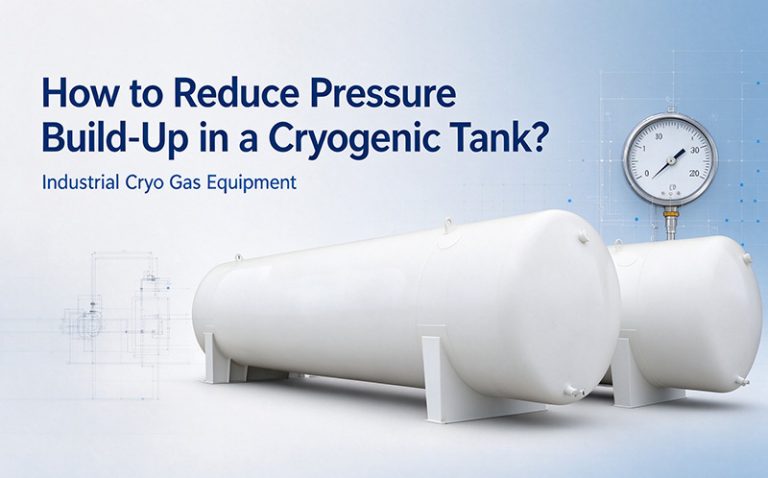
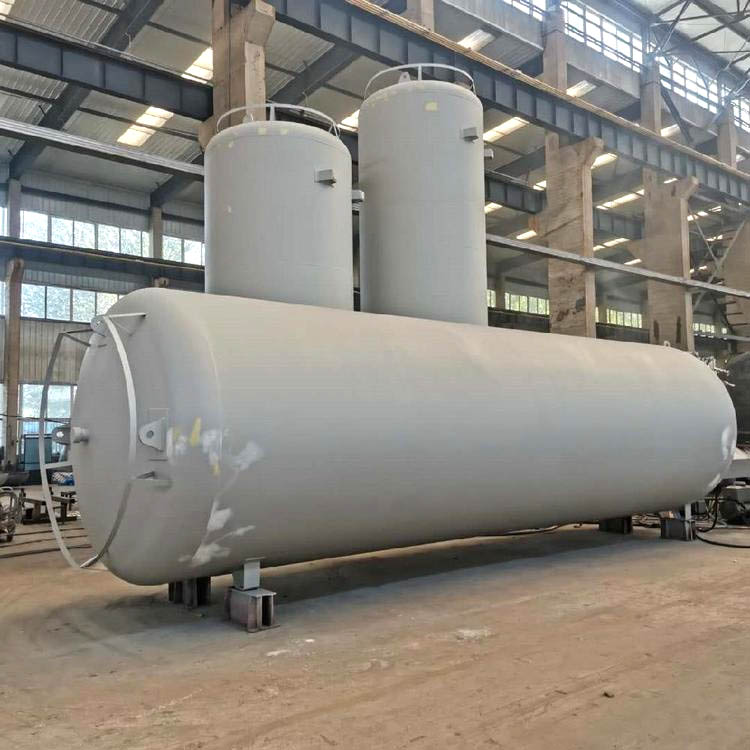
Horizontal cryogenic storage tanks adopt a horizontal saddle-seat support structure, with a lower overall center of gravity. They have extremely strong compatibility with the height restrictions of the site. If the project area has strict building height restrictions or requires the storage tank to be placed in low-rise factories, semi-underground spaces, or mobile skid-mounted systems, the advantages of horizontal storage tanks will be very prominent. The tank body is laid out horizontally, and the pressure distribution on the ground is more uniform. In areas with average geological bearing capacity, it can be stably installed without the need for particularly complex foundation reinforcement. Many overseas remote industrial projects will prefer this type of product.
II. Differences in Operation and Maintenance Costs
From a long-term operation perspective, the piping layout of vertical cryogenic storage tanks is more concentrated. All operation valves, liquid level gauges, and safety relief devices are located on the operation platform at the top of the tank. When staff conduct inspections, they do not need to move around the tank extensively. The efficiency of daily pressure calibration, liquid level verification, and seal component replacement is higher. Moreover, the vacuum layer of vertical storage tanks is heated more evenly, and the rate of insulation performance degradation during long-term use is slower. The natural evaporation rate of the cryogenic medium can be stably controlled at an extremely low level, significantly reducing the costs of long-term cooling replenishment and medium loss.
The internal space of the horizontal cryogenic storage tank extends along the axial direction. When conducting comprehensive internal flaw detection and inner wall cleaning operations, more extended working equipment is required. The overall maintenance manpower and time cost will be approximately 15% to 20% higher than that of vertical storage tanks. However, its advantage lies in the stronger overall structural anti-deformation ability. In scenarios where the equipment needs to be frequently moved, the low center of gravity design can avoid safety hazards caused by the tank’s shaking during transportation and movement. Many modular overseas gas supply projects place greater emphasis on this aspect.
III. Core Judgement Criteria for Selection Decision
First, check the hard constraints of the project site: measure the available area and the maximum allowable installation height. If the ground space is small and the height is sufficient, choose vertical storage tanks; if the ground space is sufficient but there are strict height restrictions, choose horizontal storage tanks directly.
Match storage media with usage scenarios: for large-capacity storage in urban centralized gas supply and large-scale industrial production, choose vertical cryogenic storage tanks; for skid-mounted integration, vehicle-mounted support, and temporary on-site gas supply scenarios, horizontal storage tanks are a more reliable choice.
Evaluate long-term operation capabilities: if the number of on-site maintenance personnel is small and the inspection conditions are limited, choose storage tanks with more centralized operation; if the project requires regular comprehensive inspections of the tank interior, the side-opening manholes of horizontal storage tanks can provide more spacious working space.
For foreign trade purchasing customers, there is no absolutely optimal type of storage tank; only the selection that best suits their specific working conditions. As a professional manufacturer of cryogenic gas equipment, Zhuoyue gas equipment can provide a full range of customized Cryogenic Storage Tank products. We support the customization of volume, wall thickness, and material. All products adopt a double-layer vacuum insulation process with stainless steel inner liner, which can stably maintain a low temperature storage environment of -196℃, and are suitable for industrial, medical, and research scenarios in different regions around the world.