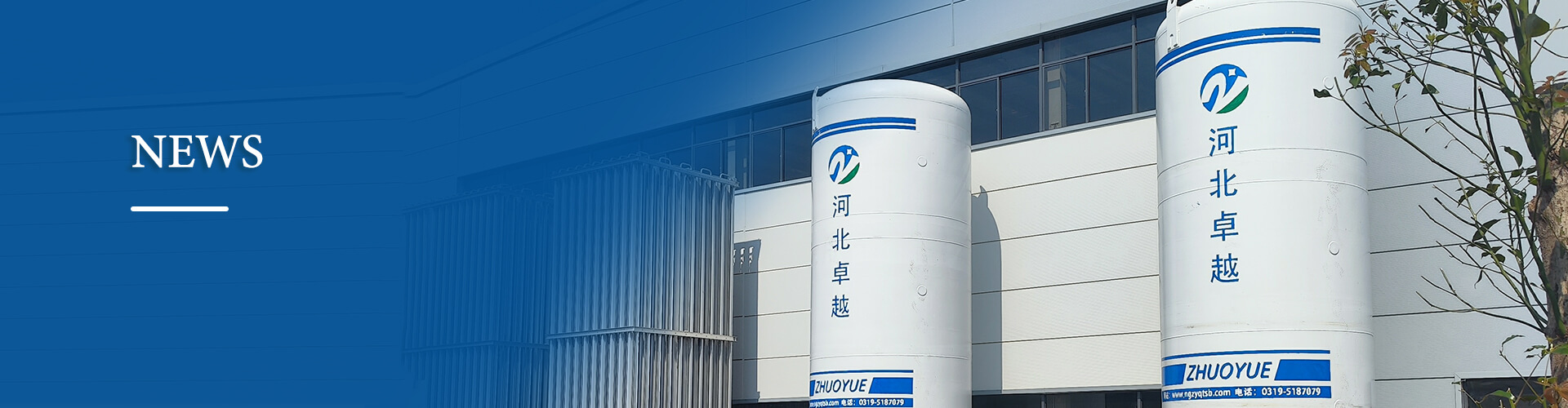
How to effectively reduce pressure accumulation inside cryogenic storage tanks
In the field of cryogenic gas equipment, overseas buyers often judge the reliability of a piece of equipment by its pressure control capability for cryogenic storage tanks. Liquid oxygen, liquid nitrogen, liquefied natural gas, or other cryogenic media need to be stored in the tanks for a long time. Over time, if pressure accumulates abnormally, the problem becomes quite serious. Frequent safety discharges will occur, and the loss of the medium will increase accordingly. What’s more troublesome is that the overpressure protection device may malfunction, thereby affecting the stable operation of the entire gas supply system.
Many customers in industrial manufacturing, medical gas supply, and food freezing industries, when purchasing cryogenic storage tanks, will focus on the pressure control design and daily operation and maintenance plans of the equipment. This is also one of the most frequently reported technical issues received during Zhuoyue gas equipment’s service to many industrial customers worldwide.
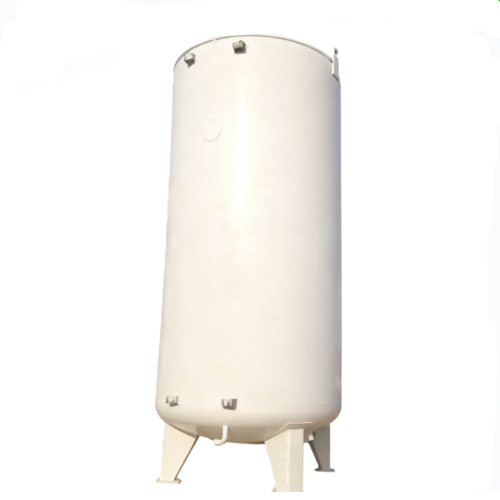
I. Reducing pressure accumulation risks from the source of equipment design
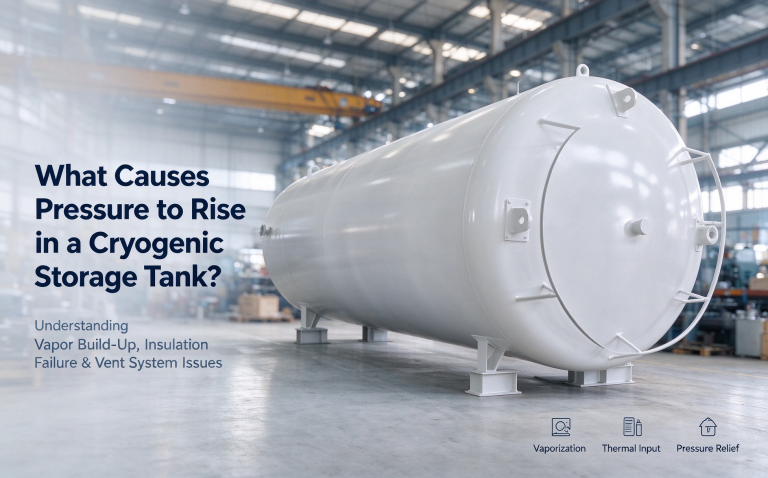
Most pressure abnormalities in cryogenic storage tanks occur during the production and manufacturing stage of the equipment. Many low-cost competing products cut corners on the insulation structure to reduce costs, directly causing heat from the external environment to continuously seep into the tank interior. This is the core cause that leads to rapid pressure increase.
By optimizing with a high-vacuum multi-layer insulation structure, our standard products will fill reflective and insulation composite materials in the inner layer of the casing. Before leaving the factory, a continuous 72-hour high-vacuum extraction process will be completed to block the conduction of environmental heat into the tank as much as possible.
We also configure a dual-path independent safety relief system. Unlike the conventional single safety valve design in the industry, our cryogenic storage tanks are equipped with both a working safety valve and a backup safety valve. The opening pressures of the two valves are set according to the design pressure of the tank, avoiding the waste of medium caused by frequent valve activation and providing dual safety guarantees in extreme conditions.
The tank piping system is specially designed with anti-thermal bridge features. All pipes passing through the tank’s inner layer are made of low thermal conductivity stainless steel, and the length of the insulation segments of the pipes is increased to reduce the heat transferred through the solid structure into the tank, thereby reducing the rate of natural evaporation of the medium at the structural level.
II. Key points for pressure control optimization during on-site installation and commissioning
Many customers report pressure abnormalities not as a defect in the equipment itself, but as a result of improper on-site installation procedures. Based on our overseas technical service experience in on-site commissioning, it is found that over 40% of pressure accumulation problems can be avoided in the installation stage.
The installation location of the tank must avoid areas directly exposed to sunlight for long periods and be placed in a well-ventilated shaded area. If space limitations prevent it from being placed indoors, it is recommended to install a simple shade canopy above the tank to avoid continuous temperature rise on the tank surface due to sunlight radiation.
After completing all pipeline connections, all external pipelines must be thoroughly insulated. Many customers tend to overlook the insulation treatment of valve and flange connection positions. Water vapor in the environment continuously forms frost at these positions, and heat will continuously enter the tank through the pipeline, directly accelerating the evaporation rate of the medium inside.
Before filling the tank with the first liquid, a thorough pre-cooling operation must be carried out. It is not allowed to quickly fill the tank with cryogenic medium all at once. It should be gradually filled in 3-4 stages to slowly lower the temperature inside the tank cavity, avoiding structural stress in the tank during rapid cooling and reducing the problem of sudden pressure increase caused by the instantaneous vaporization of a large amount of medium.
III. Practical methods for controlling pressure stability during daily operation
Standard daily operation procedures can control the daily pressure increase rate of the cryogenic storage tank within one-third of the industry standard, significantly reducing the operating costs of the equipment.
Establish a fixed pressure inspection ledger. During the three periods of each day – morning, noon and evening – it is best for the operators to record the real-time pressure and liquid level of the storage tanks. If the pressure rises much faster than the usual average value, the inner vacuum level must be checked immediately to see if it has decreased. Don’t wait until the pressure is close to the threshold for the safety valve to take action.
Reasonably arrange the gas usage frequency of the tank to avoid keeping the tank in a completely sealed idle state for a long time. Even if the gas demand is not high, it is possible to periodically release a small amount of gas in the gas phase space within the tank at a low flow rate to prevent the pressure in the gas phase space from continuously accumulating. This is more energy-efficient than directly opening the safety valve for discharge.
Regularly conduct calibration and maintenance of safety accessories. Safety valves need to be calibrated regularly – once every 12 months, and sent to a qualified institution for the calibration. The vacuum level of the vacuum layer cannot be ignored either – it must be checked once every 6 months. If you notice a significant drop in the vacuum level, immediately re-vacuumize it. Don’t wait until the insulation performance completely fails before repairing it.
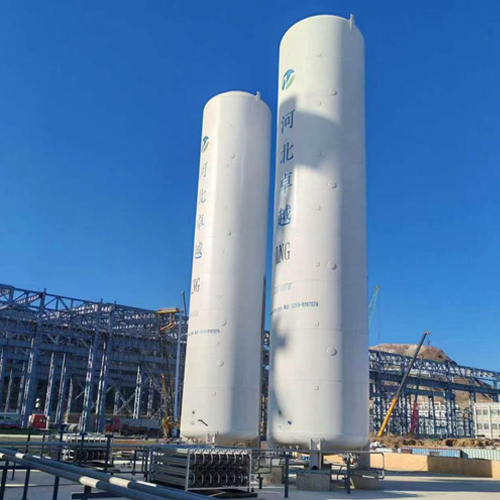
IV. Emergency Disposal Plan for Pressure under Special Working Conditions
In the hot summer with an environmental temperature exceeding 35 degrees Celsius, or in special working conditions where the tank needs to be stored unused for a long time, we have prepared targeted pressure control plans for our customers. A dedicated cooling spray system can be installed on the tank’s exterior. When the environmental temperature is too high, use cryogenic water to evenly spray the tank’s surface to remove the external radiated heat. For tanks that need to be idle for a long time, the gas phase space within the tank can be connected to the user’s gas supply end through a pipeline to allow the naturally evaporated gas to directly enter the supply pipeline, completely avoiding ineffective discharge.
Zhuoyue Gas Equipment, as a factory specializing in the manufacturing of cryogenic gas equipment, all of our cryogenic tank products undergo full-load pressure testing before leaving the factory to ensure that the daily natural evaporation rate is far below the international industry standards under extreme environmental temperatures. We will also provide each overseas customer with a complete operation and maintenance manual and an exclusive technical connection channel to help customers control pressure risks throughout the installation and long-term operation process, making the entire gas supply system operate more safely and efficiently.