

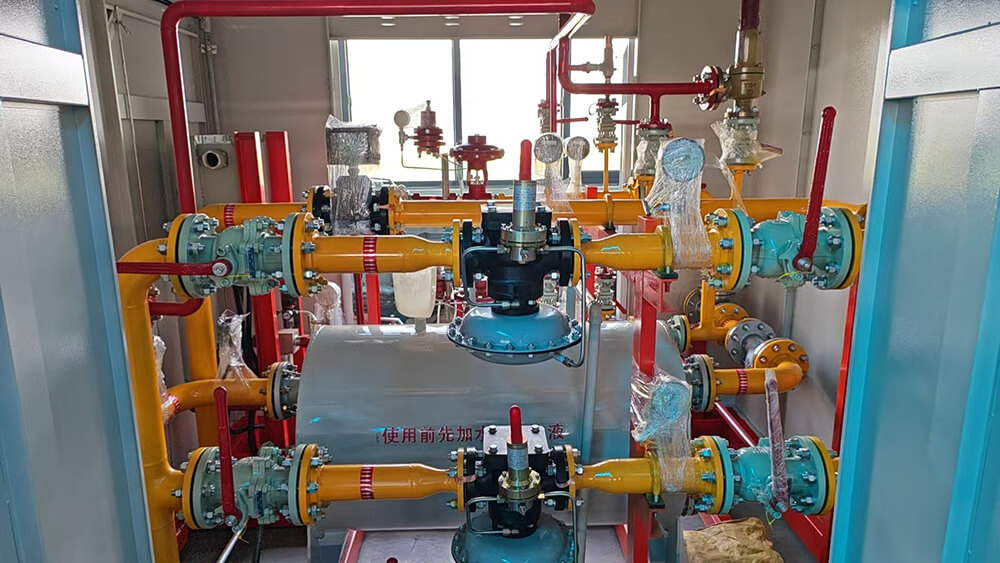
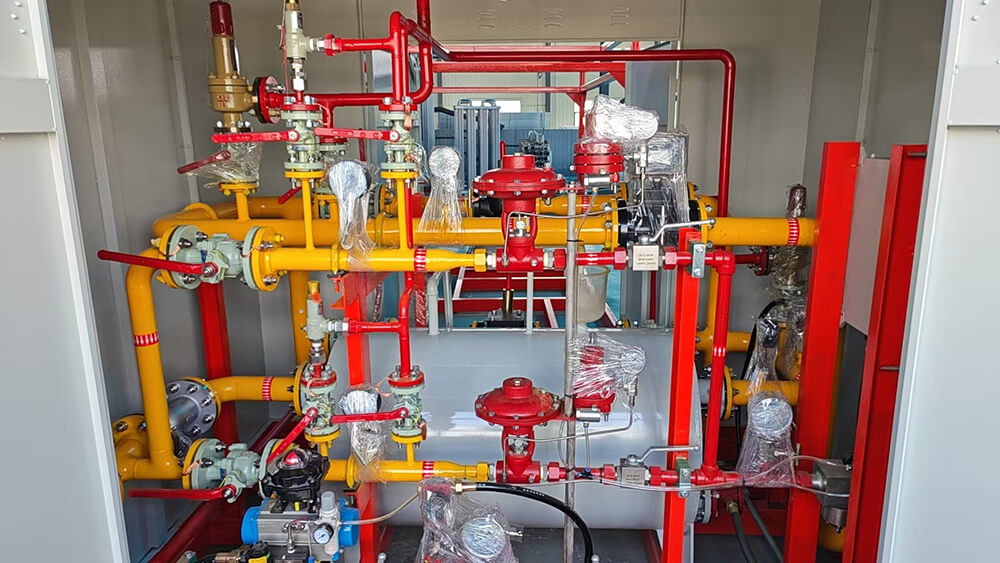
Selecting the appropriate compressed natural gas (CNG) pressure regulation skid (PRMS) – commonly referred to as a pressure regulation and metering skid (PRMS) – depends on your specific flow requirements, the required pressure reduction range downstream, and safety requirements. The correct equipment ensures a stable gas supply and prevents sudden pressure drops, thereby guaranteeing safety.
Focus your evaluation on these five core factors:
1.Flow Capacity
Evaluate peak data: Determine your peak usage volume, rather than the average value (usually expressed in standard cubic meters per hour or standard cubic feet).
Capacity selection: The selected unit capacity should ensure that the pressure does not drop while meeting the peak load requirements; conversely, it should also avoid cost waste due to an overly large capacity selection.
2.Pressure Ranges
Inlet pressure: The exact pressure at which compressed natural gas (CNG) enters the module must be specified (for example, typically between 200 and 250 bar or 3,000 psi).
Outlet pressure: The precise delivery pressure required by downstream equipment or boilers (e.g., 2 to bar). Your module must be equipped with a robust pressure-reducing stage (typically comprising a primary and secondary regulator) to safely bridge this pressure differential.
3.Safety and Emergency Features
As compressed natural gas (CNG) is an extremely high-pressure and highly flammable gas,
safety systems are built into the design.
Pressure relief valve (PRV): Automatically releases gas when pressure exceeds safe operating limits.
Emergency shut-off valve: Immediately shuts off the gas flow when downstream pressure suddenly rises or falls outside safe limits.
Ventilation and detection: Modular units equipped with ventilation systems, gas leak detection sensors and safety guards should be selected.
4.Metering and Control Integration
Depending on whether the skid is for custody transfer (selling/buying gas) or internal consumption, you will need a customized metering setup.
The selected high-precision flow meters (turbine, rotor or ultrasonic) and electronic volume correctors should be mounted on this base.
5.Footprint and Maintenance
Space Constraints: Pre-assembled modular skids are compact and require significantly less on-site civil work compared to traditionally built reducing stations.
Easy maintenance: The layout is designed to facilitate the maintenance of components such as valves, filters and regulators.
The above are the purchasing suggestions for CNG pressure regulating skids. If you have any other questions, you can also consult the engineers of Nan Gong Zhuoyue Gas Equipment. We specialize in providing solutions for low-temperature gases.