
For practitioners in the low-temperature gas industry, the daily safety management of CO₂ storage tanks is never a trivial matter that can be handled by simply conducting regular inspections. In many factories, restaurant chains, cold chain logistics, and industrial gas usage scenarios, there have been instances where neglecting detailed maintenance has led to abnormal increases in evaporation rates of the tanks, frequent activation of safety valves, and even triggering unnecessary shutdown risks. This article, based on the actual operations of frontline maintenance personnel, breaks down the core points for preventing CO₂ overpressure evaporation into actionable daily actions, helping you raise the operational stability of the tanks to a higher level.
Ⅰ. Understanding: What is “Overpressure Evaporation” of CO₂ and Why Is It More Dangerous Than Ordinary Leakage
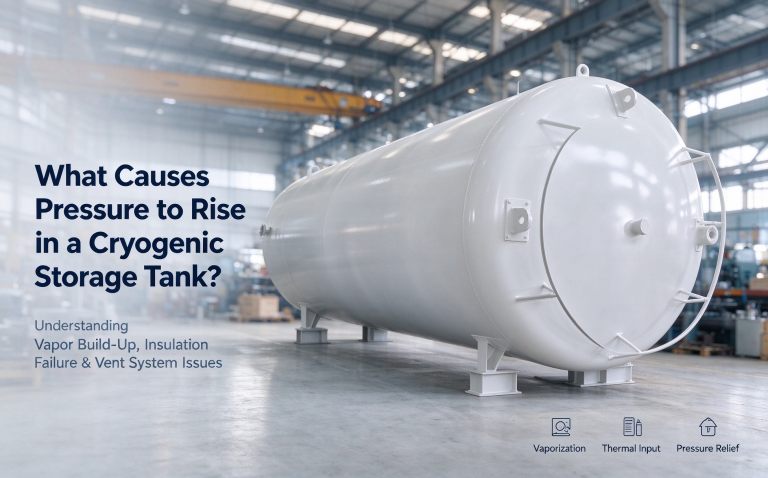
Many people confuse the natural evaporation of CO₂ with abnormal overpressure evaporation. Under normal circumstances, the daily evaporation rate of low-temperature insulated storage tanks is controlled within the design standards, which is a normal physical phenomenon for the storage of low-temperature media. However, when the insulation performance of the tank decreases, the pressure regulation logic is disrupted, or external heat sources continuously invade, the liquid CO₂ inside the tank will vaporize rapidly in a short period of time, and the internal pressure will quickly approach or exceed the opening threshold of the safety valve. This is what we call abnormal overpressure evaporation. The risks of this situation go far beyond just gas waste: frequent activation of safety valves will accelerate the wear of the sealing surfaces and make it more likely to have internal leakage problems in the future; excessive CO₂ released due to overpressure emission in poorly ventilated semi-enclosed spaces may cause a decrease in local oxygen content, posing a suffocation hazard for on-site inspection personnel; in severe cases, it may even trigger stress fatigue of the tank, shortening the overall service life of the equipment. For users of low-temperature gas equipment, safety regulations in different countries and regions have clear requirements for the evaporation rate of tanks. Doing this maintenance is also in line with local compliance standards.
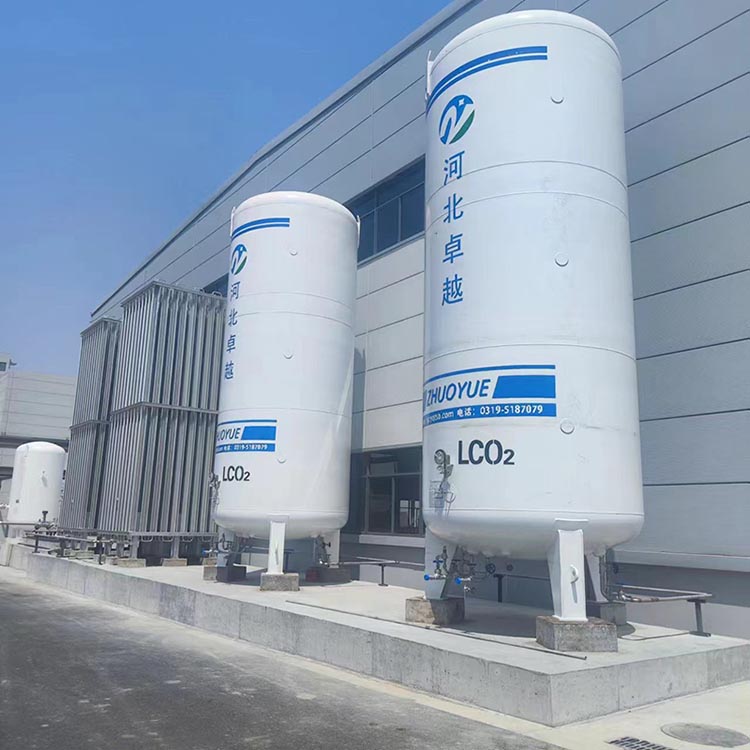
Ⅱ. The First Priority of Daily Inspection: Identifying Hidden Damage in the Insulation System
The majority of abnormal evaporation sources are hidden in the insulation layer that is most likely to be overlooked. Many users believe that the outer layer of the tank looks intact and thus assume that the insulation system is in good condition. This is a common mistake in maintenance operations.
The first thing to check is the change in vacuum degree of the tank’s vacuum chamber. For CO₂ storage tanks with powder insulation or high-vacuum multi-layer insulation, once the vacuum degree of the vacuum chamber drops below the critical value, external heat will quickly invade the tank, directly increasing the evaporation rate of the liquid CO₂. A practical judgment method in the frontline maintenance is: if the daily evaporation rate of the tank suddenly exceeds 30% higher than usual without a significant increase in ambient temperature, the vacuum degree of the vacuum chamber should be checked immediately, and do not wait until the tank surface is frosted or there is a large amount of dew to start the treatment.
The second thing to look out for is physical damage to the external insulation layer. Many tanks installed outdoors endure daily sun exposure, rain, dust accumulation, and may be scratched by nearby forklifts or lifting equipment. If the insulation material in a local area gets wet or damaged, it will form a “heat bridge”, allowing heat to continuously enter the tank from that area. During inspection, do not just look at the front of the tank; go around to the back and bottom to focus on checking if the sealing glue at the connection points of the supports and the positions where pipelines pass through the tank has cracked or fallen off. If any minor damage is found, repair it immediately to avoid small problems evolving into large-scale insulation failure.
Ⅲ. Pressure and Safety Accessories: Don’t Wait for Safety Valves to Jump Before Calibrating
The pressure regulation system of CO₂ storage tanks is the core defense line for controlling evaporation rates. Many triggers of overpressure evaporation accidents are due to the long-term non-calibration of accessories, resulting in malfunctioning actions.
The first is the regular calibration of pressure gauges and pressure transmitters. Many factories’ pressure gauges of storage tanks have not been calibrated for two years, and the displayed pressure deviates from the actual pressure inside the tank by more than 0.1 MPa. Maintenance personnel see that the pressure displayed on the gauge is normal, but in fact, the tank is already operating at the edge of overpressure. According to industry standards, these safety pressure gauges should undergo a third-party calibration at least once every 12 months. During routine on-site inspections, the values of the local pressure gauges and the remote transmitters can be compared. If the deviation exceeds 5%, calibration should be arranged immediately. Do not delay.
Then comes the maintenance logic for safety valves. Safety valves are not components that can be installed and then left unattended. The small amount of moisture and impurities in the CO₂ medium, which adhere to the sealing surface of the safety valve over time, can easily cause poor sealing and minor internal leakage. More importantly, the opening pressure of the safety valve must strictly match the design pressure of the storage tank. It is not advisable to privately increase the opening pressure to reduce emissions, as this will instead cause the internal pressure of the tank to exceed the safe stress range of the tank body, thereby introducing greater risks. We recommend that users conduct an online leak detection check on the safety valve every 6 months and complete an offline calibration and seal performance test every 12 months.
Finally, do not overlook the smoothness of the pressure relief pipeline. The discharge pipe outlets of many outdoor storage tanks are prone to being blocked by bird nests, fallen leaves, or dust covers. When overpressure occurs, the gas cannot be smoothly discharged, which instead causes abnormal surges in the tank pressure. During inspections, it is necessary to check the rain cover and the smoothness of the discharge pipe outlet to avoid blockages at critical moments.
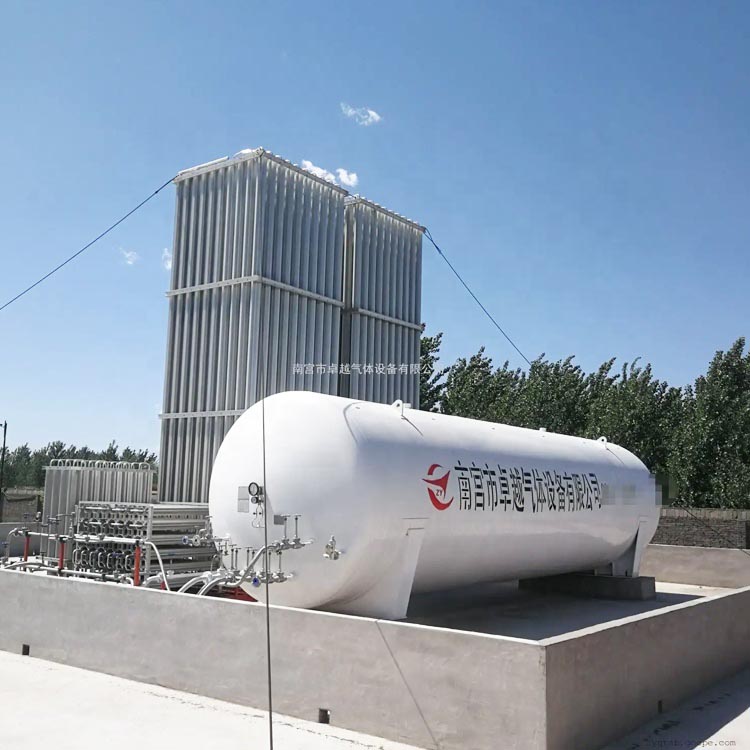
IV. Operational Details: 90% of abnormal evaporation comes from non-standard daily operations
Many users’ storage tanks have completely normal hardware conditions, but they frequently experience evaporation rate exceedances. Rooted in these issues are the small habits accumulated in daily operations.
The first is the control of the unloading operation. Many operators, in an attempt to save time, open the unloading booster valve too wide during unloading. The high-pressure gas from the tanker rushes into the storage tank rapidly, directly stirring the liquid CO₂ inside, causing violent flash evaporation within a short period of time, generating a large amount of vaporization. The correct operation method is to control the boosting speed of unloading, keeping the increase rate of tank pressure within no more than 0.05 MPa per hour. After unloading, promptly close the relevant valves to prevent the high-pressure gas from the tanker from reversing back into the storage tank.
The second is not to allow the storage tank to operate near the upper limit of the design pressure for an extended period. Many users believe that higher pressure means higher utilization rate of the storage tank. In fact, the temperature and pressure of liquid CO₂ are strictly correlated. Operating the tank at a high pressure for a long time means a higher medium temperature, and the overall thermal load balance becomes very fragile. If the environmental temperature suddenly rises, it is very likely to trigger a large amount of evaporation. During normal operation, keep the working pressure of the tank within 80% of the design pressure, which can significantly reduce the probability of abnormal evaporation.
The third is to ensure the isolation of external heat sources. Many sites stack a large amount of materials around the storage tank, and even install steam pipes and heating equipment close to the tank. The continuous external heat source radiation continuously inputs heat into the tank body. During daily management, ensure that there are no additional heat sources within 1.5 meters around the tank. During the summer high-temperature period, it is necessary to provide shading treatment for the tank’s shell to avoid a sudden increase in environmental heat load due to direct sunlight.
V. Establish a Traceable Maintenance Ledger: Transform Passive Repair into Active Prevention
The last maintenance point that is most easily overlooked is the establishment of a continuous operation data ledger. The operation data of many factories’ storage tanks is only stored in the minds of the operators. Once personnel rotate, the changes in evaporation rate and pressure fluctuations in the past will all be lost. It is recommended to record the operation pressure, environmental temperature, and liquid level height of the storage tank every day, and then calculate the actual evaporation rate for the day. Continuously track for more than 30 days, and you can clearly see the performance trend of the storage tank: if the evaporation rate is gradually increasing slowly, it is likely that the vacuum degree in the liner is slowly decaying, and you can arrange vacuum re-pumping in advance; If the evaporation rate suddenly spikes, it can be pinpointed to a specific discharge operation or a local insulation layer breach, which will significantly enhance the efficiency of troubleshooting. For users of low-temperature gas equipment, a complete set of operation and maintenance records is also an important part that complies with local OSHA or EU PED safety regulations, helping users easily pass local safety audits and avoiding unnecessary compliance penalties.
The safe operation and maintenance of CO₂ storage tanks have never involved any sophisticated high-tech. The core lies in doing every basic task thoroughly. From the investigation of minor insulation layer damages to the calibration of each pressure gauge, and to the daily recording of operation data, these seemingly trivial actions will eventually translate into longer service life of the storage tank, lower operating costs, and a safer on-site environment. As a supplier of low-temperature gas equipment, Zhuoyue Gas Equipment always recommends that users prioritize preventive maintenance and do not wait until there is overpressure discharge or equipment failure before taking remedial measures.