CNG Cylinder Set Practical Purchase Guide
In industrial gas usage, mobile supply stations, and fixed storage scenarios, CNG cylinder sets are the core equipment for ensuring the safe storage and stable transportation of high-pressure natural gas. Many purchasers often only focus on volume and price when selecting models, neglecting key details such as compliance qualifications, structural design, and scenario compatibility. This not only leaves potential safety hazards but also may lead to problems such as difficulty in approval, high maintenance costs, and poor adaptability in subsequent use. This article will, based on the industry usage habits of domestic industrial gas equipment, step by step break down the selection logic of CNG cylinder sets and help you choose products that not only comply with safety standards but also meet your own usage needs.
Step 1: Confirm Core Qualifications, Staying on the Compliance Bottom Line
CNG cylinder sets belong to high-pressure special equipment. This is the first step that cannot be skipped when making a purchase. Many users choose products without complete qualifications for the sake of cost savings, but this not only makes it impossible to complete the usage registration with the market supervision department, but also brings great safety risks in daily operations. A formally qualified CNG cylinder set must first have a complete special equipment manufacturing qualification. Each cylinder must have a corresponding factory certificate of conformity, and the entire equipment can be registered and filed with the local special equipment regulatory department. For export projects, corresponding regional compliance certifications such as PED and TPED can also be matched as needed to meet the regulatory requirements for cross-border transportation and use. Do not blindly trust the “low-price bare cylinder sets” offer. Cylinder sets without complete qualifications will not only be rejected by gas filling stations for filling, but also the purchasing party will bear all the main responsibilities in case of an accident.
Step 2: Match Your Own Usage Scenario, Select the Right Specifications and Parameters
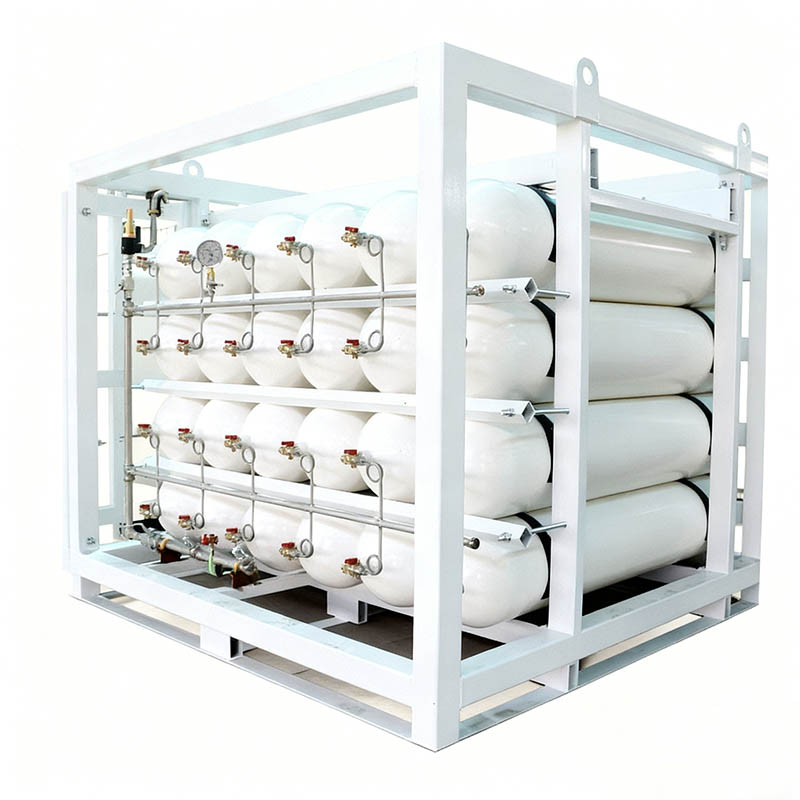
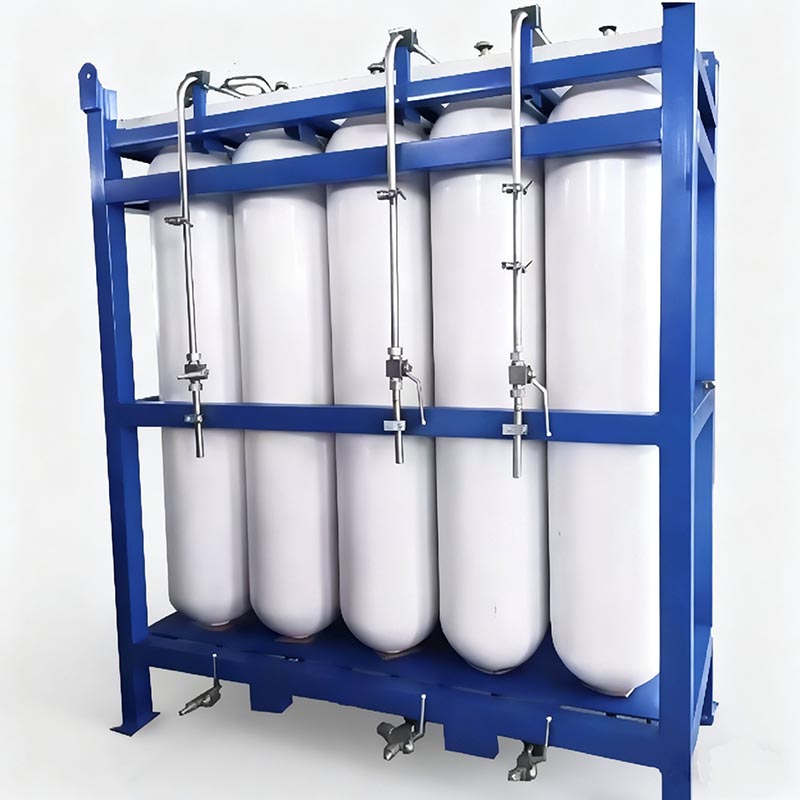
In different scenarios, the working pressure, flow rate requirements, and volume configuration of CNG cylinder sets vary greatly. Blindly choosing a universal model can easily lead to “small horses pulling big carts” or waste due to over-performance. If it is a small industrial workshop or temporary replenishment site with a small flow supply scenario, a standard type cylinder set with a working pressure of 15 MPa and a flow rate of 50 – 500 Nm³/h is completely sufficient. The equipment is small in size, occupies less space, and is very flexible to deploy. If it is a gas filling point for regular industrial gas usage or medium-sized logistics fleets, a medium-flow model with a working pressure of 20 MPa and a flow rate of 500 – 2000 Nm³/h will be more suitable, which can meet daily stable gas supply without causing unnecessary cost waste. For specialized CNG storage sites and high-pressure industrial gas usage scenarios, a high-pressure structural cylinder set with a working pressure of 25 MPa or above is needed to cope with higher storage and transportation demands. For large-flow scenarios such as formal gas filling stations, a 30 MPa or even 35 MPa large-capacity combined cylinder set can support a continuous gas supply of 6000 – 16000 Nm³/h, avoiding operational disruptions caused by frequent gas filling. In addition to pressure and flow, the volume configuration of the cylinders should also be selected based on your turnover requirements. The commonly available 205L specification cylinders, when combined in 8, 12, or 24 different combinations, can completely cover the gas storage needs of most scenarios.
Step 3: Focus on Safety Structural Design, Reduce Long-Term Use Risks
The core requirement for high-pressure natural gas storage is always safety. High-quality CNG cylinder sets will prioritize risk reduction in detail design, minimizing potential operational hazards.
First, choose products with multiple venting designs, such as multi-discharge or double-discharge. During equipment maintenance and emergency pressure relief, they can quickly and safely release the high-pressure gas in the cylinder, avoiding dangerous local pressure abnormalities.
Second, multi-ventilation port design is a necessary configuration for outdoor deployment, which can promptly disperse any trace of leaked natural gas and prevent gas accumulation inside the box. If the equipment needs to be placed outdoors for a long time, it is essential to choose a container-type gas cylinder group with rainproof design and double-sided doors. The lightweight design of the metal structure frame can not only ensure the overall strength but also reduce the difficulty of lifting and transportation.
In addition, the gas cylinder group with integrated gas concentration detection function can capture the trace leakage signals in the first instance and issue an early warning, eliminating potential safety hazards at the initial stage. Such detailed configurations can significantly enhance the security of long-term use.
Step 4: Combine customized capabilities to adapt to individual needs
In many special scenarios, standard gas cylinder groups cannot fully meet the on-site conditions. At this time, the customization capability of the manufacturer becomes an important plus factor for purchase. Reliable suppliers can adjust the overall shape parameters of the gas cylinder group according to your on-site space dimensions; they can also configure different specifications of filling interfaces as needed and seamlessly connect with your existing filling equipment without additional pipeline modification. Some powerful manufacturers can even provide surrounding accessories such as LNG hoses and transportation pipelines, making the adaptability of the entire gas supply system higher and reducing the subsequent connection troubles. During the purchase process, you can communicate with the supplier in advance about your deployment site dimensions, existing equipment interface standards, and special environmental usage requirements to confirm whether they can provide corresponding customized solutions to avoid finding that the equipment does not match the on-site conditions after purchasing.
Step 5: Consider after-sales and long-term maintenance costs
CNG gas cylinder groups are special equipment that need to be used for a long time. The subsequent maintenance, annual inspection support directly affects the service life of the equipment. Regular suppliers will provide clear installation instructions, daily maintenance training, and can assist users in completing the subsequent special equipment regular inspection process, without the need for users to search for qualified testing institutions everywhere. During the purchase process, you can confirm in advance whether the manufacturer can provide long-term spare parts supply and technical response services to avoid finding that the equipment is not compatible with the on-site conditions when there are minor faults in the equipment later. In summary, choosing the right CNG gas cylinder group is never a simple matter of only considering price and volume; from qualification compliance, scene adaptation, safety design, to customized capabilities and after-sales support, every aspect relates to the subsequent years’ usage experience and operational safety. By clarifying these dimensions of requirements, you can find a truly suitable high-value CNG gas cylinder group that suits you.