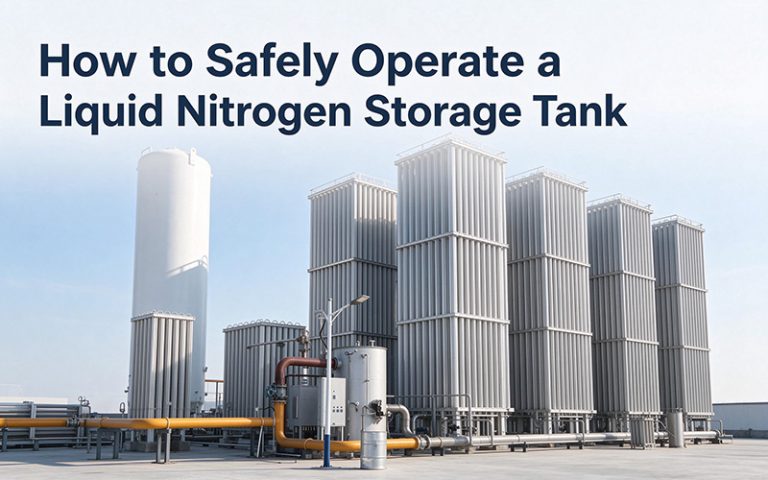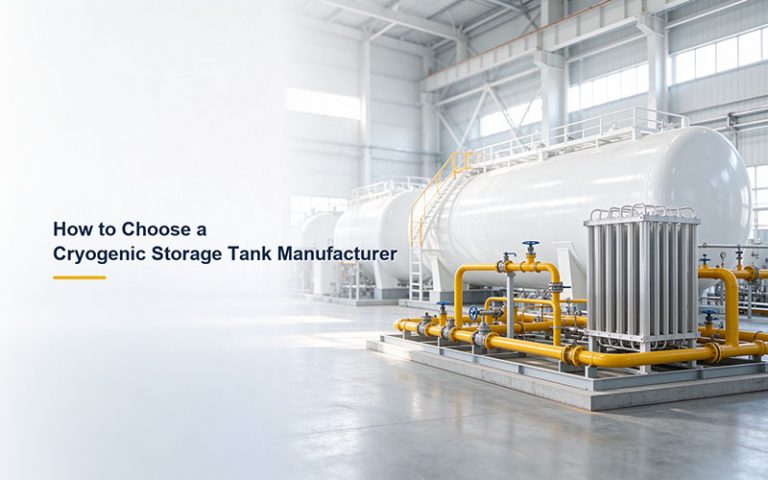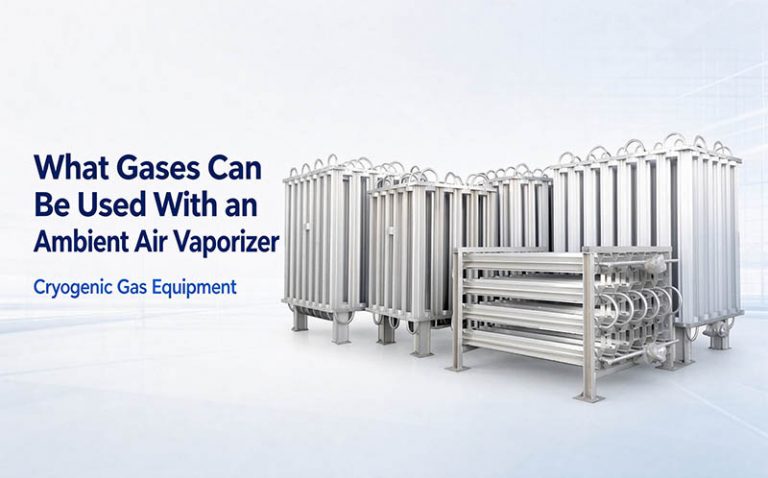


Every cryogenic tank loses product. Not through a leak — through the wall, quietly, all day. Warm air outside, cold liquid inside, and heat finds its way across that gap no matter how well you built the vessel. Liquid turns to vapor. Pressure climbs. At some point you vent, and the gas you paid for goes up the stack.
We make this equipment, so we’ve had the conversation a few thousand times. Buyers call asking how to reduce boil-off losses in cryogenic storage, usually after noticing their tank vents more often than the datasheet promised. Here’s what we tell them. Some of it is design work. Most of it isn’t.
Where Boil-Off Losses in Cryogenic Storage Actually Come From
Four ways in. Radiation across the gap between the two walls. Conduction through the neck, the supports, the pipe penetrations — all those little metal bridges nobody thinks about. Convection, if the vacuum starts to degrade. And the heat your own crew adds during filling, transfer, and transport.
Numbers help. Large LNG tanks take in roughly 5 to 15 watts per square meter, which works out near 0.1% boil-off a day. A small lab dewar, measured against how little it holds, can be ten times worse. That gap isn’t luck. It’s surface area doing its thing.
Two things get missed constantly. Thermal stratification — warmer liquid floats up, that top layer boils quicker than the bulk, pressure rises. And sloshing. A tanker that’s been bouncing down a highway arrives warmer than it left, because impact energy turned into heat. Nobody writes that into the spec.
The Boring Answer: Buy a Bigger Tank
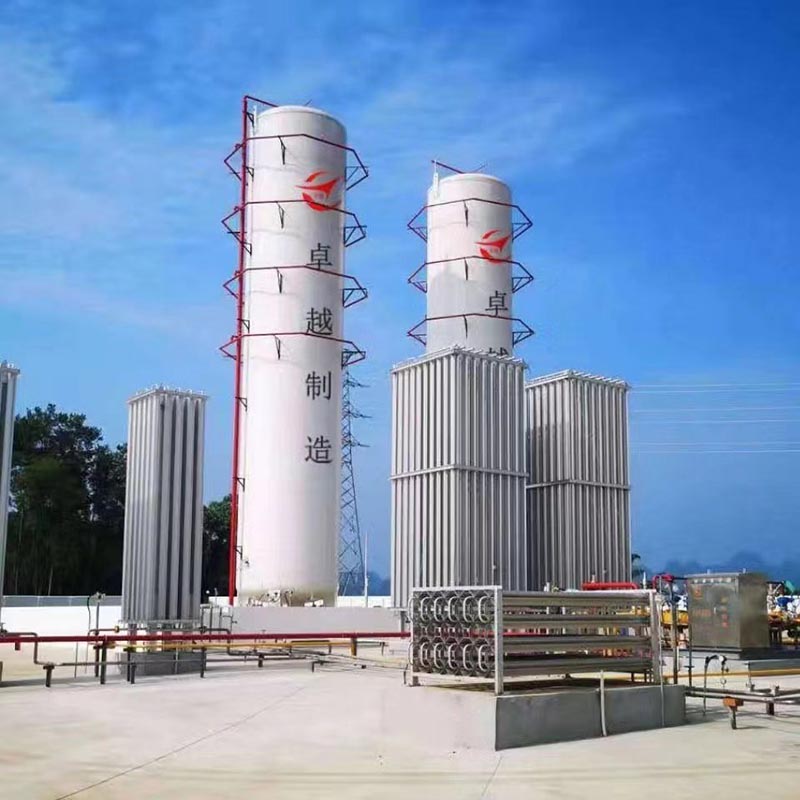
I know, I know. Nobody wants to hear this one. But boil-off tracks surface area while inventory tracks volume, so the bigger the vessel, the smaller the percentage you lose.
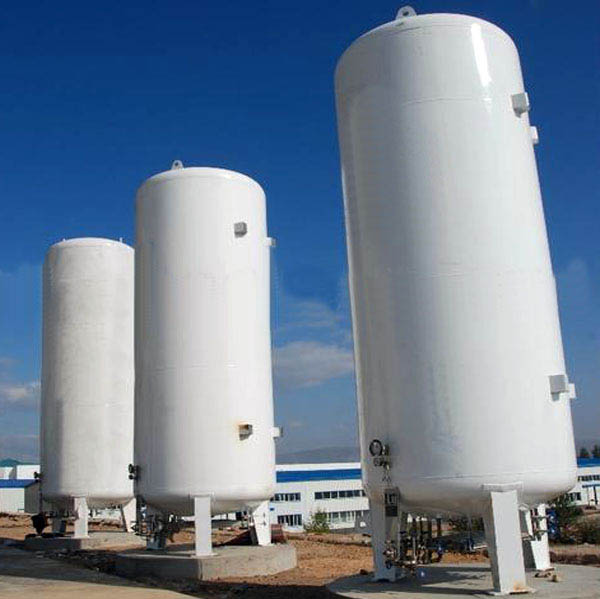
Double-wall vacuum spherical dewars: about 0.3 to 0.5% a day at 50 cubic meters. Around 0.2% at 1,000. Roughly 0.06% at 19,000. The physics isn’t subtle.
That said, don’t buy a tank twice the size you need just to brag about a low number. A lower percentage on a giant inventory can still be more lost kilograms than a higher percentage on a tank that actually fits. What matters is holding time, and what’s still in the vessel at month’s end. If you can merge two small tanks into one bigger one, though — do it. Free win.
Insulation, and the Part Most Spec Sheets Skip
Vacuum jacket kills most convection. Inside it, multilayer insulation — thin aluminized film with low-conductivity spacers like fiberglass mat or Dacron net — handles radiation. Big LNG and hydrogen tanks often use evacuated perlite or glass bubbles instead, trading a little performance for less weight and cost.
Then there’s the vapor-cooled shield. Here’s the part most guides skip. Cold boil-off gas gets routed through a coil in the jacket on its way out, so it soaks up incoming heat before being recovered or vented. Published studies have shown heat flux dropping above 50% in some liquid hydrogen setups. Less dramatic for LOX, LN2, and LNG, but real. You pay for extra piping and a bit of pressure drop. On expensive gas it usually earns that back.
One last thing on numbers. If a supplier quotes you a boil-off rate, ask what conditions it was measured at. Fill level, ambient temperature, and whether the tank had been through a few thermal cycles all move that figure. A rate taken on a fresh, half-full vessel in a cool plant won’t hold up on a full tank in a hot climate. Get the test conditions in writing, not just the headline percentage.
The Losses You Create Yourself
Honestly, operators sometimes cause more boil-off than the insulation does. A few habits worth getting right:
•Fill from the bottom where the design allows. Splashing into a warm tank flashes liquid straight to vapor. Pre-cool the line first.
•Watch the fill level. Too low means a big vapor space that pressurizes fast. Too high and there’s no ullage left when the liquid expands. Every tank has a sweet spot.
•Keep openings short. Valves shut. Warm air meeting cold gas is heat, full stop.
•Use vapor return on transfer lines, so displaced gas goes back to the source instead of out the vent.
•And ease up on the venting. A small pressure rise isn’t an emergency. Learn what your pressure-builder actually does before you start cracking relief valves.
Deal With the Vapor Instead of Just Venting It
Sometimes you accept that some gas will boil, and give it somewhere useful to go. LNG sites send BOG to a compressor and back into the fuel system, or run a re-liquefaction skid. Helium and hydrogen operations increasingly add active cryocoolers — reverse-Brayton or pulse-tube units that pull heat out and re-condense vapor. NASA’s integrated refrigeration and storage work has demonstrated rates under 0.05% a day with active cooling.
The trade-off is simple: power and capital versus product lost. For helium, where the gas is scarce and pricey, venting is hard to defend. For a small nitrogen tank, good passive insulation is plenty. Frankly, a lot of “zero boil-off” marketing only makes sense once you know what the escaping gas is worth.
Measure It, or You’re Just Guessing
Track boil-off as a rate. Level, pressure, temperature over time tell you far more than one gauge reading. From a known fill level and how fast pressure climbs, your engineer can estimate daily loss and catch a change early.
Three numbers worth logging: percent lost per day, holding time before venting, and jacket vacuum condition — checked at least once a year. Storing hydrogen? Add a real leak-detection plan. Those molecules are small enough to find seals that would hold anything else.
Three Mistakes We Keep Seeing
Comparing bids on purchase price alone, then ignoring gas price × boil-off rate × years of service. False economy. It’s also the most common one.
Accepting a quoted rate without asking at what fill level and ambient temperature it was measured. Ask. Without conditions, the number means nothing.
Assuming day-one performance still holds in year five. It doesn’t.
A Short Checklist
1.Right-size the tank; more volume, less surface area where you can.
2.Specify vacuum jacket + MLI; add a vapor-cooled shield for high-value gas.
3.Confirm the vacuum level and how it gets monitored.
4.Bottom fill, vapor return, sensible fill levels.
5.Add BOG recovery or active cooling if the gas price justifies it.
6.Log the rate monthly. Re-check the vacuum yearly.
FAQ
What’s an acceptable boil-off rate?
Depends on the gas and the size. Big LNG tanks often run 0.05–0.1% a day; small liquid hydrogen vessels can be several percent. Judge it against your required holding time, not a universal number.
Does a bigger tank always boil off less?
By percentage, usually — surface-to-volume ratio drops. In absolute kilograms, not necessarily. It depends on total inventory.
Can you eliminate boil-off entirely?
Passive insulation can’t remove every watt. Active refrigeration gets close — “zero boil-off” — but it costs money and power.
Want Us to Look at Your Numbers?
If you are striving to reduce the evaporation loss during low-temperature storage, please let us know the type of gas used, the volume, and the required preservation duration. Zhuoyue gas equipment will analyze the insulation plan for you and provide evaporation rate data including the test conditions. Please feel free to request a quotation or communicate with the engineer.