For overseas customers of foreign trade enterprises dealing with cryogenic gas equipment, the storage duration of liquid nitrogen directly affects the operational costs and safety of various scenarios such as laboratory research, industrial freezing, food cold chain, and medical sample preservation. Many overseas purchasers often ask the most common question when purchasing liquid nitrogen storage tanks and cryogenic storage equipment, which is “How long can liquid nitrogen be stored?”. However, there is no unified standard answer to this question, as it varies significantly based on factors such as the type of storage container, the operating environment, and operating procedures. This article will, based on the actual application scenarios of the cryogenic gas equipment industry, thoroughly analyze the influencing factors of liquid nitrogen storage duration, the actual storage periods of different containers, and practical methods for extending storage time, to help your customers reduce liquid nitrogen loss and lower operational costs in their daily use.
Ⅰ. Three Core Factors Affecting the Duration of Liquid Nitrogen Storage
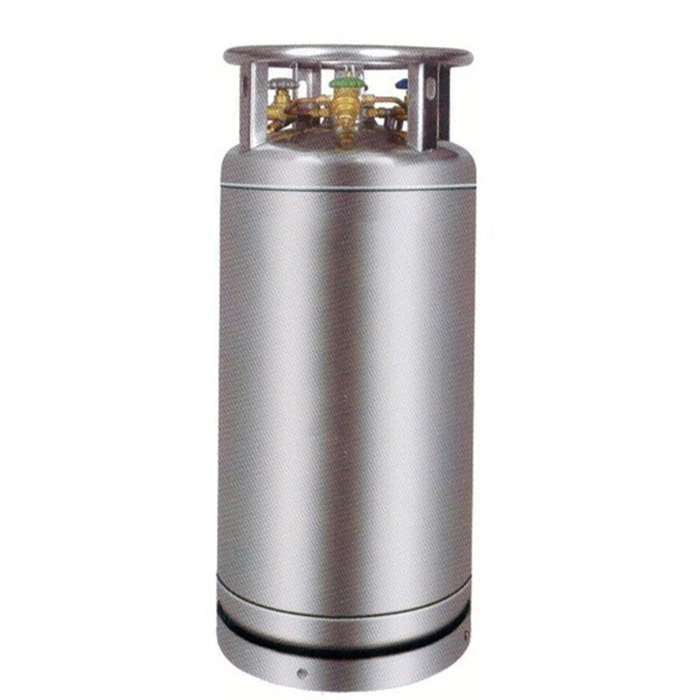
1.The Type and Performance of Storage Containers This is the most crucial factor affecting the storage duration of liquid nitrogen. Ordinary open-top insulated bottles can only keep the liquid nitrogen in a non-volatile state for a few hours, while professional cryogenic liquid nitrogen storage tanks employ multi-layer insulation technology. The high vacuum layer between the inner liner and the outer shell, combined with insulation materials, can significantly reduce the intrusion of external heat, extending the static storage duration of the liquid nitrogen to several days or even months. Different models of liquid nitrogen storage tanks have parameters for evaporation rate directly indicating the daily natural loss ratio, which is a core indicator that customers need to pay close attention to when purchasing equipment.
2.The Frequency of Daily Use Many customers overlook the impact of operation on the storage duration: frequently opening the tank to take samples, leaving the tank cover open for a long time, and directly placing room-temperature items into the liquid nitrogen tank will allow a large amount of external heat to enter the tank interior, accelerating the vaporization and loss of liquid nitrogen. For a 10-liter liquid nitrogen tank, the natural consumption can be maintained for over 30 days in a sealed state. However, if the tank is opened multiple times a day to take materials, the actual usage duration may be shortened to within 10 days.
3.The Temperature and Ventilation Conditions of the Placement Environment If the liquid nitrogen storage tank is placed in a high-temperature environment exposed to direct sunlight or close to heat sources, external heat will be acceleratedly conducted into the inner liner through the tank shell, significantly increasing the evaporation rate of the liquid nitrogen. While placing it in a cool and ventilated environment with a stable temperature of 15-25℃ indoors can effectively reduce unnecessary heat intrusion and extend the actual storage period of the liquid nitrogen.
Ⅱ. Reference for the Normal Storage Duration of Different Types of Liquid Nitrogen Containers
Based on the actual application data of the cryogenic gas equipment industry, we can provide clear reference standards for overseas customers:
●Small portable liquid nitrogen storage tanks (less than 10 liters): When stored statically, the liquid nitrogen can maintain an effective storage period of 15 to 30 days; in scenarios where the tank is frequently opened for use, the storage duration is usually 7 to 15 days. These devices are mainly used for transporting small samples and conducting outdoor cryogenic experiments.
●Medium-sized liquid nitrogen storage tanks (10 – 50 liters): The static storage period can reach 30 to 90 days. In the daily usage scenarios of regular laboratories and small biological sample libraries, the actual liquid nitrogen replacement cycle for most customers can be maintained at 20 to 60 days. This is currently the most widely used equipment type in the industrial and scientific research fields.
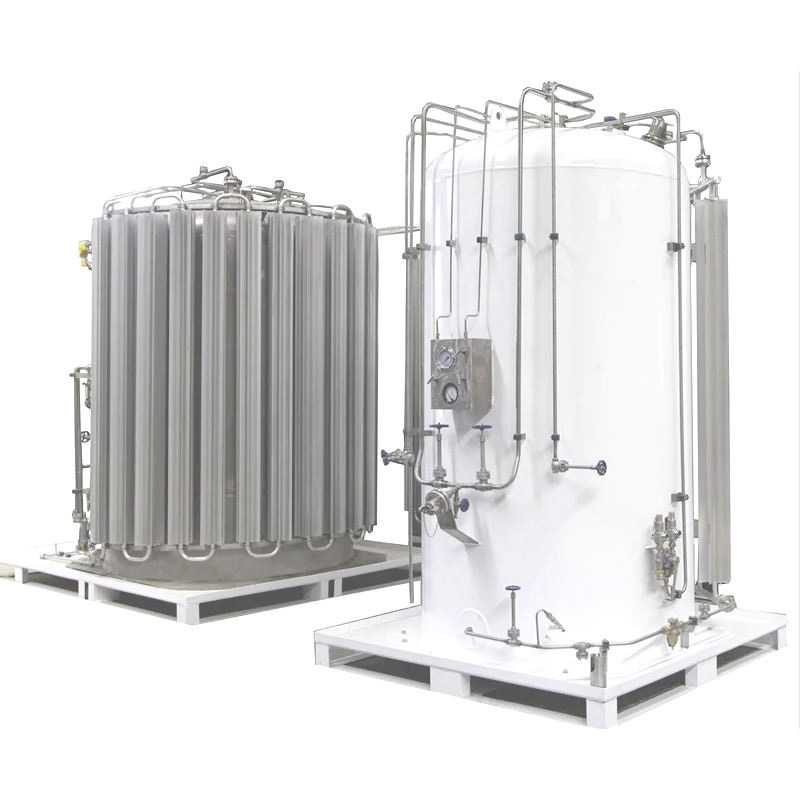
●Large industrial liquid nitrogen storage tanks (over 500 liters): These fixed installation cryogenic equipment adopt more advanced vacuum insulation structures. The static liquid nitrogen storage duration can reach 6 to 12 months. In stable industrial environments, combined with professional daily maintenance, the actual nitrogen replenishment cycle for many customers can be maintained at 3 to 6 months, significantly reducing the transportation and labor costs in large-scale nitrogen usage scenarios.
It is particularly important to remind the customers that the above durations are all reference values for the new equipment under standard working conditions. If the liquid nitrogen storage tank has been in use for more than 5 years, the vacuum layer will naturally deteriorate and the insulation performance will decline, resulting in a shorter storage duration for the liquid nitrogen. This will lead to a faster evaporation loss compared to the new equipment.
Ⅲ. 4 Practical Tips for Extending the Storage Time of Liquid Nitrogen
1.When using it daily, try to minimize the number of times the lid is opened. The action of taking and placing the samples should be quick and precise to avoid keeping the lid open for a long time, which would allow external heat to enter the tank.
2.Regularly check the vacuum performance of the liquid nitrogen storage tank. If you find frost on the tank surface or a sudden increase in the evaporation rate of liquid nitrogen, contact the equipment manufacturer immediately for vacuum pumping maintenance to restore the insulation performance of the equipment.
3.Do not directly place large-volume items at room temperature into the liquid nitrogen tank. Pre-cool the items in advance to avoid bringing in excessive heat and causing a large amount of liquid nitrogen to vaporize and be lost.
4.Place the liquid nitrogen storage tank in a cool and ventilated area away from direct sunlight and heating equipment to avoid drastic temperature fluctuations in the environment and maintain the stability of the surrounding temperature of the tank.
For overseas buyers of cryogenic gas equipment, choosing a liquid nitrogen storage tank with stable insulation performance and low evaporation rate is the key to controlling the long-term usage cost of liquid nitrogen. Many customers initially only focus on the purchase price of the equipment, but overlook the additional expenses brought about by the frequent replenishment of liquid nitrogen during its long-term use. An excellent cryogenic storage tank can save customers a significant amount of liquid nitrogen procurement and transportation costs over a 3-5 year usage period. This is the core intention of Zhuoyue gas equipment in providing global customers with cost-effective cryogenic solutions.