
As an industry service provider specializing in low-temperature gas equipment, we have encountered numerous actual needs from foreign trade customers: many industrial, medical, and research field buyers, before purchasing vaporizers, low-temperature storage tanks, and other equipment, all hope to systematically understand the complete production and storage logic of liquid nitrogen, in order to match their own equipment selection plans. This article will, from the perspective of industry practice, break down the entire process of liquid nitrogen from production to stable storage, all the content is based on actual project experience and does not contain redundant theoretical stacking.
I. The mainstream industrial production methods of liquid nitrogen
Currently, the mainstream production methods of liquid nitrogen worldwide are divided into two categories. Different processes are suitable for different production scenarios and are also the core reference basis when we customize equipment solutions for customers.
The first type is the traditional low-temperature distillation process, which is the preferred route for large-scale production of liquid nitrogen. The raw material air is first compressed and purified, removing moisture, carbon dioxide, and impurity hydrocarbons, and then enters the cooling unit for liquefaction. The difference in boiling points between nitrogen and oxygen is utilized to complete component separation in the distillation tower, and finally high-purity liquid nitrogen is produced. The advantage of this process is that a single set of equipment has a large output, suitable for large air separation plants with a daily output of several tons or more. The purity of the produced liquid nitrogen can be stably maintained at over 99.999%, fully meeting the needs of industrial bulk gas usage.
The second type is the small-scale nitrogen production process combining pressure swing adsorption and refrigeration. It is more suitable for small-scale on-site nitrogen production scenarios. This system uses carbon molecular sieves as adsorbents, and the compressed air after purification completes oxygen-nitrogen separation under pressure. The high-purity nitrogen obtained is then cooled by a Stirling refrigeration system and directly liquefied to produce liquid nitrogen. Many of our overseas small customers, such as small biological sample libraries and local gas distribution stations, prefer this type of equipment. It has a small footprint, can produce liquid nitrogen upon startup, does not require external large-scale transportation pipelines, and the hourly liquid nitrogen production is generally above 5L, with nitrogen purity maintained at a level of 99.995%, fully covering daily usage needs.
Regardless of which process is adopted, the liquid nitrogen produced must undergo strict quality testing and meet the latest industry standards before entering the subsequent storage and transportation stages.
II. Core environmental requirements for liquid nitrogen storage
Many customers have reported faults in low-temperature equipment, and fundamentally, these are not quality issues of the equipment itself, but rather that the storage environment has not met the specified requirements. When delivering equipment to overseas customers, we will simultaneously provide a complete environmental layout guide. The core requirements focus on three dimensions.
The first is the selection of an independent space location. Liquid nitrogen tanks and low-temperature storage tanks must be placed in a dedicated ventilation room. The distance between the tank body and the radiator and heating equipment should be at least 2 meters, and the entire area should avoid direct sunlight. The ground should be flat and meet the load standards. It is recommended to use a hardening ground that is slip-resistant and wear-resistant. When multiple equipment are placed side by side, sufficient gaps should be left between the tanks to reserve channels for daily inspection and later maintenance.
The second is temperature and humidity control. The environmental temperature in the storage area should preferably be maintained at 5℃ to 25℃, and the relative humidity should not exceed 70%. We usually recommend that customers install temperature and humidity monitoring devices on-site. Once the values are abnormal, an early warning will be triggered immediately to avoid excessive condensation on the tank surface during the winter heating period, which could corrode the equipment shell and sealing components.
The third is ventilation safety configuration. The storage area must be equipped with explosion-proof axial flow fans to ensure that the air change rate per hour is not less than 6 times. The exhaust vents should extend directly to the outside. At the same time, an oxygen concentration alarm device should be linked. Once the oxygen content in the space drops below 19.5%, the strong exhaust fan will be activated immediately to prevent nitrogen accumulation and the risk of oxygen deficiency at the source.
III. Selection of compliant storage equipment and supporting systems
The long-term stable storage of liquid nitrogen is entirely dependent on compliant low-temperature equipment, which is also our core service area as a supplier of low-temperature gas equipment. The equipment selection standards for different usage scenarios vary greatly. We will provide customized solutions based on the average daily usage volume, storage period, and usage scenarios of the customers.
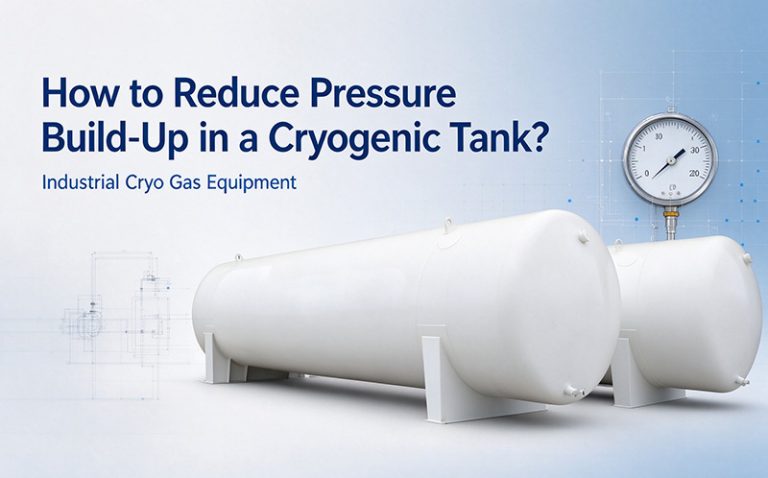
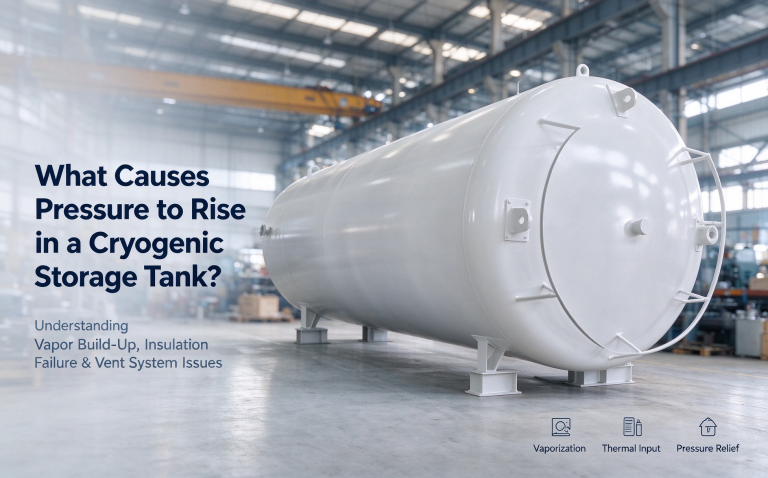
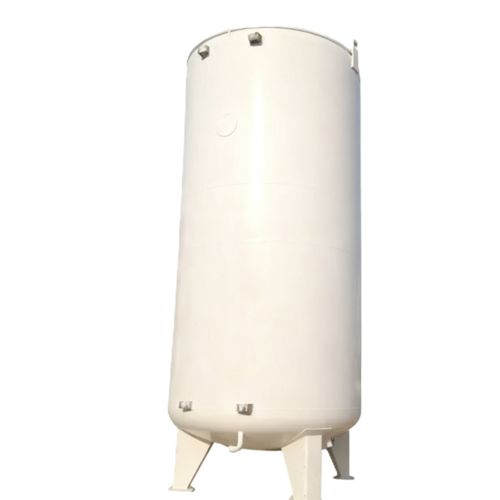
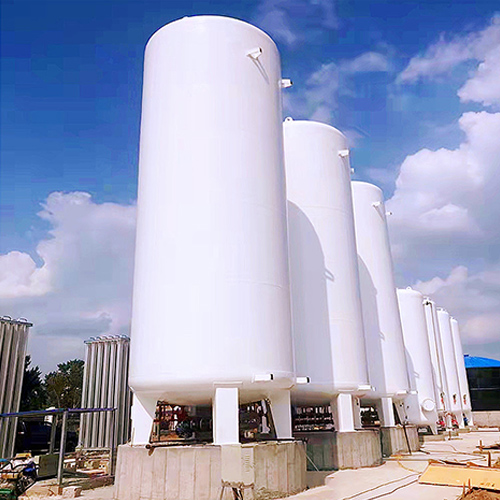
The commonly used atmospheric pressure liquid nitrogen storage containers include Dewar bottles for small capacities, and medium-sized and large-capacity atmospheric storage tanks for 50L and above. According to the current industry standards, the leakage rate of vacuum jackets must be controlled within 5×10⁻⁹ Pa·m³/s to ensure that the vacuum degree does not rapidly decrease during long-term use and to reduce the natural evaporation loss of liquid nitrogen. All storage tanks must be equipped with liquid level sensors, pressure transmitters, and low-temperature temperature probes to form a three-dimensional monitoring network. The data will be uploaded to the cloud management platform in real time without the need for frequent manual opening of the covers for inspection.
The accompanying transportation system cannot be ignored either. The liquid nitrogen transportation hoses must adopt multi-layer stainless steel corrugated structures, covered with anti-freezing polyurethane insulation layers, and the working temperature must cover the range of -196°C to +80°C. The burst pressure must be no less than 4 times the nominal pressure. All connection flanges must use low-temperature-specific austenitic stainless steel materials, and ordinary carbon steel or conventional 304 stainless steel must not be used to prevent brittle fracture in the low-temperature environment.
We have come into contact with many overseas customers. To reduce costs, some customers choose old containers that do not meet the standards. Subsequently, not only does the evaporation rate of liquid nitrogen remain high, but there are also multiple potential leakage hazards in the seals. This not only increases additional operation and maintenance costs but also undermines the core reason we have always emphasized on compliant equipment selection.
IV. Key Points of Daily Operation and Safe Operating Procedures
The long-term stability of liquid nitrogen storage depends on three parts: equipment and seven parts: daily operation. We will provide all customers who purchase equipment with complete operation training. The core practical points are all summarized from a large number of project experiences.
Firstly, personnel and authority management. A three-level authority system is set up, including administrators, certified operators, and visitors. Unauthorized personnel cannot touch the storage equipment at will. At the same time, an electronic operation ledger is established. Every filling operation, liquid level reading, and safety valve calibration time must be recorded completely to achieve full traceability throughout the process.
Secondly, filling operation norms. Special filling hoses must be used, and the flow rate should be controlled within 10L/min to avoid violent boiling of liquid nitrogen and splashing. The tank should be pre-cooled to -80°C before slowly injecting liquid nitrogen. The liquid level height must be strictly controlled according to the tank scale line. It is absolutely not allowed to overfill. Operators must wear a complete set of compliant low-temperature protective equipment, including anti-fog face shields, low-temperature resistant composite cold-resistant gloves, cotton-free anti-static coveralls, and anti-slip low-temperature boots. Cotton gloves must not be used. Cotton fibers will absorb a large amount of liquid nitrogen through capillary action, which will accelerate the risk of frostbite.
Finally, periodic maintenance. Every year, a comprehensive and in-depth inspection of the tank must be conducted. Frost on the neck pipe must be cleaned, the aging state of the sealing ring must be tested, and expired bursting discs must be replaced in time. The overall gas tightness must be verified using an helium mass spectrometry leak detector. The safety valve must be inspected by a professional institution every 6 months, and the nitrogen concentration monitoring instrument must be calibrated regularly to ensure accurate and reliable alarm values. At least one emergency drill must be organized every quarter to enable on-site staff to master the rapid disposal methods for liquid nitrogen splashing and the emergency evacuation procedures in the case of oxygen deficiency.
As a service provider specializing in low-temperature gas equipment, Zhuoyue Gas Equipment not only offers a full range of compliant equipment such as low-temperature liquid vaporizers, LNG gasification and pressure regulation skids, and low-temperature storage tanks, but also provides a complete chain of services including scheme design, equipment delivery, and operation training for overseas customers. This helps users from different industries build safe and efficient liquid nitrogen production and storage systems.