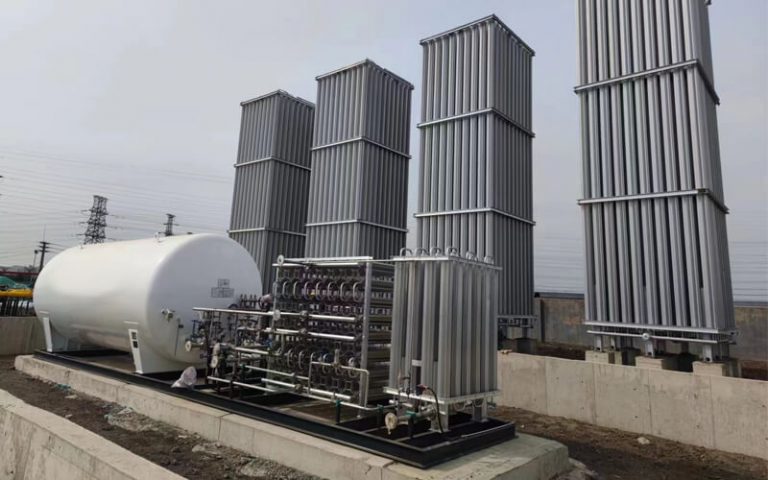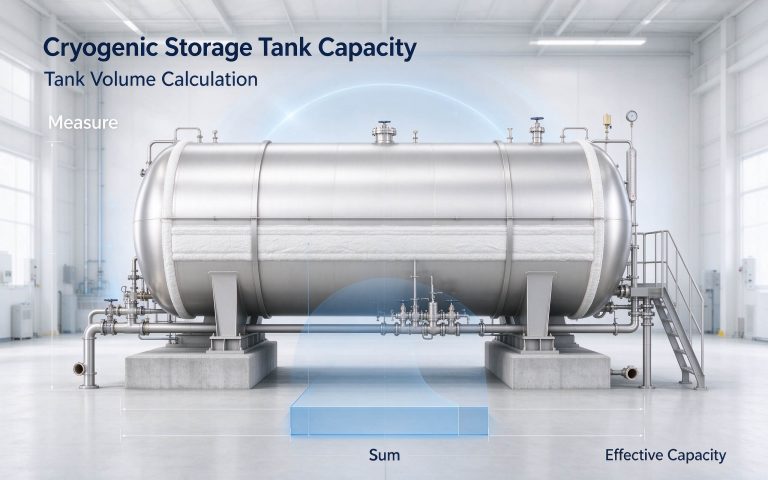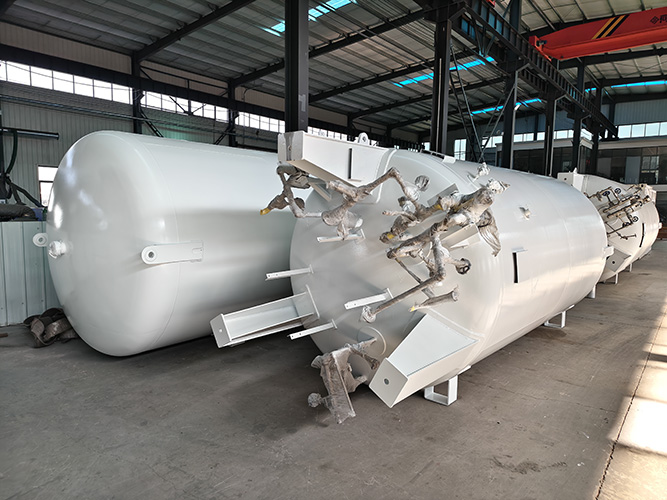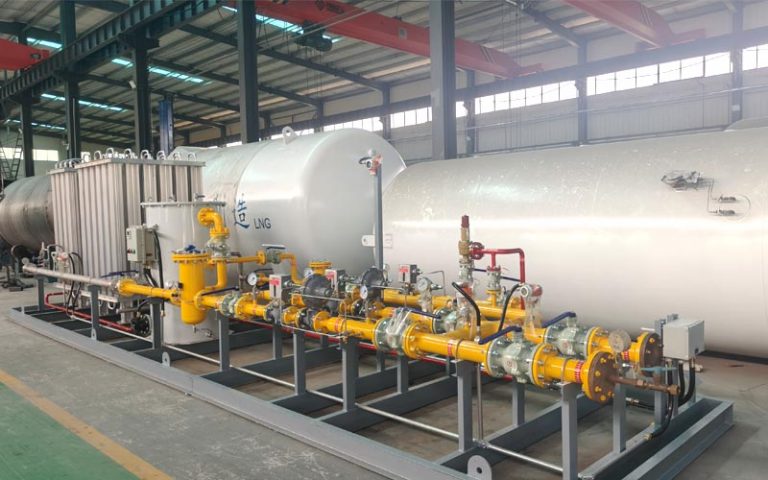
In the fields of global industrial gases, medical oxygen supply, and new energy storage and transportation, vacuum insulated cryogenic storage tanks have long become the core special equipment for storing ultra-low temperature media such as liquid oxygen, liquid nitrogen, liquid argon, and LNG. Many overseas purchasers often only focus on the tank’s volume, quotation, and delivery cycle when selecting models, but overlook its most crucial performance logic – the operation principle of the vacuum insulation system. This is the fundamental reason why the same type of cryogenic storage tanks exhibit significant differences in evaporation loss, service life, and operation and maintenance costs during actual use.
Many users mistakenly consider cryogenic storage tanks and ordinary pressure vessels to be the same. In fact, its design logic is similar to that of a daily-used vacuum insulated cup, but in terms of industrial-level pressure-bearing, low-temperature resistance, and long-term cold preservation performance, there are extremely strict industry standards. A qualified vacuum insulated cryogenic storage tank can stably store -196℃ ultra-low temperature liquids without external cooling for several months, with a daily evaporation rate controlled within 0.3%. Poor-quality products may fail to maintain cold preservation and release large amounts of the medium within just a few months, causing unnecessary losses and safety hazards for enterprises.
Double-layer tank body: The core basic structure of the cryogenic storage tank
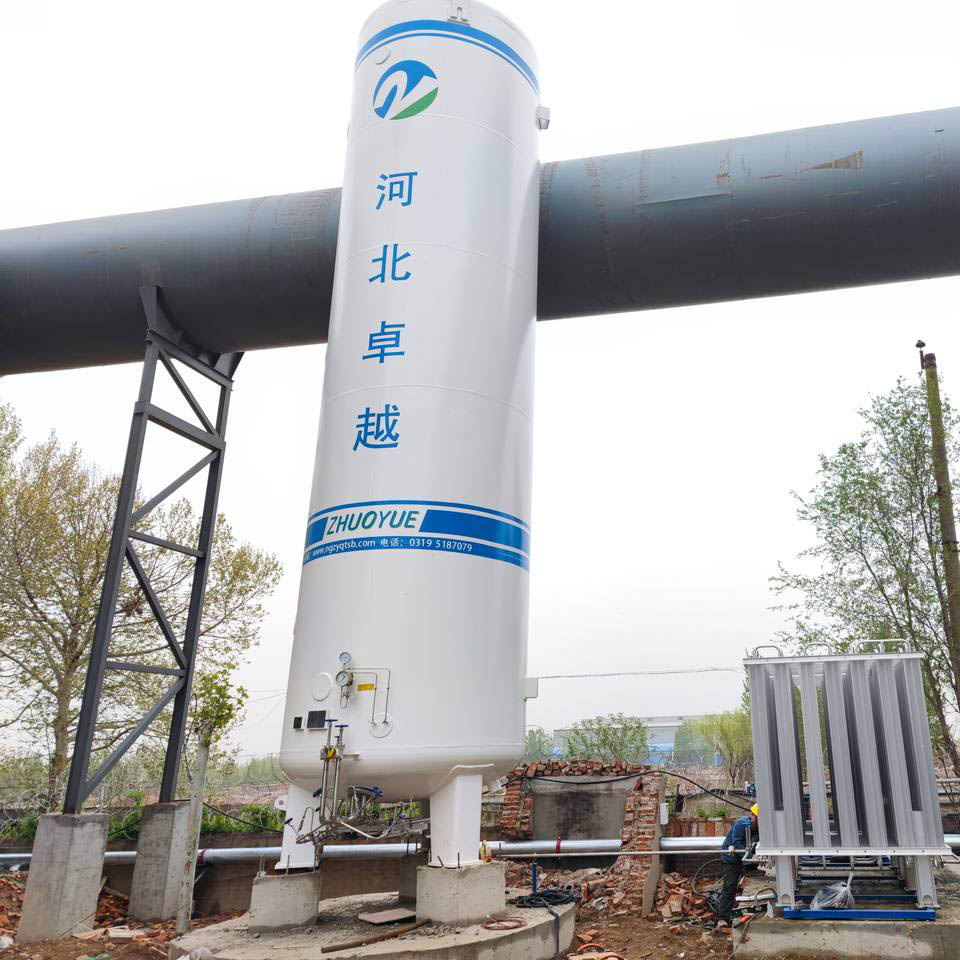
The overall structure of the vacuum insulated cryogenic storage tank is divided into two completely independent cavities, the inner cylinder and the outer cylinder. This is the basic framework for achieving ultra-low temperature storage.
The inner cylinder is the part that directly comes into contact with the ultra-low temperature medium. It is all made of austenitic corrosion-resistant stainless steel, which can maintain stable toughness at -196℃ in the extreme low-temperature environment and will not undergo brittle cracking. At the same time, it can avoid reactions with liquid oxygen and other media, ensuring the purity of the stored medium. Depending on different volumes and pressure-bearing requirements, the welding process of the inner cylinder will undergo strict flaw detection, and all weld seams must pass helium leak testing to ensure no minor leakage risks of the medium.
The outer cylinder is the pressure-bearing protective shell of the entire tank, generally made of carbon steel in line with industry standards. In some special anti-corrosion scenarios, stainless steel sheets will also be used. Its core function is to provide rigid protection for the inner cylinder and form a completely sealed interlayer space between the inner and outer cylinders, creating conditions for subsequent vacuum treatment. The design of the outer cylinder will fully consider local wind load, snow load, and seismic intensity requirements. Even when placed outdoors for many years, the tank structure can remain stable.
Vacuum insulation layer: The core barrier to block heat invasion
The interlayer between the inner and outer cylinders is the core area for achieving the cold preservation performance of the entire cryogenic storage tank. Its working logic is to simultaneously cut off the three paths of heat transfer: heat conduction, air convection, and heat radiation.
After filling with high-purity silica sand insulation material, manufacturers will use professional high-vacuum extraction equipment to conduct continuous vacuum treatment of the entire interlayer for several hours, reducing the internal pressure of the interlayer to below 10⁻³Pa in a high-vacuum state. In this environment, there are almost no residual air molecules inside the interlayer, eliminating heat transfer caused by air convection at its root, and significantly reducing the heat conduction efficiency between solid materials.
High-quality cryogenic storage tanks will also install multiple layers of reflective aluminum foil and low-emissivity coatings inside the interlayer, combined with specially configured adsorbents, to capture the trace gases slowly released during the long-term operation of the equipment, allowing the high-vacuum state of the interlayer to be maintained for more than ten years. Many problems with low-priced and inferior storage tanks occur in this stage: insufficient vacuum extraction time, sparse and uneven filling of silica sand, and lack of long-term adsorption protection. Within just a few months of use, the vacuum degree rapidly decays, and external heat invades the tank, causing a sharp increase in medium evaporation, and even large-scale frosting on the tank surface and frequent overpressure relief failures.
Safety and monitoring system: Ensuring long-term stable operation
A qualified industrial-grade vacuum insulated cryogenic storage tank not only features a core insulation structure but also is equipped with a complete set of safety and operation monitoring systems, fully complying with the mainstream pressure vessel safety standards worldwide.
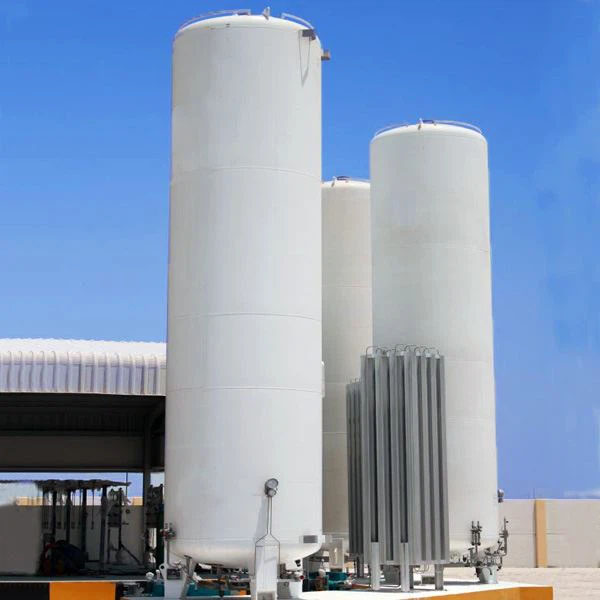
The top of the storage tank is equipped with a dual safety pressure relief device. When the internal pressure of the tank exceeds the set threshold due to factors such as an increase in ambient temperature, the safety valve will automatically open to slowly release pressure, preventing abnormal increase in the internal pressure and avoiding dangerous instantaneous ejection. The liquid level gauge and high-precision pressure gauge installed on the tank allow maintenance personnel to intuitively grasp the medium quantity and operating pressure inside the tank. Some upgraded models also come with a remote intelligent monitoring module, enabling users to view the real-time operation data of the storage tank from their offices, significantly reducing the cost of manual inspections.
For different application scenarios, the interfaces and supporting accessories of the storage tank will be optimized specifically: The model for medical liquid oxygen supply will be equipped with dedicated pipelines without grease to avoid safety hazards caused by contact between grease and high-purity liquid oxygen; The model for LNG refueling stations will add anti-shaking design to reduce the impact of the medium during transportation and use on the inner wall of the tank, further extending the service life of the equipment.
Practical application value for different industries
The technical characteristics of vacuum insulated cryogenic storage tanks make them indispensable storage equipment for many industries. In industrial gas centralized supply stations, large-capacity cryogenic storage tanks can centrally store liquid oxygen and liquid nitrogen, and continuously supply gaseous industrial gases through the accompanying vaporizers. Compared with traditional high-pressure steel cylinder groups, it can significantly reduce the occupied space and long-term gas usage costs; In the medical industry, centralized liquid oxygen storage tanks can provide a stable oxygen supply source for the entire hospital, avoiding the cumbersome operation of frequently replacing steel cylinders; In the new energy field, it is also the core storage equipment for LNG peak shaving stations and hydrogen refueling stations, ensuring the stable supply of clean energy.
For overseas purchasers, choosing vacuum insulated cryogenic storage tanks that meet international certification standards such as ASME and CE, the core value is not only obtaining a device that complies with the standards, but also the extremely low medium evaporation loss during long-term use, stable and reliable operation performance, and a service life of up to 20 years. From a full life cycle perspective, it can actually help enterprises save a large amount of operation and medium loss costs.
For many users, when they first come into contact with cryogenic storage tanks, they may find the structural principle complex and difficult to understand. However, in essence, it relies on mature vacuum insulation technology to completely isolate the ultra-low-temperature medium from the external normal-temperature environment, using a stable structure and strict production processes to provide safe, efficient, and low-cost cryogenic liquid storage solutions for various industries.
If there are any technical questions or customization requirements, you can directly contact Zhuoyue Gas Equipment through the website, email, or online customer service. Our professional engineering team will provide you with an adapted exclusive solution.