
In-depth Explanation of Low-Temperature Storage Tanks: Definition, Type Selection and Comprehensive Application Guide in All Scenarios
In fields such as industrial gases, medical biology, new energy, aerospace, etc., a stable performance cryogenic storage tank is the core equipment that ensures the long-term safe storage of ultra-low temperature liquefied media. As an experienced professional manufacturer in the field of low-temperature gas equipment, Zhuoyue Gas Equipment, with its rich experience in on-site project implementation, will comprehensively explain the relevant knowledge of cryogenic storage tanks to you in an easy-to-understand manner. This will help you avoid incorrect selection and choose highly reliable equipment that suits your specific working conditions.
I. Definition of the Foundation of Cryogenic Storage Tanks
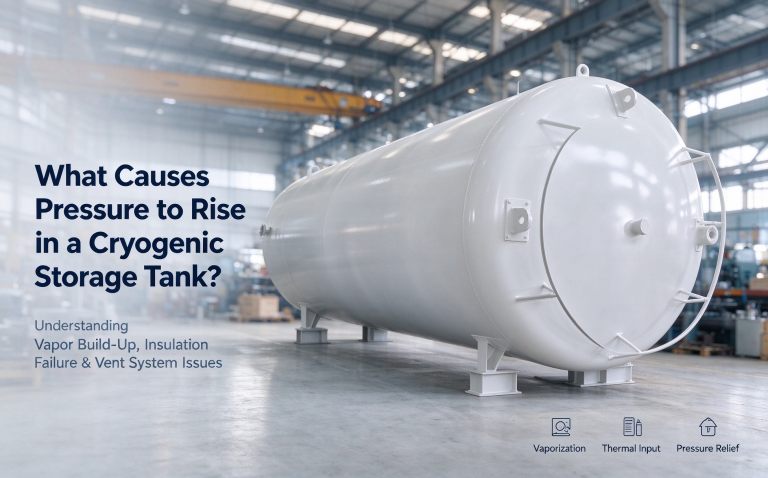
Cryogenic storage tanks are special pressure vessels specifically designed for storing ultra-low temperature liquefied gases below -150℃. They adopt the classic “inner tank within an outer tank” double-layer nested structure. Through multi-layer insulation and vacuum sealing technologies, they effectively prevent external heat from penetrating, allowing liquid oxygen, liquid nitrogen, liquid argon, LNG, and other liquefied media to remain in a liquid state for a long time, significantly reducing daily evaporation losses. They are the key infrastructure for achieving high-density storage of low-temperature media and stable long-term supply.
II. Core Characteristics of Low-Temperature Storage Tanks
Compared with ordinary storage tanks at normal temperature and pressure, qualified industrial-grade cryogenic storage tanks have three core advantages:
Firstly, they have extremely strong cold resistance. The inner lining is entirely made of special cryogenic stainless steel materials, which can maintain sufficient toughness even in an environment close to -200℃, and there will be no risk of cold cracking;
Secondly, their insulation efficiency is extremely high. The inner layer is filled with expanded perlite or multiple layers of insulation materials, combined with high vacuum sealing treatment. The daily evaporation rate can be controlled within 0.2%, significantly reducing the waste of the medium;
Thirdly, they have sufficient safety redundancy. Standard features include multiple levels of safety valves, overpressure interlock devices, and real-time liquid level monitoring systems. They operate automatically throughout the process, and there is almost no need for frequent manual supervision on a daily basis.
III. Comprehensive Explanation of All Types of Mainstream Low-Temperature Storage Tanks
The commonly used cryogenic storage tanks in domestic industrial settings are classified into seven major categories based on their structural forms, insulation techniques, and application scenarios, covering almost 99% of industry demands:
1.Vacuum powder insulated cryogenic storage tank
This is currently the most widely used type of fixed storage tank in the industrial market. The inner and outer tanks are filled with specially treated cryogenic expanded perlite, and then evacuated to a high vacuum state. The insulation performance is stable and reliable, with a low daily evaporation rate, and the service life generally reaches over 20 years. It covers the full capacity range from 5m³ to 1000m³, with working pressures ranging from 0.8MPa to 2.5MPa. It is the preferred equipment for industrial gas stations, LNG refueling stations, and centralized gas supply parks, and is also the core product line with the highest production and delivery volume of outstanding gas equipment.
2.High vacuum multi-layer insulated cryogenic storage tank
The inner layer of the high vacuum multi-layer insulation cryogenic storage tank is formed by alternately winding aluminum foil and insulation paper to create a multi-layer reflective insulation structure. Combined with an ultra-high vacuum environment, the overall heat leakage is more than 40% lower than that of the vacuum powder type. It is lighter in weight and has better insulation performance. It is specially designed for special media with extremely low boiling points and high volatility, such as liquid hydrogen and liquid helium. It is mainly used in aerospace launch bases, cutting-edge research laboratories, and storage of special gases for semiconductors, where high precision in temperature control is required.
3.Vertical cryogenic storage tank
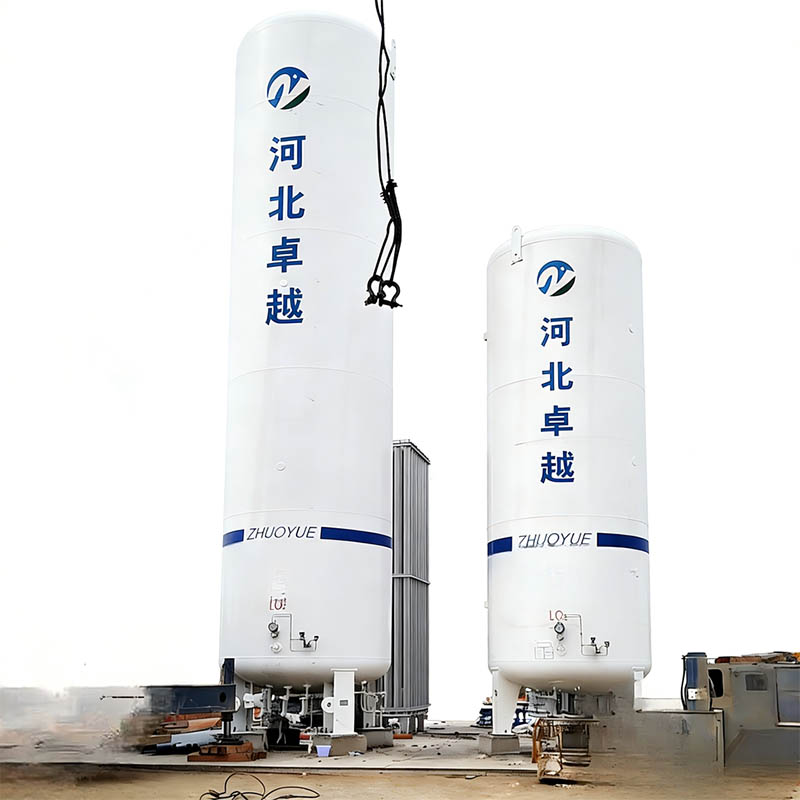
The vertical cryogenic storage tank adopts a vertical standing structure that is fixed to the ground. It has an extremely high space utilization rate, and the occupied area is over 30% less than that of the horizontal tank with the same capacity. It is easier to achieve large-capacity design. Large-sized cryogenic storage tanks with a capacity of 50m³ and above are almost all in a vertical structure. These types of tanks are mostly used in urban LNG peak regulation stations, large-scale air separation plants, and port low-temperature medium transfer bases. They can store a large amount of media at one time and are suitable for large-scale continuous gas usage demands.
4.Horizontal cryogenic storage tank
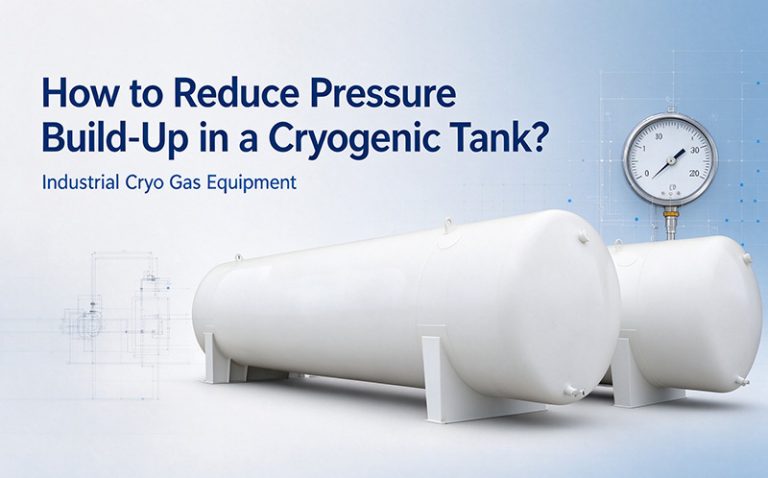
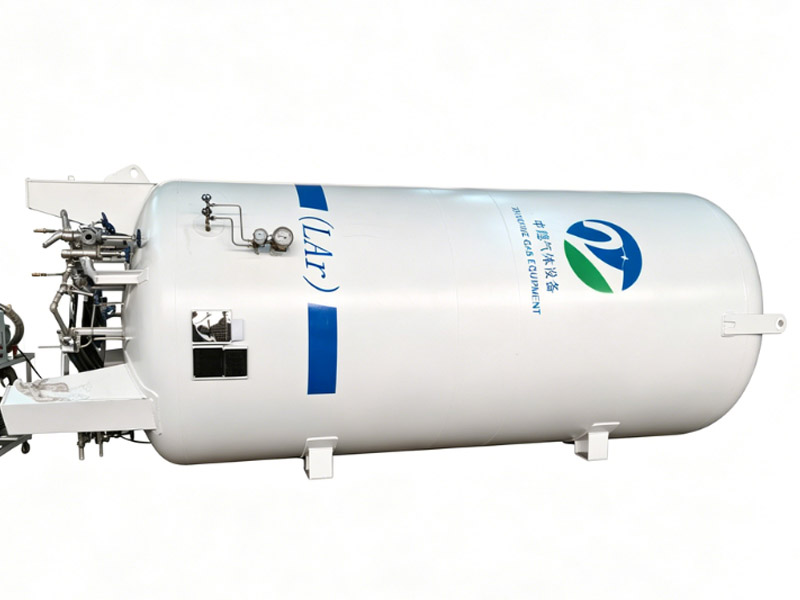
The horizontal cryogenic storage tank is constructed with a horizontal placement structure, which has lower requirements for the bearing capacity of the on-site foundation, makes the lifting and installation process easier, and enables more flexible transportation and entry. The conventional capacity ranges from 1 cubic meter to 50 cubic meters, and the working pressure can reach up to 3 MPa. It is highly suitable for installation scenarios with limited heights such as inside factories, on rooftops, and in small parks. It is the mainstream choice for small and medium-sized manufacturing enterprises and hospital centralized oxygen supply stations.
5.Skid-mounted integrated cryogenic storage tank
All the cryogenic storage tanks, air-cooled vaporizers, pressure regulating valve groups, and safety interlock systems are integrated onto a unified steel platform. All the commissioning work can be completed within the factory. Users only need to connect the power supply and the gas outlet pipeline at the site to directly start production. All the complex procedures such as on-site welding and pressure testing are completely omitted. It can be put into use as soon as the next day. It is particularly suitable for temporary gas supply points, rapid commissioning of new factories, mobile gas supply stations and other projects with extremely short delivery cycles.
6.The mobile cryogenic storage tanks (Cryogenic Dewar Tanks)
come in capacities ranging from 80L to 500L. They are equipped with mobile casters and built-in vaporizers, allowing them to directly output gaseous media without the need for external vaporization equipment. They are lightweight and flexible in transportation. They are widely used in scenarios such as laboratory sample storage, outdoor welding operations, and liquid nitrogen replenishment in small clinics, where small-scale gas usage is required. They are supplementary equipment for large fixed storage tanks.
7.ISO Low-temperature Tank Container
The ISO cryogenic tank container is suitable for the core branch of global multimodal transportation. It is a mobile cryogenic storage and transportation equipment fully designed in accordance with the international standardized container size framework. It is also the most widely used core carrier in current cross-border low-temperature fluid trade and can meet the compliance usage requirements of different countries and regions.
IV. Main Application Areas of Low-Temperature Storage Tanks
Nowadays, cryogenic storage tanks have permeated into various production processes across different industries: In the mechanical processing industry, they are used to store liquid oxygen and liquid argon, providing support for flame cutting and welding protection; in the medical and biological industry, special liquid nitrogen storage tanks are used to long-term preserve stem cells, vaccines and biological samples; in the new energy field, LNG cryogenic storage tanks are used to supply clean industrial fuels to factories; in the semiconductor industry, high-purity special cryogenic storage tanks are used to store electronic-grade liquid argon and liquid nitrogen, ensuring the high-purity gas supply requirements for chip production.
V. Key Points for Practical Selection of Low-Temperature Storage Tanks
When choosing a cryogenic storage tank, one should not only consider the price, but also match it based on three core dimensions:
Firstly, determine the properties of the storage medium. The inner liner of an oxygen storage tank must undergo strict degreasing treatment, while an LNG storage tank should use a special material that is resistant to low temperatures and sulfur;
Secondly, select the capacity based on the average daily gas consumption and the local medium delivery cycle to avoid frequent replenishment when the capacity is too small, and also avoid a large capacity that leads to unnecessary evaporation loss of the medium when stored for a long time;
Finally, combine the size of the site, installation conditions, choose a vertical, horizontal or skid-mounted structure, so that the equipment and the on-site working conditions are perfectly matched.
If you are unsure which type of cryogenic storage tank to choose for your specific situation, simply contact Zhuoyue Gas Equipment. Our technical team, with professional experience in the design and implementation of cryogenic equipment, will customize a dedicated selection plan based on your medium type, site conditions, and gas usage scale for free. This will help you obtain the most compatible and cost-effective cryogenic storage tank solution.