
Cryogenic tank insulation prevents heat transfer to liquefied gases (like nitrogen, hydrogen, and LNG) by combining advanced materials, powders, and vacuum jackets to achieve extremely low thermal conductivity.
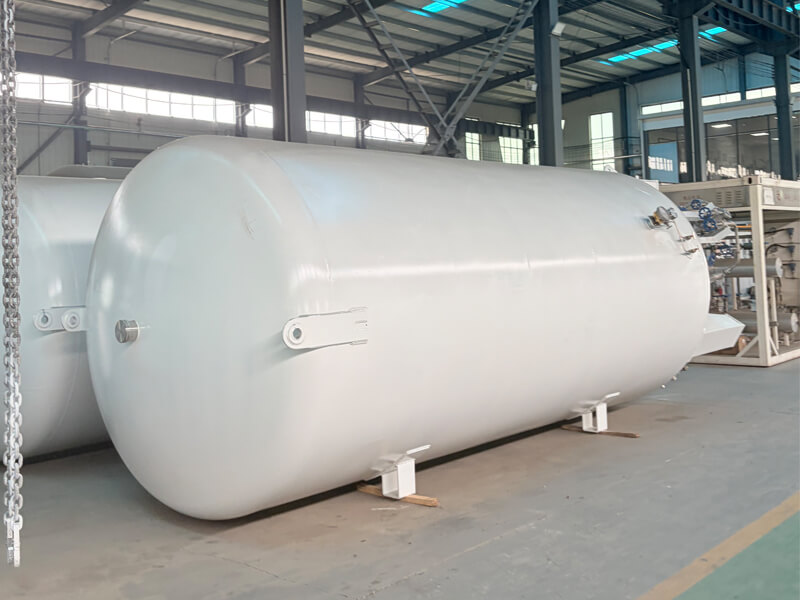
In industrial low-temperature systems, the main insulation types typically include the following:
1.Vacuum insulation
● Working principle: A high vacuum annular space is formed between the inner and outer walls of the double-layer tank. Heat needs to be transferred through conduction or convection within the substance, so the heat transfer efficiency significantly decreases after the air is evacuated.
●Applicable to: Small to medium laboratory dewars and portable cryogenic vessels.
2.Powder and Fibrous Insulation
● Working principle: There is a ring-shaped space between the inner and outer walls, filled with fine porous powder that can block infrared rays, or opaque powder like rock wool.
● Traditional standard: Expanding volcanic glass (also known as perlite) has been the standard filling material in the past.
● Modern alternative: Use engineering materials such as 3M glass bubbles instead. Compared to traditional perlite, it is lighter in weight, more durable, and has much lower evaporation emissions.
● Applicable to: Large fixed industrial storage tanks.
3.Multilayer Insulation (MLI)
●Principle: The outer layer of the tank is coated with multiple layers of highly reflective materials (such as aluminum foil or aluminized polyester film), and the layers are separated by low thermal conductivity partitions (such as glass fiber paper).It works primarily by reflecting radiant heat and is almost always paired with a vacuum system.
● Applicable to: High-performance aerospace, spacecraft, and special transportation.
4.Spray Foam and Aerogel Systems
● Working principle: Directly spray or mold polyurethane foam or low-temperature rubber foam onto the outer surface of the container to form a continuous closed-cell barrier.
● Advantages: Light in weight, good flexibility, and affordable price. Usually comes with a moisture-proof layer, which can prevent condensation on the frozen surface.
●Applicable to: Cryogenic piping systems and transport tanks.
5.Composite Structural Insulation
● Working principle: The special materials used, such as Lin Stone Low Temperature (resin-impregnated laminated wood), can not only control the temperature but also physically support the large storage tanks, while keeping them separated from the external structural framework.
●Applicable to: Large marine carriers and LNG fuel tanks.
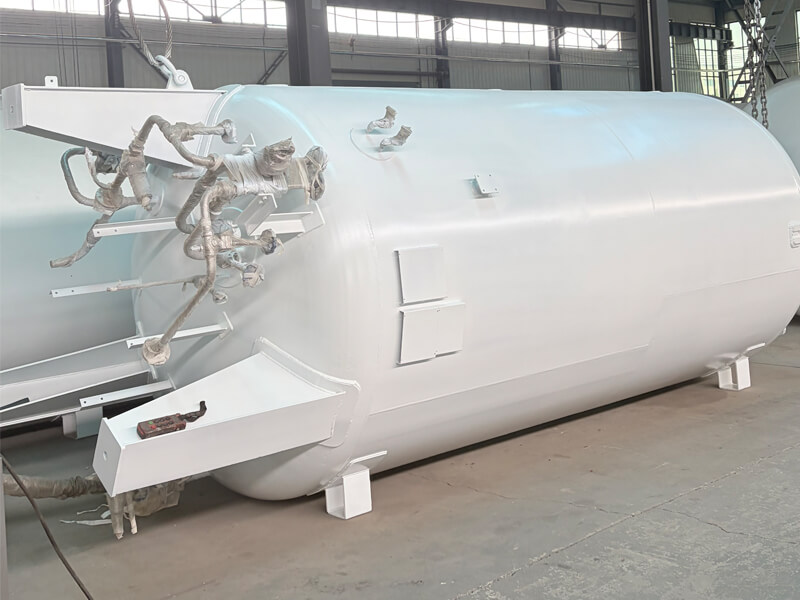
If you need a solution for storing the gas you want to store (such as nitrogen, hydrogen or liquefied natural gas), you can directly contact the engineers of Zhuoyue Gas. Inform them of your usage and other requirements, and we can provide you with a more suitable solution.