
A cryogenic tank is not a purchase you can return. At −196 °C, carbon steel turns brittle, a small weld defect can become a safety incident, and a tank insulated to the wrong standard quietly costs you product for years. Yet most buyers open a supplier’s catalogue, line up capacities and prices, and pick the lowest number.
That’s the wrong order. The gap between a cryogenic storage tank manufacturer who stands behind a vessel and a trading company with a polished website shows up in documents — impact test records, weld procedures, vacuum data — not in the headline specs. Here are five checks worth running before you sign anything.
Start With Certificates You Can Actually Verify
Cryogenic tanks are pressure vessels. In most markets they cannot legally be installed without the right paperwork, so this is the first filter, not a formality.
Ask for a production licence covering pressure-vessel design, fabrication and installation, not a loose collection of processing permits. Then match the certification to where the tank is going:
- ASME Section VIII — the common basis for international projects
- PED 2014/68/EU and CE — for the EU
- GB — the Chinese national standard, usually the baseline for tanks built in China
- DOT — for US transport vessels; GOST — for Russia and Eurasia
- ISO 9001 / 14001 / 45001 — quality, environmental and safety management systems
Here’s the test that actually matters: ask for certificate numbers, then look them up through the issuing body yourself. A certificate you can’t verify doesn’t count. Be wary of scanned documents with no traceable number. Paperwork that fails verification can hold a shipment at customs, and that costs far more than the few dollars saved on a cheaper bid.
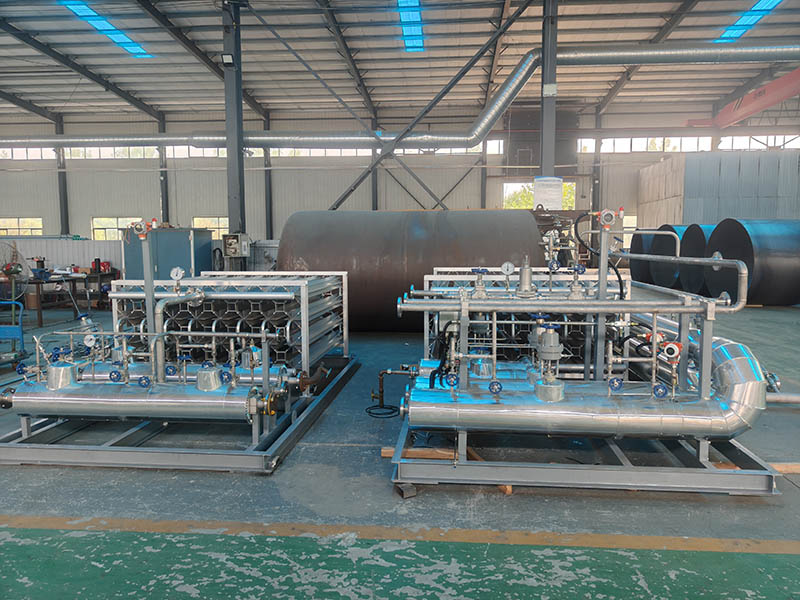
Ask a Cryogenic Storage Tank Manufacturer How the Tank Is Built
Long-term stability comes from material choice and welding discipline. This is also where low-priced equipment quietly cuts corners — the savings hide in places a buyer never thinks to ask about.
Start with the inner shell. Austenitic stainless steels — 304L and 316L — stay ductile at −196 °C. Carbon steel doesn’t, which is why you’ll only find it on the outer jacket, where it sits near ambient temperature. Ask for:
- A Charpy V-notch impact test (ASTM E23) at or below your service temperature, traceable by heat number to a mill certificate (EN 10204 3.1).
- A WPS/PQR covering the same low-temperature service — the weld metal’s toughness has to match the parent metal.
- Full non-destructive testing on welds: RT and PT on every seam, with records. Spot checks aren’t enough.
- A high-vacuum jacket with multilayer insulation, helium leak-tested before dispatch.
Worth knowing: 304L caps carbon at 0.030% versus 0.08% for standard 304. Higher carbon precipitates chromium carbides at grain boundaries under welding heat and thermal cycling, costing toughness right where you need it. If a quote says “304” for −196 °C service, ask why not 304L.
Most guides stop there. Heat leak often comes from supports, not the insulation blanket. One documented failure mode on a large flat-bottom tank: supports were switched from stainless to aluminium to simplify welding. Aluminium conducts around 117 W/(m·K), turning the supports into a thermal bridge, and daily boil-off climbed from a designed 0.35% to 0.9%. Ask to see the thermal design, not just the insulation spec.
Insist on a Design That Fits Your Site
Different industries use a cryogenic tank very differently. A standard catalogue product rarely fits all of them.
An outdoor LNG station needs wind and sun protection and materials that tolerate extreme ambient temperatures. A food-processing freezing line needs interfaces and discharge accuracy matched to its conveyor system. A laboratory tank needs a clean interior with no oil or residue. These aren’t nice-to-haves; get them wrong and you’re looking at installation rework or a tank that never quite performs.
An established supplier won’t push stock products at you first. They’ll ask about your medium, installation environment, capacity and pressure, then adjust the tank dimensions, insulation thickness and nozzle layout to your site. If the supplier’s first question is “how many cubic metres,” you’re talking to a seller, not an engineer.
Find Out Who Shows Up After Delivery
A cryogenic tank’s service life is measured in decades. Delivery is the start of the relationship, not the end of it.
Installation guidance, periodic inspection and fault response decide what the tank actually costs you over that life. The common complaint about low-price bids is that the supplier disappears after handover. You’re left with a commissioning problem, no technician to call, and a team improvising in the dark — which is how safety habits go wrong.
Before you buy, confirm the supplier has engineers who can support installation, English manuals, and remote video guidance during commissioning. Ask about annual inspection too: vacuum degradation and ageing valve seals are small problems until they aren’t. Cheap bids rarely come with that kind of backup, and it’s precisely where the money gets saved.
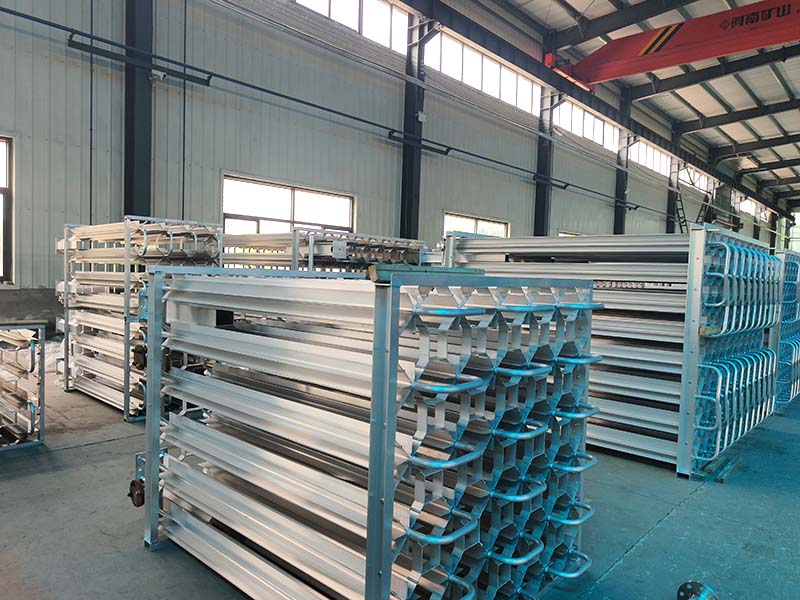
Ask for References — Then Check Them
The clearest picture of a supplier comes from projects like yours, in your industry and your region.
Ask for cases at a comparable scale and application, then ask what happened after commissioning: did the actual evaporation rate meet the design figure, how often did faults occur, did the customer buy again? A supplier serving industrial gas, medical oxygen, food freezing and energy storage across multiple countries will know the installation norms and usage habits of each market — and that experience saves you from a category of mistakes you don’t have to make yourself.
If the answers stay vague on impact testing, boil-off and vacuum, you’re not talking to a manufacturer you should trust with a cryogenic vessel.
The Bottom Line
Choosing a cryogenic storage tank manufacturer comes down to verification, not persuasion. A tank that’s compliant, fits your site and comes with real support may cost more upfront, but across a service life measured in decades it saves you product loss, downtime and rectification work. The overall return is far better than a cheap vessel that problems follow.
Put every bidder through the same five checks and compare like for like. Any manufacturer confident in its own vessel will welcome the questions.