
How Liquid Argon Can Be Safely Stored in Cryogenic Tanks: A Complete Practical Guide
In numerous fields such as industrial production, scientific research experiments, and metal processing, liquid argon is an indispensable low-temperature medium. As a liquid with a boiling point as low as -185.9℃, the storage process of liquid argon has extremely high requirements for equipment performance, operation procedures, and environmental conditions. Many users of low-temperature gas equipment often ask: How can liquid argon be stably stored in a low-temperature tank? Every aspect, from the structural design of the tank, site selection, to daily operation and emergency management, directly determines the safety and economy of the storage process.
Ⅰ. Core Structural Design of Liquid Argon Cryogenic Tanks: The Foundation for Stable Cryogenic Storage
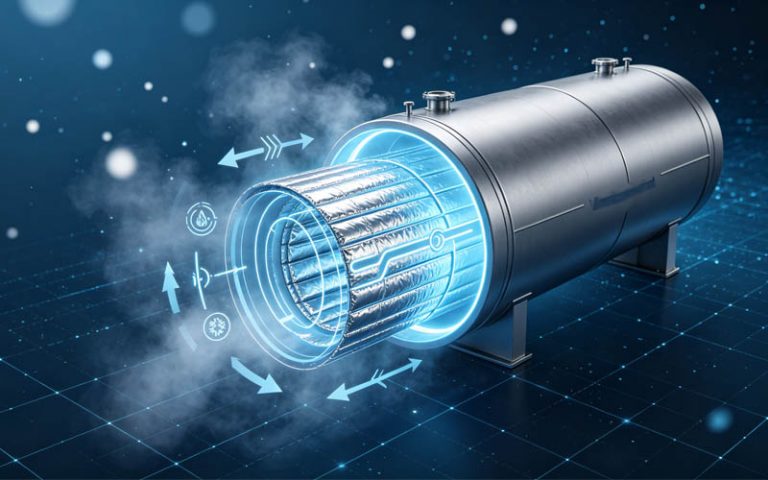
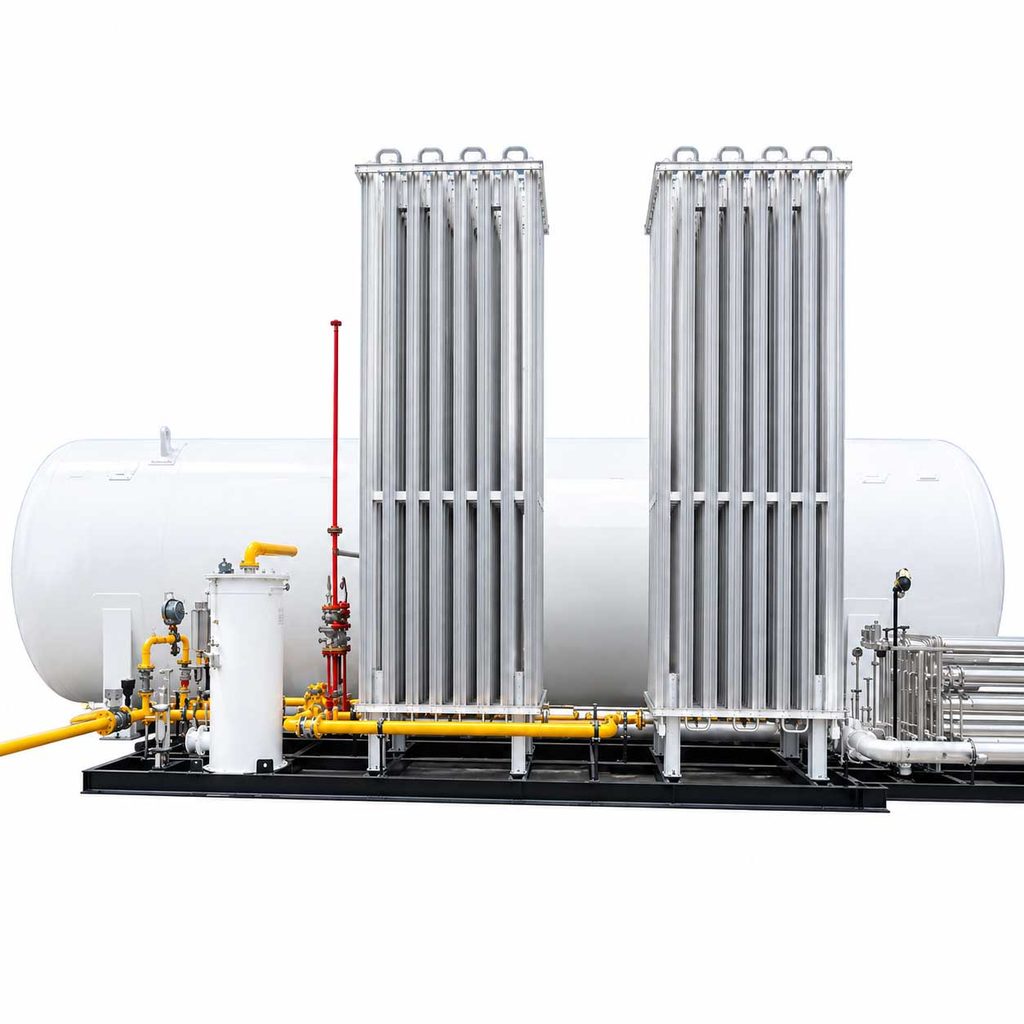
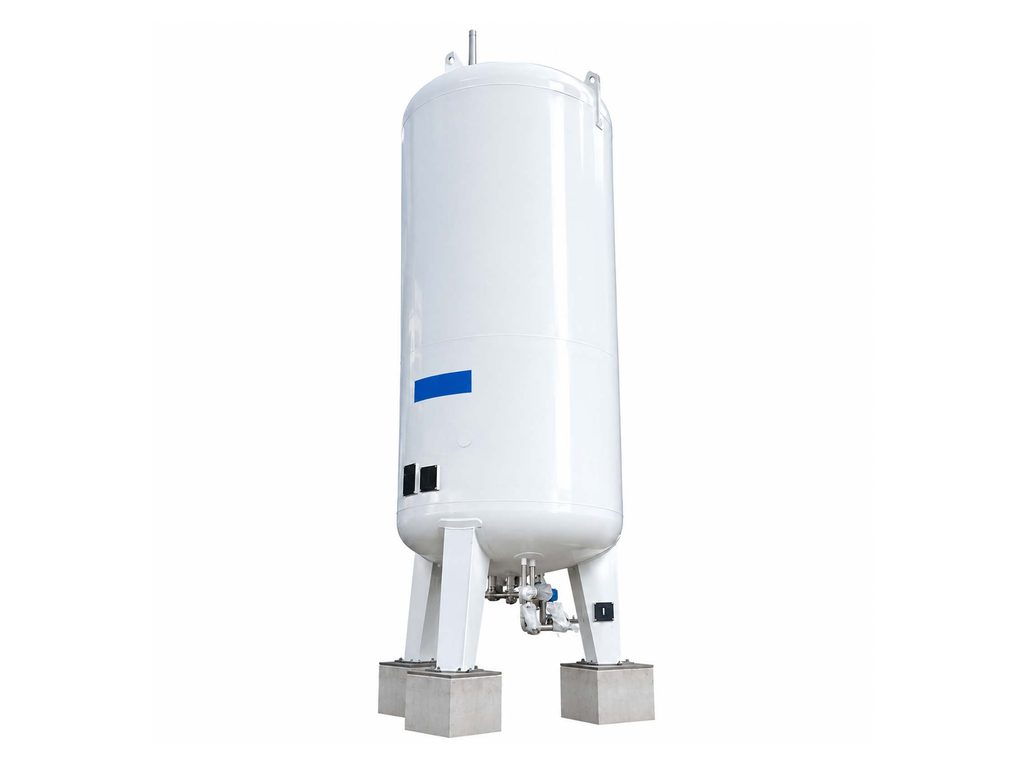
Liquid argon can remain in a liquid state for a long time, mainly relying on the unique double-layer structure design of the low-temperature tank. Unlike ordinary atmospheric pressure storage tanks, qualified industrial liquid argon tanks adopt an internal and external double-layer tank design, creating a closed interlayer space. The inner tank body uses stainless steel material with a low-temperature resistance, which can operate stably at -196℃ in an extremely low-temperature environment without cracking or deformation, and is specifically used to directly come into contact with liquid argon; the outer tank body uses high-strength carbon steel material to provide sufficient structural strength to resist external pressure and external force impacts.
The interlayer between the two tanks is the key part for achieving low-temperature insulation. This space is evacuated to a high vacuum state and filled with pearlescent sand or multi-layer insulation paper as insulation materials to block the entry of external heat through conduction and radiation as much as possible. This design can control the daily evaporation rate of the tank to an extremely low level. The natural evaporation loss of conventional industrial liquid argon tanks is generally less than 0.3% per day, significantly reducing the user’s operating costs.
In addition, the top of the tank is equipped with a complete set of safety accessories, including working safety valves, backup safety valves, precision pressure gauges, magnetic flap level gauges, and booster pressure regulation systems. These components are not simple additional configurations but are the core guarantee for storage safety: When the pressure inside the tank gradually rises due to the evaporation of a small amount of liquid argon, the safety valve will automatically open to release pressure when the set pressure is reached, preventing the tank from overpressurization; the level gauge can display the remaining liquid argon volume in the tank in real time, preventing situations of overfilling or empty tanks.
Ⅱ. Site Selection and Installation Specifications: Reducing Storage Risks from the Source
The selection of the storage site for liquid argon tanks is a section that many enterprises often overlook during the installation stage but directly determines the safety baseline for long-term use. According to the current domestic pressure vessel safety regulations, the tank must be placed in an open area with good ventilation conditions, and must not be located in a sealed basement, semi-basement, or low-lying area. After liquid argon evaporation, the density of the resulting argon gas is much higher than that of air. If it leaks in a low-lying area, it will quickly accumulate on the ground, gradually reducing the oxygen concentration in the area and causing an imperceptible suffocation risk.
The foundation of the site must be hardened and treated with reinforced concrete pouring and pre-structural load tests to ensure it can withstand the total weight of several tons or even tens of tons when the tank is full, avoiding uneven settlement of the tank body that may cause pipeline misalignment and leakage. Within a 10-meter radius around the tank, there should be no open flame operation points, and no items that are flammable or explosive, such as paint or gas cylinders, are allowed to be stacked. If it is placed outdoors in the open air, a fixed shading shed should be installed to avoid the tank body being exposed to direct sunlight for a long time, ensuring that the maximum temperature of the environment does not exceed 35℃, reducing unnecessary evaporation losses of liquid argon.
The layout between storage tanks also has clear practical standards: the net distance between two adjacent liquid argon storage tanks must not be less than 1.5 meters, and the distance between the tanks and other surrounding production equipment, buildings, etc. must be at least 3 meters. A circular safety passage with a width of no less than 1.2 meters must be left around the tank body. No tools or debris can be stacked on the passage to ensure smooth passage for daily inspections and emergency handling by staff. After installation, the tank body must be calibrated using a level gauge to ensure it is in a horizontal state. For large-capacity storage tanks, metal anti-tilt fixing chains must be provided to prevent the tank from shifting due to external forces or extreme weather conditions.
III. Daily Operations and Maintenance Management: Key to Long-Term Stable Operation of Storage Tanks
The safe storage of liquid argon is not a one-time job after installation; long-term, standardized daily maintenance is the core to avoiding failures. All operators who come into contact with the storage tanks must undergo complete training on low-temperature pressure vessels and be qualified before they can start working. During operation, they must wear cold-proof gloves, protective masks, and cold-proof work clothes. It is strictly prohibited to directly touch the low-temperature pipelines of the tank with bare hands to prevent cold injuries.
Daily inspections must form a fixed standard process: at least twice a day, the pressure and liquid level values in the tank must be recorded. The normal working pressure should be controlled below 0.75 MPa. If the pressure gauge value jumps abnormally or exceeds the threshold, the use should be immediately suspended, and the status of the safety valve and pressure regulating system should be checked. Every week, leak detection at all valve sealing points must be conducted. Using soapy water to check for bubbles at the valve and flange connection points, any slight leakage should be tightened and handled promptly. Monthly, a preliminary assessment of the vacuum layer performance of the storage tank should be conducted. If the daily evaporation volume suddenly increases significantly, it is likely that the vacuum degree of the vacuum layer has decreased, and it is necessary to contact the equipment manufacturer to come and perform vacuum pumping to avoid the failure of insulation performance.
The filling process of liquid argon is the most prone to operational errors. It must be operated by certified professionals throughout the process, with strict control of the filling speed. The entire filling process duration should not be less than 30 minutes to avoid static electricity generated by rapid filling causing risks. At the same time, the filling volume must not exceed 90% of the design total capacity of the tank. A sufficient gas phase buffer space must be reserved to prevent overpressure problems when the temperature of liquid argon rises and expands. During daily use, it is strictly prohibited to strike the tank body with metal tools, and no one is allowed to dismantle or modify the safety attachments of the tank without authorization. All safety valves and pressure gauges must be sent to a third-party institution for calibration at the prescribed cycle to ensure accurate and reliable measurement values.
IV. Emergency Protection and Management: Building a Complete Safety Storage Line
Even with a complete daily management system, enterprises must establish a complete emergency response plan for liquid argon leakage and regularly organize operators to conduct drills. The storage area must be equipped with fixed argon gas leakage alarm devices. When the concentration of argon in the environment exceeds the standard, causing the oxygen content to drop below 19.5%, the alarm device can automatically emit sound and light alarms to remind on-site personnel to evacuate in time. Near the storage area, backup positive pressure air respirators, explosion-proof tools, and fire-fighting equipment must be provided. In case of a small leakage, operators should handle it in the upwind direction, quickly close the relevant valves, and simultaneously turn on the forced ventilation equipment to accelerate the diffusion of the leaked argon.
If a fire occurs around the tank, the first principle of handling is not to directly extinguish it, but to spray continuous water flow onto the tank body to cool it down. This avoids the rapid increase in internal pressure of the tank in a high-temperature environment, causing an overpressure explosion. Under the premise of ensuring safety, the affected tanks should be moved to a safe area with open space as soon as possible. In daily management, it is also necessary to clearly stipulate that irrelevant personnel are strictly prohibited from entering the operation area of the storage tank. Before conducting inspection and maintenance work inside the tank, all residual liquid argon must be completely emptied. Dry air must be repeatedly replaced and purged to detect that the oxygen concentration inside the tank has returned to the normal level. Only then can personnel enter for work. Moreover, during the operation process, at least two external supervisors must be arranged. It is absolutely not allowed for a single person to enter the confined space for work.
Zhuoyue Gas Equipment believes that the safe storage service of liquid argon tanks is not just about delivering a piece of equipment. From the initial site survey, customized installation plans, to the regular on-site inspections, safety accessory calibration, vacuum maintenance, and operator training in the later stage, the entire process of supporting services can truly help users minimize the storage risks of liquid argon and ensure the long-term stable operation of the cryogenic storage tanks, providing a guarantee for the safe production of enterprises.