Overseas CNG refueling station project: How to select the right CNG Tube Skid that suits your site
When setting up a CNG refueling station overseas, the CNG storage unit assembly (CNG Tube Skid) is the core framework of the entire station’s gas supply system – its capacity, pressure rating, and integrated configuration directly determine the refueling efficiency, operational safety, and maintenance costs of your station over the next 10 to 15 years. Many project owners only focus on the quotation and nominal storage capacity during the procurement stage, ignoring the actual operational scenarios of their sites, local safety regulations, and subsequent maintenance convenience. As a result, after the equipment arrives, it fails to meet local regulatory requirements, does not match the compressors and refueling machines in the station, and cannot keep up with peak demand during peak hours. This not only slows down the overall project’s commissioning progress but also leads to the loss of many regular refueling customers.
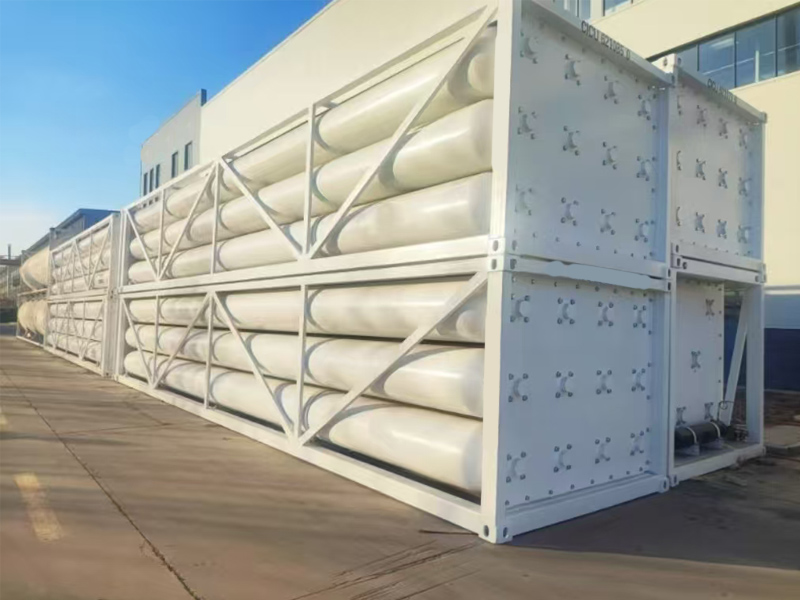
The first step: First, determine the operational positioning of your site and select the appropriate basic capacity specification.
The first step in selection is never to start by looking at the product parameter table. Instead, first clarify the core purpose of your CNG refueling station:
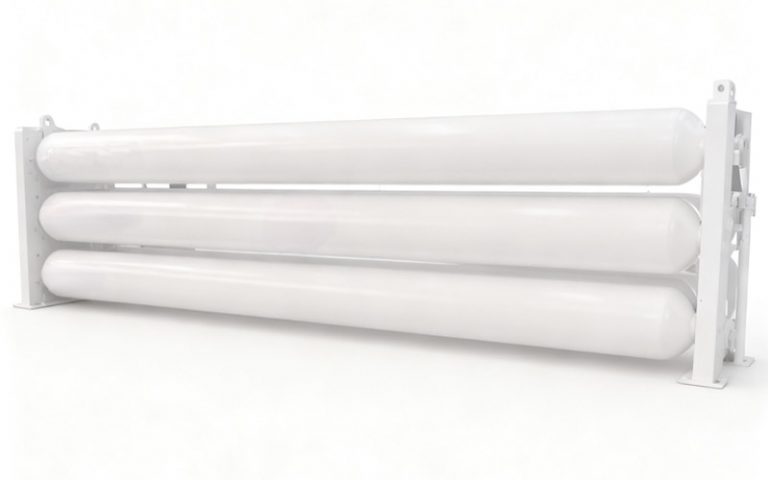
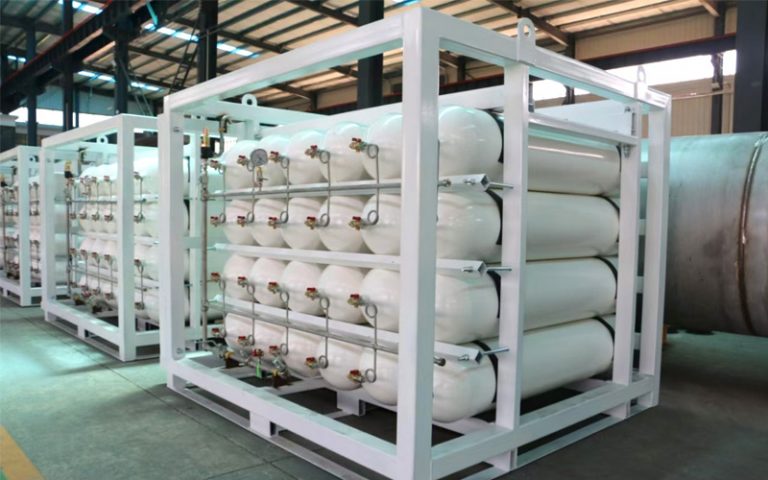
If your site is a conventional civilian sub-station for taxis and small logistics vehicles, with a daily refueling volume of 500-1500 standard cubic meters, prioritize the standard skid with a water volume of 12-24 cubic meters. The storage cylinders should be arranged in a 3×4 or 4×6 matrix, which can cover the continuous gas supply needs for the morning, noon, and evening peaks without the need for excessive redundant capacity that would result in unnecessary initial investment waste.
If your site is a CNG mother station for pipe trailers and heavy truck fleets, with a daily refueling volume of over 3000 standard cubic meters, you must choose a large-flow Tube Skid with a water volume of 30 cubic meters or more. At the same time, reserve at least 2 independent charging and discharging interfaces to avoid insufficient flow and queuing situations when multiple trailers are charging simultaneously.
If you are setting up a mobile temporary refueling point that requires frequent relocation, do not choose a large-volume fixed skid. Instead, prioritize the compact model that meets ISO container lifting standards, with a 6-12 cubic meter capacity. The overall frame comes with lifting points, allowing for direct transportation without on-site disassembly, making it suitable for short-term refueling needs in remote construction sites or temporary activities.
Many overseas small-scale project owners directly copy the parameters of other cities’ stations, ignoring the peak refueling volume of their own site. After commissioning, the storage cylinder pressure drops too quickly during peak hours, and the refueling machines frequently trip, resulting in the loss of many regular refueling customers.
The second step: Match the pressure rating and material standards, and adapt to local regulatory requirements in advance
The pressure rating and material selection of the CNG Tube Skid not only affect operational safety but are also the core review items for many national gas safety departments during project acceptance.
Currently, the working pressure of mainstream CNG stations is divided into two levels: 20MPa and 25MPa. The skid with a 20MPa rating is suitable for the routine refueling needs of most civilian small vehicles and has strong compatibility for valves and seals, with lower procurement and replacement costs, making it suitable for projects in regions sensitive to initial investment such as Southeast Asia and Africa; the skid with a 25MPa rating can increase the storage capacity by 15% or more under the same water volume, meeting the larger storage capacity requirements in smaller site areas and being more suitable for urban stations in Europe, the United States, and the Middle East with limited land resources.
In terms of materials, all high-pressure pipelines must use seamless alloy steel pipes, and all joints must use forged high-pressure threaded connections. Welded pipelines must not be used to avoid safety hazards of weld cracks caused by long-term bearing high-pressure alternating loads. At the same time, it is essential to confirm the mandatory certification requirements of the target market in advance: for mobile pressure vessels exported to the EU, they must comply with the PED pressure vessel directive; for the North American market, they must meet the ASME B31.3 process piping standards; and for some emerging markets, there are also exclusive certification requirements from local gas authorities. By including certification adaptation in the selection criteria in advance, you can avoid major losses such as equipment being unable to clear customs or pass acceptance and commissioning after arrival at the port.
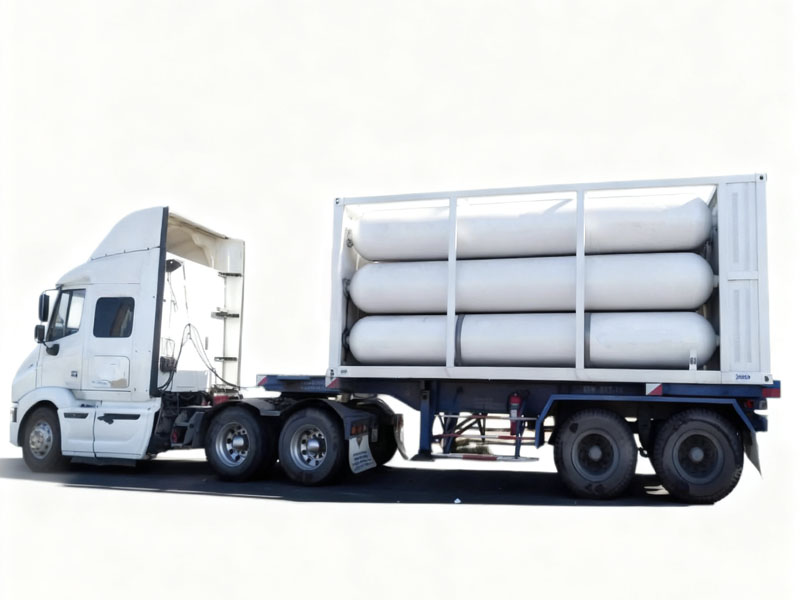
The third step: evaluate the degree of integration and operational convenience, and control the total cost throughout the cycle
A mature CNG Tube Skid should complete all pipeline, valve, and safety accessory pre-assembly and pre-testing before leaving the factory. After being transported to the project site, you only need to connect the air intake, exhaust port, and safety grounding, and you can quickly put it into use, significantly reducing the installation and commissioning cycle on site.
When selecting, you should carefully check the safety configurations included in the skid: it must be equipped with multiple safety valves, emergency shut-off valves, high-pressure pressure gauges, and pressure transmitters. At the same time, reserve the installation interface for CNG leakage detection sensors. For projects with conditions, you can also choose to install a remote pressure data transmission module. The operation team can view the pressure changes of each group of storage cylinders in real time on the back end, predict abnormalities in advance, and avoid safety risks.
Many purchasers initially only compare the purchase price of the equipment, but ignore the subsequent maintenance costs for more than a decade. High-quality skids will use global standard valves and seals, and you can quickly purchase replacement parts locally, avoiding the situation where rare and specialized parts have a procurement cycle of up to two months, causing the site to be out of service for a long time and resulting in continuous revenue losses.
Selecting the right CNG Tube Skid that is suitable for your project is not about choosing the model with the most advanced parameters and the fullest configuration, but about selecting a product that fully meets your operational needs, complies with local regulations, and has controllable long-term operation costs. Zhuoyue Gas Equipment will provide one-on-one customized selection plans for each project’s on-site conditions and local certification requirements, helping you achieve long-term stable and safe operation of the site while controlling the initial investment reasonably.