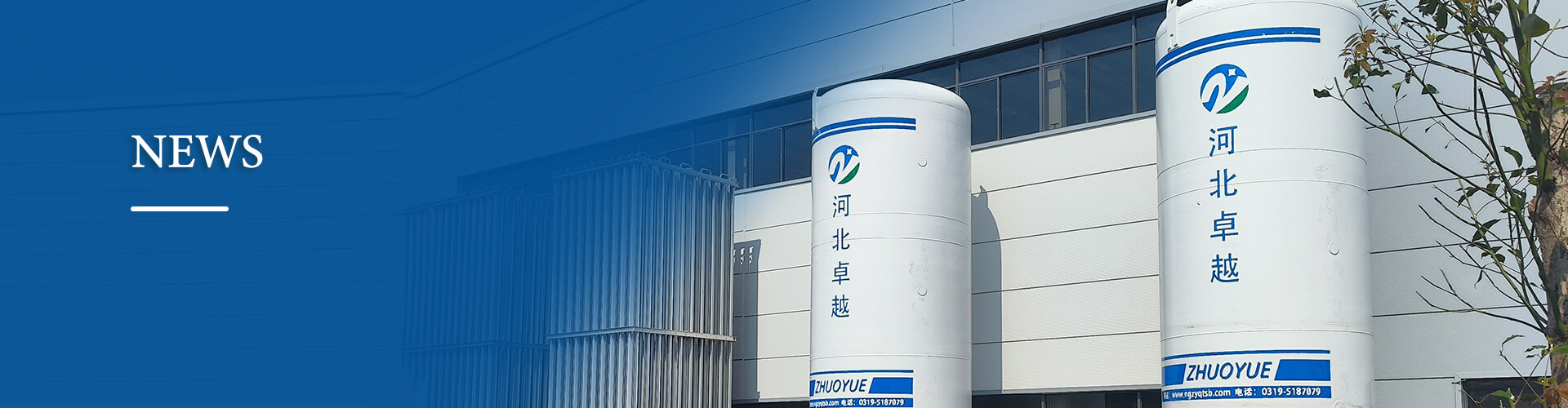
Liquid Nitrogen Storage Tanks: Selection and Life Cycle Operation Guidelines for Vacuum Insulated Cryogenic Containers
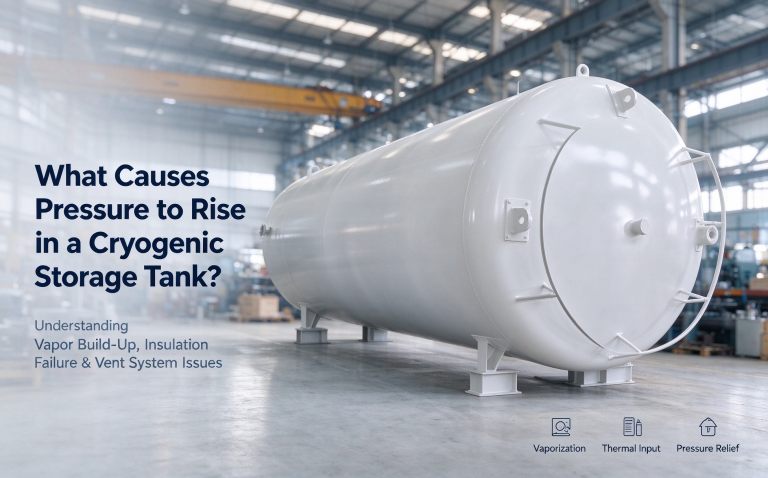
In all industrial scenarios involving the storage of cryogenic gases, liquid nitrogen storage tanks are the core supporting equipment that ensures the long-term stable retention of the medium. Unlike the common ordinary atmospheric pressure liquid storage tanks available on the market, vacuum insulated cryogenic liquid nitrogen storage tanks rely on the high vacuum barrier design between the inner and outer tanks. This design significantly reduces the channels for external heat to invade the interior, controlling the natural evaporation loss of liquid nitrogen within an extremely low industry standard. These devices have now become indispensable basic supporting facilities in dozens of fields such as semiconductor chip manufacturing, long-term cryogenic storage of biological samples, deep freezing of food, and aerospace environment simulation experiments. Many initial overseas customers often confuse laboratory-sized ordinary atmospheric pressure liquid nitrogen tanks with industrial-grade vacuum insulated cryogenic containers, only to find after use that the actual evaporation rate far exceeds the indicated value, the surface of the tank is covered with large areas of frost, and the actual service life of the equipment far fails to meet the expected standards. This not only increases the long-term operation cost of liquid nitrogen consumption but also may cause unnecessary safety hazards due to equipment malfunctions.
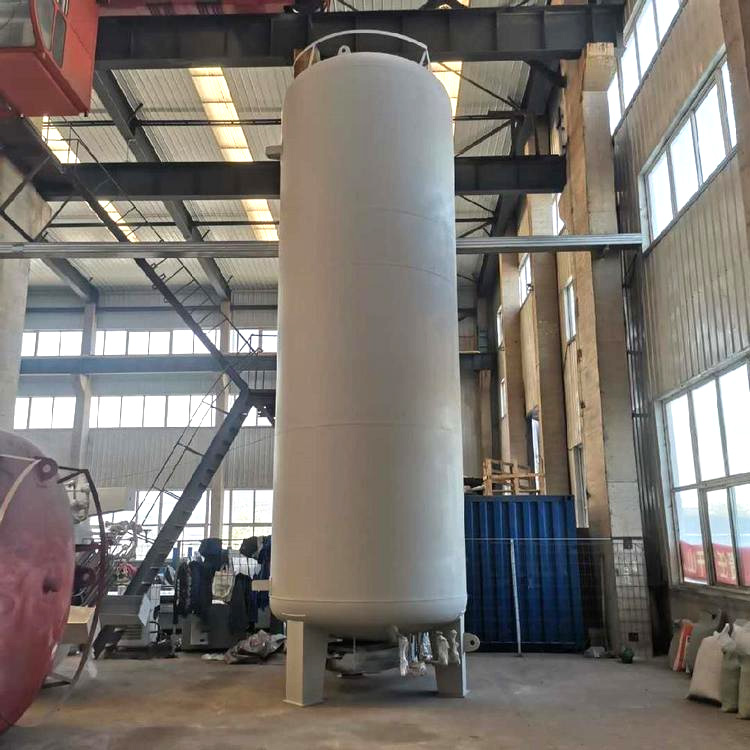
Ⅰ.From foam insulation to high vacuum barriers: The essential differences in core insulation logic
The entry-level liquid nitrogen storage containers that many people come across are usually equipped with insulation layers made of polyurethane foam or similar porous insulation materials. This structure has a low manufacturing cost and can still cope with small-capacity temporary storage ranging from a few liters to several hundred liters. However, once the storage volume exceeds 5 cubic meters, the shortcomings of this insulation method will be fully exposed. The air filled in the gaps of the insulation material becomes a carrier for heat transfer, and external heat will continuously penetrate the tank body through air conduction and convection. During hot summer weather, the heat penetration speed will further accelerate. A full tank of liquid nitrogen may vaporize and empty out in just a few days, unable to meet the continuous operation requirements of industrial scenarios. The core design concept of vacuum insulated cryogenic liquid nitrogen storage tanks is to create a high vacuum sealed layer with an air pressure lower than 1 Pa between the stainless steel inner container in contact with the liquid nitrogen and the outer tank in contact with the external environment. The nearly completely gas-free space directly cuts off the two core paths of heat transfer through air conduction and convection. Combined with the multi-layer aluminum-coated insulation reflectors laid layer by layer inside the cladding layer, most of the external heat penetrating through radiation is reflected back by more than 90%, achieving a dual effect of reducing the total heat invading the tank to an extremely low level. This fundamentally realizes the long-term low-loss storage of liquid nitrogen at the structural level.
Ⅱ. Five Core Parameters Must Be Clarified During Purchase Selection
Many overseas buyers, when placing orders, only mark “liquid nitrogen storage tank” and volume as the two parameters. The received quotations and solutions often do not match their actual usage scenarios. To select the most suitable vacuum insulated cryogenic container, it is necessary to confirm the following five core indicators in advance:
The first is design pressure. Depending on the usage scenario, liquid nitrogen storage tanks are divided into two types: atmospheric pressure storage type and low-pressure boost output type. Conventional industrial scenarios mostly choose products with a design pressure of 0.8 MPa, while scenarios that need to directly connect to pipeline transportation systems require high-pressure grade tanks of 1.6 MPa and above to avoid insufficient output pressure affecting downstream processes.
The second is the daily evaporation rate indicator. This directly determines the liquid nitrogen loss cost for the user’s long-term operation. High-quality vacuum insulated liquid nitrogen storage tanks can achieve no significant decline in vacuum degree for 5 years or more, while some low-price products will experience rapid drop in vacuum degree in the vacuum layer and a soaring daily evaporation rate to over 2% within 1-2 years of use, resulting in a long-term liquid nitrogen loss cost even higher than the purchase price of the tank itself.
The third is material compatibility. The inner container directly contacts the -196°C cryogenic liquid nitrogen and must use austenitic stainless steel that can withstand cryogenic impact to avoid material brittleness cracking under long-term cryogenic conditions; if the outer tank is deployed in a high-salt spray area along the coast, it is recommended to use a fully stainless steel outer tank to prevent large-scale rusting of ordinary carbon steel tanks.
Fourth, the configuration of matching valves and pipelines. The inlet and outlet pipelines of the cryogenic storage tank, the safety relief valve, and the liquid level monitoring instrument must all use specialized components suitable for cryogenic conditions. Ordinary industrial valves will quickly experience sealing failure and valve body cracking at -196℃, directly affecting the safety of equipment operation.
Fifth, the installation space and transportation conditions. The overall height of large-volume liquid nitrogen storage tanks often exceeds 10 meters. Before procurement, it is necessary to confirm the lifting space and road passage conditions at the project site to avoid the equipment being unable to be smoothly transported to the site after production.
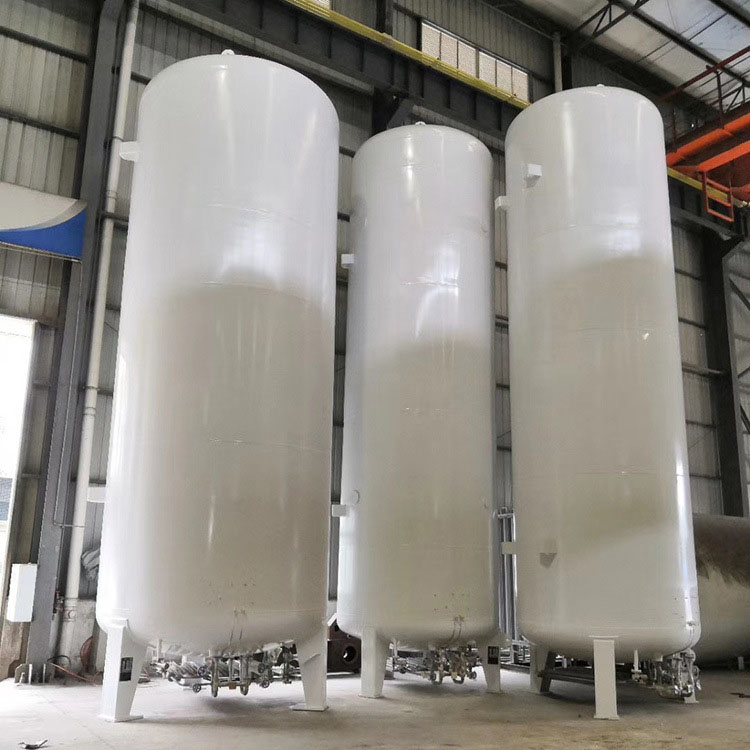
III. Key Considerations for the Entire Lifecycle Operation
The design service life of vacuum insulated liquid nitrogen storage tanks is generally 15-20 years. To maintain long-term stable operation, scientific operation and maintenance norms must be followed. After the initial installation of the equipment, it is not allowed to directly inject full tanks of liquid nitrogen. Instead, dry nitrogen gas should be used to pre-cool and replace the tank interior, gradually reducing the tank temperature to avoid the huge temperature stress damage to the container welds caused by directly adding cryogenic liquid.
During daily operation, the liquid level change data should be recorded once a week. The actual daily evaporation rate can be calculated by continuously calculating the liquid level difference over 7 days. If the evaporation rate suddenly exceeds the rated value by more than twice, it is necessary to promptly check whether the vacuum degree of the inner layer of the tank has any abnormalities to avoid small problems turning into major faults requiring factory repair. At the same time, the calibration validity period of the safety relief valve should be checked regularly. It is strictly prohibited to install any blocking components at the valve outlet to prevent abnormal increase in tank pressure and safety risks. An overlooked detail by many overseas users is that when the storage tank is restarted after long-term inactivity, it cannot be directly injected with liquid nitrogen. It is necessary to thoroughly dry and blow the interior to avoid moisture from the air entering the tank and freezing, blocking the pipelines and valves, and affecting subsequent normal use.
Zhuoyue Gas Equipment is a supplier with mature experience in manufacturing cryogenic equipment. By choosing Zhuoyue, customers can design and produce products that comply with different regional certification standards such as ASME and CE. We also provide full-process after-sales services including installation guidance, commissioning training, and subsequent operation and maintenance support.