

Liquefied natural gas storage tanks: Key facilities in the energy system
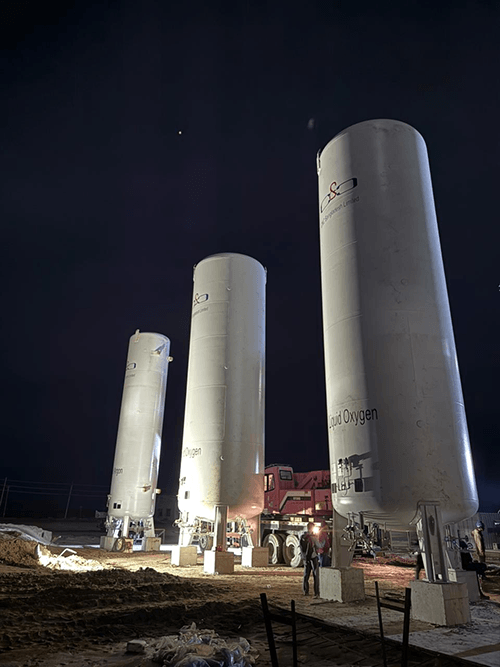
Liquefied natural gas storage tanks (LNG storage tanks) are three types of pressure vessels specifically designed for storing ultra-low temperature liquid natural gas at -162℃. As the core infrastructure of the LNG industry chain, they are widely used in receiving stations, peak regulation stations and transportation sectors, and are hailed as the “super cold storage” of the energy system.
I. Basic Definitions and Functions
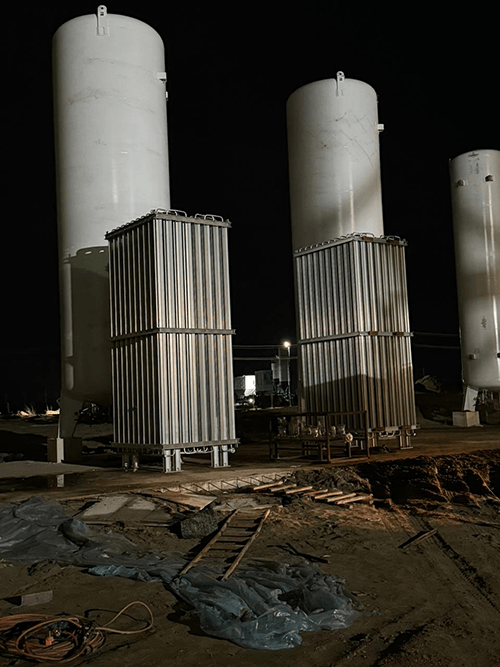
Due to the nature of LNG, LNG storage tanks should be able to endure very low temperatures, have strong insulation properties to prevent evaporation loss, and maintain the LNG in its liquid state. At LNG receiving stations, they mainly keep the resource after it has been brought in from overseas. At peak shaving stations, they are used to level the supply and demand by storing some quantity of LNG. Besides, they could also act as a source of fuel for LNG vehicles. In other words, those tanks are an indispensable component of the chain of events leading to a continuous energy supply.
II. Main Types
By pressure and scale classification:
Atmospheric pressure storage tanks: With a capacity of up to 270,000 cubic meters, they are used in large receiving stations and maintain low temperatures through insulation structures.
High-pressure storage tanks: Suitable for small-scale scenarios such as gas filling stations and tanker trucks, they adopt a double-layer vacuum insulation design.
By structure classification:
Full-capacity tanks: Inner tank made of 9% nickel steel, outer tank made of concrete structure, high safety, suitable for large-scale projects.
Film tanks: Stainless steel film + concrete/steel structure, saves materials, large capacity, increasingly widely used.
Mother-child tanks: Multiple sub-tanks connected in parallel, total capacity up to 2000 cubic meters, suitable for medium-scale demands.
Vehicle storage tanks: High vacuum insulation structure, lightweight design, enhances the range of LNG vehicles.
III. Core Technical Characteristics
Low-temperature resistant material: 9% nickel steel (06Ni9DR) maintains strength and toughness at -196℃.
High-efficiency insulation: Large storage tanks use insulation layers such as expanded perlite; small storage tanks employ high-vacuum multi-layer insulation with extremely low thermal conductivity.
BOG treatment system: Controls evaporative gas through re-condensation or flare emissions to ensure operational safety.
Intelligent monitoring: Integrates liquid level, pressure monitoring, and emergency shut-off systems to achieve automated management.
IV. Development and Application Trends
Large-scale production: A 270,000 cubic meter super large storage tank has been put into operation, significantly reducing the unit storage cost.
Technical breakthroughs: New materials, fully automatic welding (with a one-time qualification rate exceeding 99.8%) and intelligent operation and maintenance are continuously advanced.
Application expansion: It has extended from the receiving station to fields such as transportation and distributed energy, and the market for vehicle-mounted LNG storage tanks has grown rapidly.
International collaboration is intensifying: Chinese technology is becoming part of the world, getting involved in overseas project construction in countries such as Algeria, which is contributing to the promotion of global energy development.
V. Conclusion
LNG storage tanks, due to their excellent features, have been a great help in running the modern LNG industry efficiently. As the pace of energy transition speeds up, these tanks will have a much bigger role in securing energy and faciliting green and low carbon developments.
Zhuoyue Gas Equipment is a professional factory specializing in providing solutions for low-temperature gases. We possess the ability to design and develop, and can customize solutions according to your needs. If you have any requirements for a customized solution, please feel free to contact us.