
Introduction
CO₂ plays a crucial role in areas such as carbon capture, food and beverage production, firefighting, and energy storage. The duration of its storage depends on the type of storage tank, the physical state of CO₂, environmental conditions, and industry requirements, and there is no unified standard.
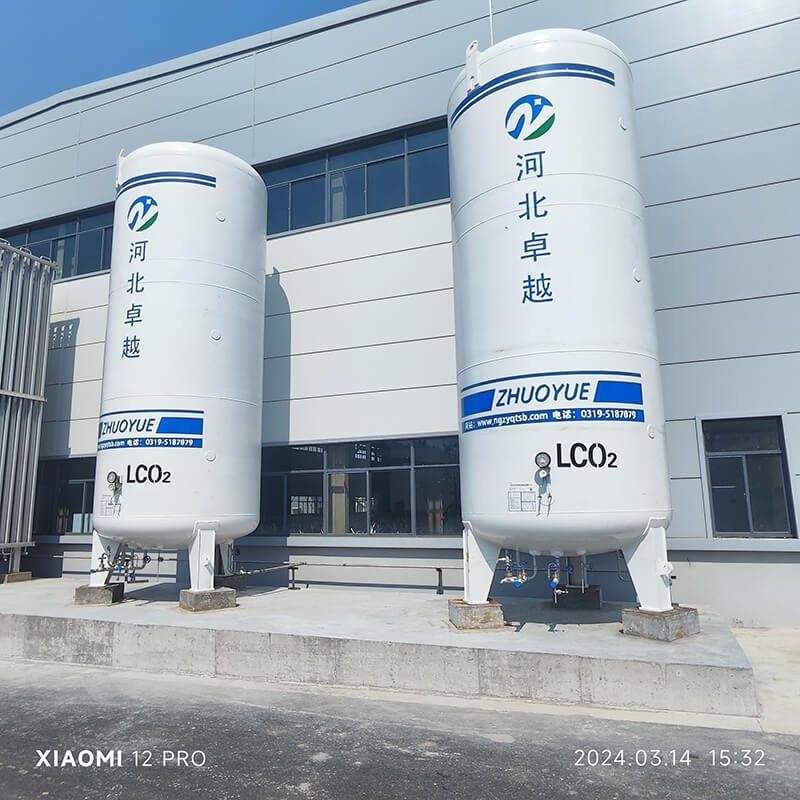
Influencing factors
1.Tank types
Low-pressure gaseous tanks: Low cost but prone to leakage, suitable for short-term storage (from several months to several years).
High-pressure liquid tanks: Commonly used in industrial settings, with a pressure of approximately 70 bar. When well maintained, they can store for 10–15 years; corrosion is the main risk.
Low-temperature tanks: Maintained below -78.5°C, with CO₂ in a solid or super-cold liquid state. With good insulation, they can be stored for 15–20 years or more; insulation integrity is of utmost importance.
2.Physical states of CO₂
Gaseous: Easily leaks slowly through seals and is not suitable for long-term storage.
Liquid: Relatively stable, but temperature changes may cause pressure loss; presence of water vapor can form acidic corrosive substances.
Solid (dry ice): Sublimation rate is low in low-temperature tanks (about 1–2% per month), suitable for long-term storage.
3.Storage and Maintenance
Stability of temperature and pressure is crucial to prevent phase changes and pressure leakage.
Anti-corrosion measures include drying CO₂, using corrosion-resistant coatings, and conducting regular inspections.
Regularly inspect valves, seals, pressure gauges, and insulation systems. Professional inspections are recommended annually in high-risk scenarios.
4.Industry Demand Differences
Carbon Capture and Storage (CCS): Transfer tanks are mostly of high-pressure or low-temperature type and require extremely low loss.
Food and Beverage: High purity is required. They are usually used in rotation and the storage period ranges from several months to one year.
Fire Protection System: The lifespan of CO₂ fire extinguishers is approximately 12 years, and a hydrostatic test is required every 5 years.
Energy Storage: Compressed CO₂ Energy Storage (CCES) systems have a design lifespan of up to 30-40 years.
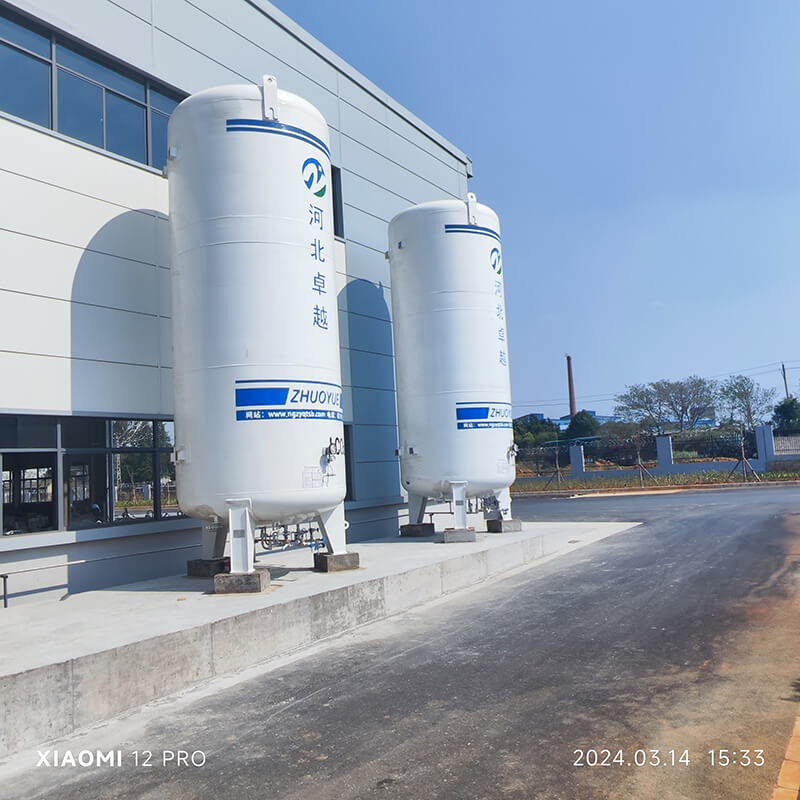
Actual cases
For instance, the high-pressure storage tanks of a certain chemical plant are maintained in accordance with the maintenance manual, and their average service life has reached 15 years.
The cryogenic tanks in a research laboratory were properly maintained, and the dry ice stored in them lost less than 15% after 8 years.
For instance, in a large shopping mall, the carbon dioxide fire extinguishers used need to be replaced mandatorily after 12 years to ensure safety and compliance.
Best Practices
On-demand selection: For long-term storage, high-pressure or low-temperature tanks should be preferred.
Control environment: Protect from light, moisture, and temperature control.
Regular maintenance: Inspect key components and repair them promptly.
Preventive purification: Remove moisture and impurities.
Data recording: Monitor temperature and pressure changes and establish maintenance records.
Conclusion
The storage lifespan of CO₂ varies depending on the application scenario: gaseous form lasts from several months to several years, liquid form lasts 10 to 15 years, and at low temperatures, it can last for over 20 years. Through scientific selection and standardized maintenance, the storage period can be effectively extended, ensuring safety and efficiency.