

I. Introduction
For many overseas manufacturing, medical, and laboratory customers, the supply of industrial gases has long faced two extreme choices: one end involves the frequent handling and replacement of high-pressure gas cylinders, while the other end involves large storage tanks that occupy a lot of space and have high initial costs. The micro bulk gas system is precisely a solution that fills the gap between these two extremes. It retains the stability of centralized gas supply while eliminating the high costs of large storage tanks and the pressure of site renovation for enterprises. Today, it has become one of the most popular gas supply models in medium-sized usage scenarios.
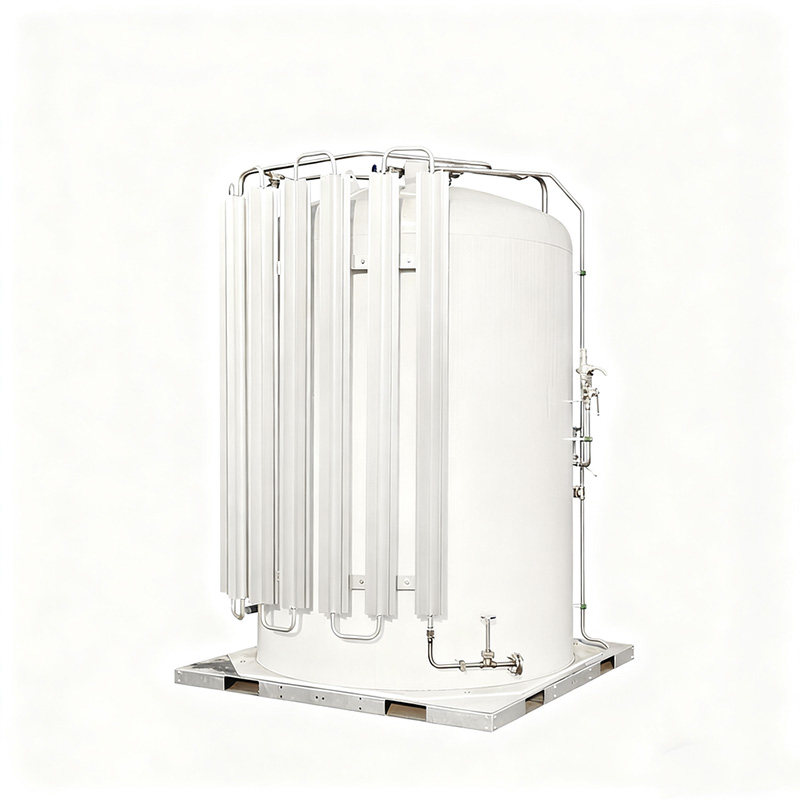
II. Core Definition and Applicable Boundaries of the Micro Bulk Gas System
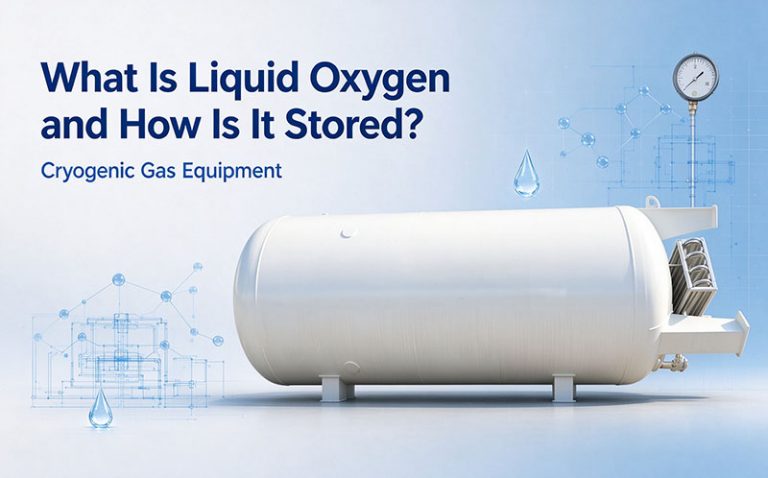
The micro bulk gas system is essentially an integrated on-site gas supply device that combines the storage of cryogenic liquid gases, natural vaporization, and stable transportation. Its core component is a vacuum insulated cryogenic storage tank, with a common volume ranging from 450 liters to 3000 liters, specifically designed for storing cryogenic industrial gases such as liquid nitrogen, liquid oxygen, liquid argon, and liquid carbon dioxide. Compared to traditional high-pressure gas cylinder groups, it does not require employees to frequently handle heavy gas cylinders or reserve large areas for gas cylinder storage in the workshop; compared to large bulk storage tanks, it does not require complex civil construction foundations, has a lower installation threshold, and is more suitable for medium-sized enterprises that do not want to invest too much manpower in gas management. Currently, such systems have been widely used in various overseas industry scenarios such as metal processing, food freezing, laboratory analysis, and medical oxygen supply.
III. Disassembly of Core Components of the System
A complete micro bulk gas system is composed of several core components that work together in series, each of which directly affects the stability and safety of gas supply.
The first is the vacuum insulated cryogenic storage tank, which is the “heart” of the entire system. It adopts a double-layer stainless steel structure with a vacuum layer between the two layers, minimizing the entry of external heat into the tank and allowing cryogenic liquid gases to be stored stably at low pressure for a long time, avoiding unnecessary rapid vaporization loss.
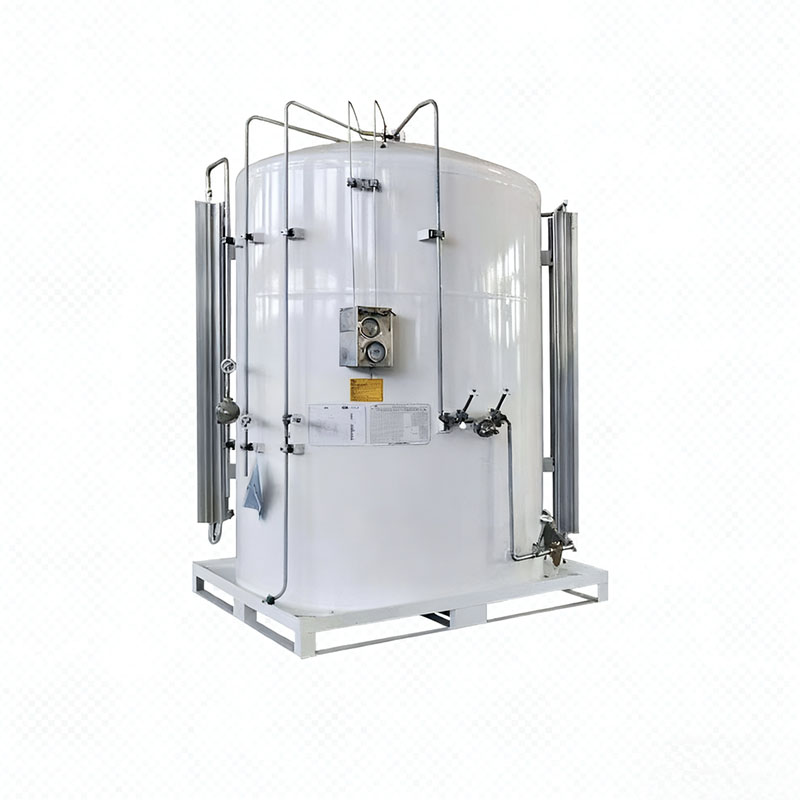
The second is the built-in vaporizer, which converts the cryogenic liquid gas output from the storage tank into a normal temperature gaseous state through natural air heat exchange, directly delivering it to the gas consumption points in the workshop without the need for additional external power supply. Next is the pressure regulating and safety components, including multiple pressure regulating valves, safety valves, and pressure monitoring instruments, which stabilize the output gas pressure within the equipment’s required working range and automatically release pressure in case of abnormal pressure, fundamentally avoiding overpressure risks.
Finally, the remote liquid level monitoring module is also a standard feature of modern micro bulk systems. It can synchronize the remaining gas volume data in the tank to the gas supplier’s backend in real time, eliminating the need for customers to manually report the data through inspection, allowing the supplier to plan delivery routes in advance and proactively visit to refill when gas levels are insufficient, completely avoiding gas supply interruptions.
IV. Complete Work Flow from Cryogenic Gas to On-site Gas Consumption
The operation logic of the entire system is not complex, but it forms a highly automated closed-loop process.
The first step is on-site filling of cryogenic liquid gas, where gas delivery vehicles use dedicated filling hoses to inject liquid gas into the micro bulk storage tank on site. The entire filling process does not require manual operation by the customer; it is completed by professional technicians trained by the supplier.
The second step is the safe storage of cryogenic liquids, where the tank maintains a low-temperature and low-pressure state through a high-vacuum insulation layer, and the small amount of naturally vaporized gas is stabilized within the set working pressure range by the safety control system, without any abnormal overpressure.
The third step is vaporization and pressure regulation for transportation. When the gas-using equipment in the workshop starts up and the pressure in the pipeline drops, the storage tank will automatically output a small amount of low-temperature liquid gas. This gas is then converted into a normal-temperature gaseous state through an evaporator and adjusted to the stable pressure required by the equipment by the pressure regulation component, before being continuously transported to various gas-using locations.
The fourth step is the intelligent replenishment loop. The remote liquid level monitoring module continuously synchronizes the remaining volume in the tank. When the gas volume drops to the preset threshold, the system will automatically send a replenishment reminder to the gas supplier. The delivery personnel will come to the site in advance to fill the cylinders, and the entire process does not require customers to participate in cumbersome tasks such as cylinder replacement or volume statistics.
V. The core practical advantages compared to traditional gas cylinder supply
Many overseas customers, after switching to the micro bulk gas system, most intuitively feel that the workload of gas management has been significantly reduced.
Firstly, it completely eliminates the physical labor of frequently replacing gas cylinders. Employees no longer have to carry heavy high-pressure gas cylinders or stack a large number of empty or full cylinders in the workshop, significantly reducing on-site safety hazards.
Secondly, it effectively reduces the overall cost of gas usage. Traditional gas cylinders often contain a considerable amount of unusable residual gas, which accumulates into a considerable waste over time. However, the liquid storage method of the micro bulk system can almost completely use up the gas in the tank, with almost no residual loss. At the same time, the automatic replenishment mode also significantly reduces the administrative workload of purchasing and accounting, eliminating the need to frequently handle numerous scattered gas cylinder delivery documents. Additionally, in terms of gas usage stability, this system can achieve 24-hour continuous uninterrupted gas supply, without interrupting production due to the exhaustion of gas cylinders or waiting for cylinder replacement, and avoids the risk of gas contamination between different cylinders. This advantage is particularly significant for scenarios requiring high purity of gas, such as welding and laboratory analysis.
VI. Practical considerations for installation and daily operation
For overseas customers who are new to this system, the installation threshold is much lower than expected. Most regular models of the micro bulk storage tanks do not require customers to prepare a special thick concrete foundation in advance, nor do they need to modify the power and water supply facilities. As long as there is a well-ventilated, heat-source-free, and flat hardened surface in the factory area, the storage tank can be placed and installed. Before official operation, the supplier’s technicians will complete the pressure test and safety verification of the entire system, and provide basic safety operation training to on-site staff to ensure they are familiar with the normal operating state and basic handling methods for abnormal situations. During daily use, customers rarely need to perform complex maintenance work. They only need to regularly observe the pressure status on the instrument panel and confirm that there are no abnormalities. The regular professional safety inspection and maintenance of the storage tank are all handled by the gas supplier.
VII. Who is the most suitable for this gas supply solution
The micro bulk gas system is not the optimal solution for all scenarios, but it is an excellent cost-effective choice for medium gas usage customers. If your factory needs to consume dozens to hundreds of industrial gas cylinders per week and has been maintaining gas supply through frequent manual cylinder replacements, this system can almost solve 90% of the gas management pain points. It is particularly suitable for small and medium-sized metal processing workshops, local food freezing processing plants, medium-sized hospitals and research laboratories, as well as production enterprises that do not want to invest too much effort in gas supply management. For these customers, the micro bulk gas system does not require the high upfront investment of large storage tanks and can enjoy the efficiency improvement brought by centralized and stable gas supply, making it an ideal choice that balances cost, safety, and convenience.