

Today, let’s delve into the mysteries of the cryogenic liquid nitrogen storage tank technology.
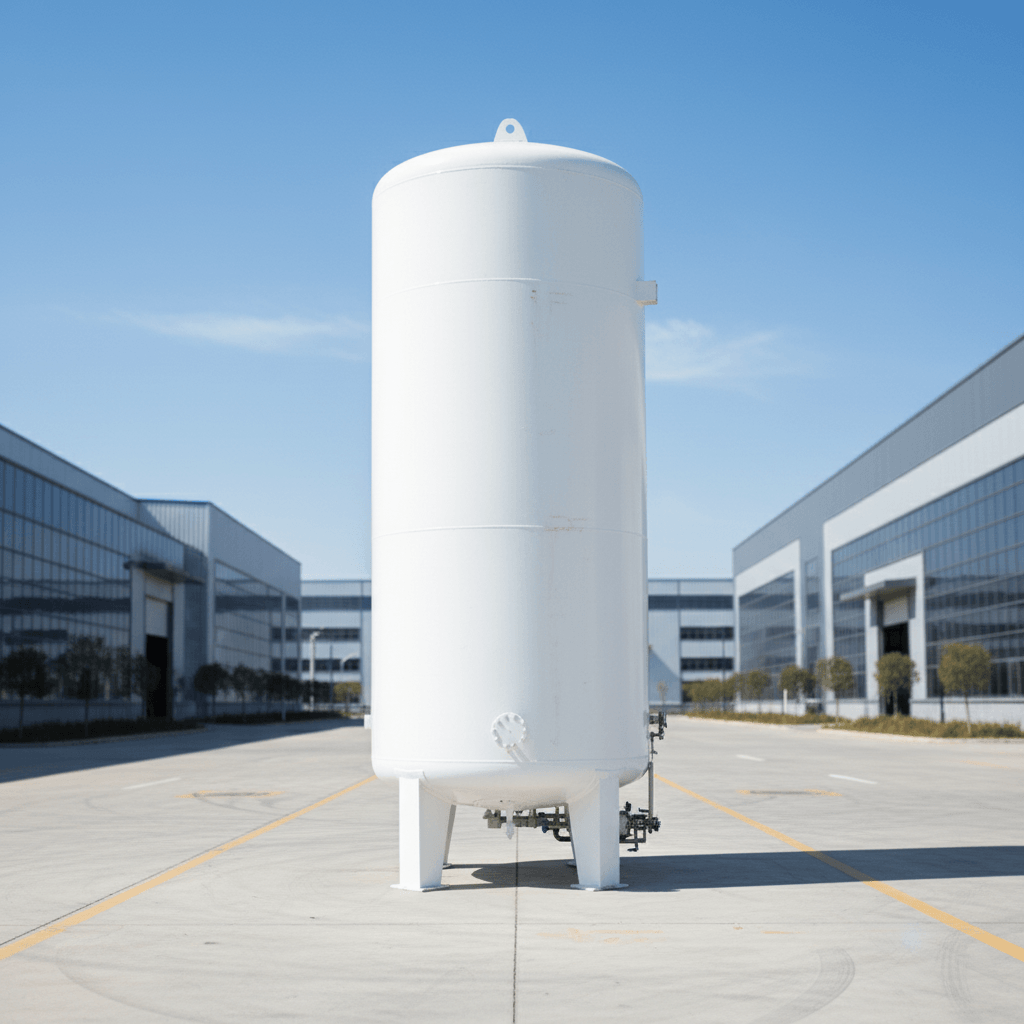
In the fields of biomedicine, research and industry, liquid nitrogen storage tanks are the key equipment for achieving ultra-low temperature preservation at -196℃. Through precise design, they effectively slow down the evaporation of liquid nitrogen and provide long-term stable storage for biological samples and industrial materials.
I. The extremely low temperature characteristic of liquid nitrogen
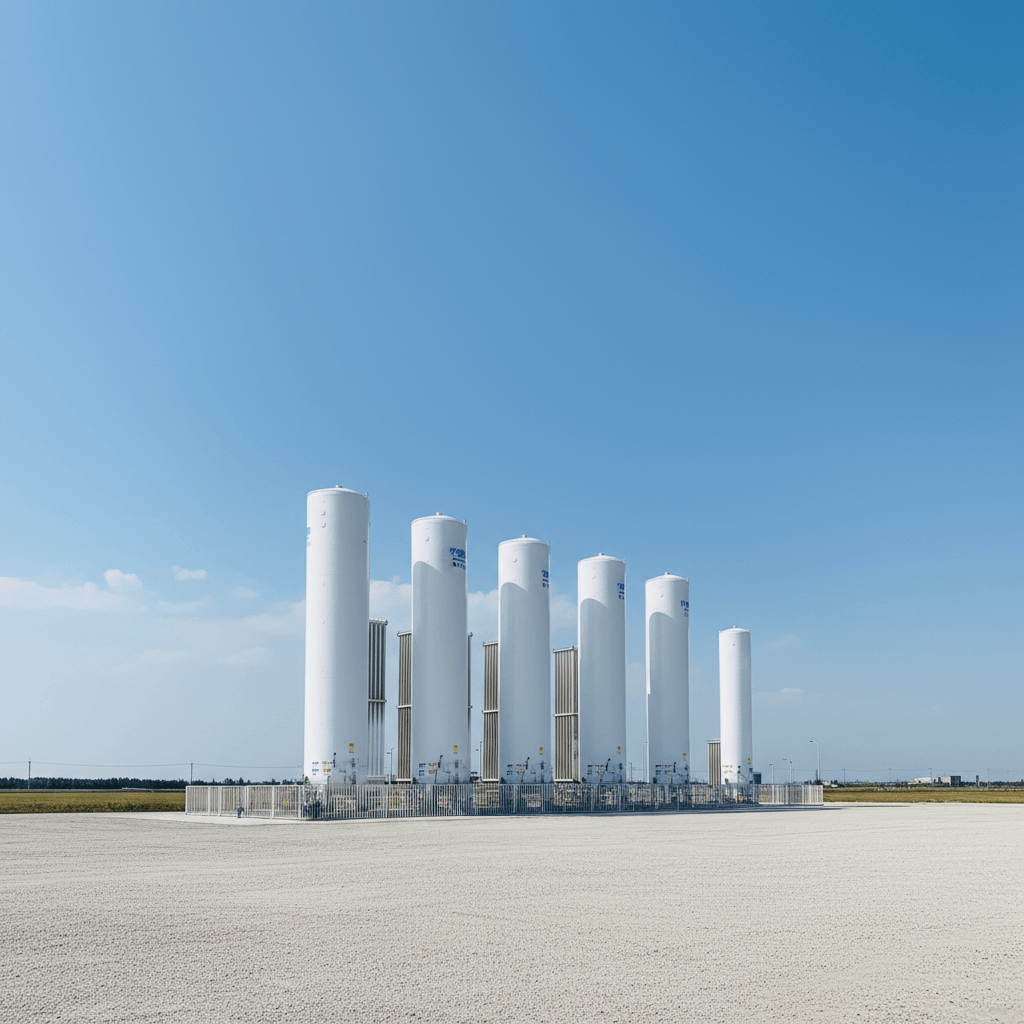
Liquid nitrogen is a liquid formed by the liquefaction of nitrogen gas. Its boiling point under standard atmospheric pressure is -196℃. The vaporization process absorbs a large amount of heat and can rapidly cool down. However, without effective insulation, liquid nitrogen will rapidly evaporate. The core function of the storage tank is to delay this process.
II. Triple Thermal Isolation Protection
1.Vacuum insulation technology
The cryogenic storage tank is divided into an inner layer and an outer layer, and the inner layer and the outer layer are in a vacuum state. This can effectively check heat conduction and convection, thereby forming an efficient insulation barrier.
2.Multi-layer Reflective Screen
Inside the vacuum layer, there are 30 to 50 layers of aluminum foil reflective screens, with a reflectivity exceeding 95%, effectively blocking the transmission of heat radiation.
3.Long-neck tube and sealing design
The long-neck tube increases the resistance of the heat conduction path; the low-temperature-resistant neck plug seal allows for pressure release while reducing the entry of heat and the escape of cold air.
III. Intelligent Stress Management
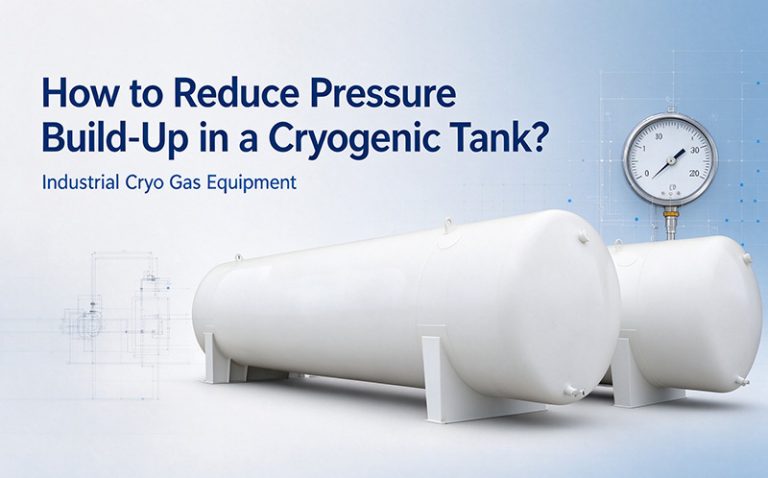
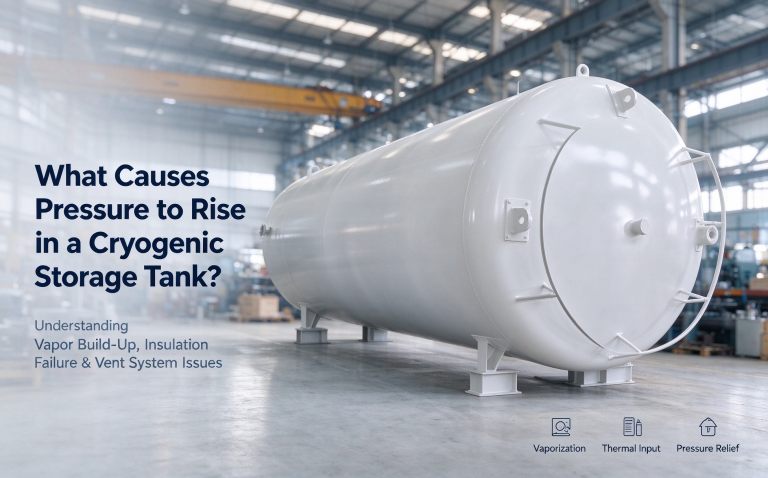
When liquid nitrogen is heated, it will evaporate, thereby increasing the pressure. This system can be adjusted as necessary to ensure safety.
Automatic pressure balance valve: Automatically regulates the pressure difference between the interior and the exterior, preventing deformation or overpressure.
Double safety relief device: Includes a safety valve and a rupture disc, providing dual protection. It can safely release and relieve pressure in abnormal high-pressure situations.
Ⅳ. Self-pressurized Liquid Nitrogen Tank
The heat is absorbed through the pressurized tubes that are in close contact with the outer shell. As a result, some of the liquid nitrogen evaporates and is pressurized to 0.05 – 0.09 MPa. During the liquid discharge process, this device can automatically discharge the liquid using its own pressure difference without the need for external intervention. In addition, two safety valves and a rupture disk are also important components of the device’s safety prevention system.
V. Daily Maintenance Tips
Avoid collisions and prevent the vacuum layer from being damaged;
Regularly inspect components such as the neck plug and sealing ring;
Monitor the liquid level (top up when below 1/3) and pressure;
Use isopropyl alcohol for cleaning to avoid corrosion.
VI. Conclusion
The liquid nitrogen storage tank is a technological achievement resulting from the integration of materials science and thermodynamics. With multiple insulation and pressure control mechanisms, it creates a stable and safe ultra-low temperature environment, and is widely used in both scientific research and industrial fields.