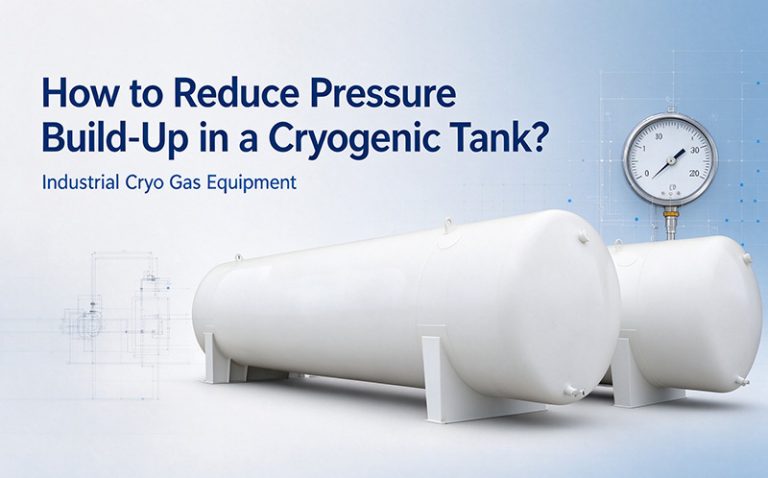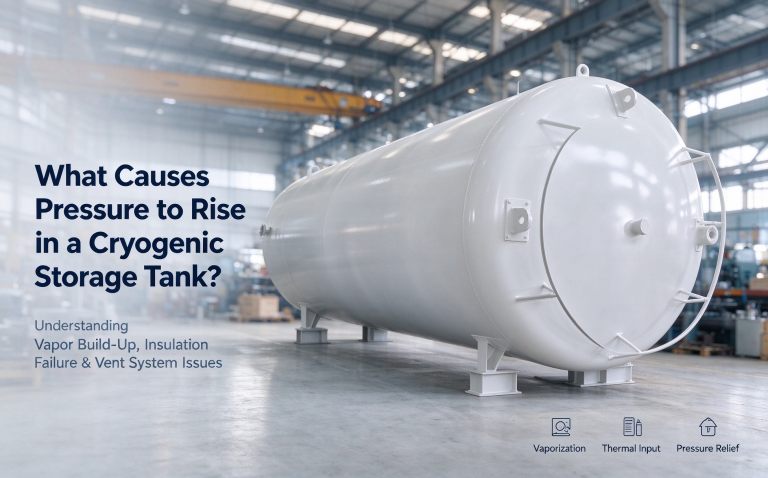
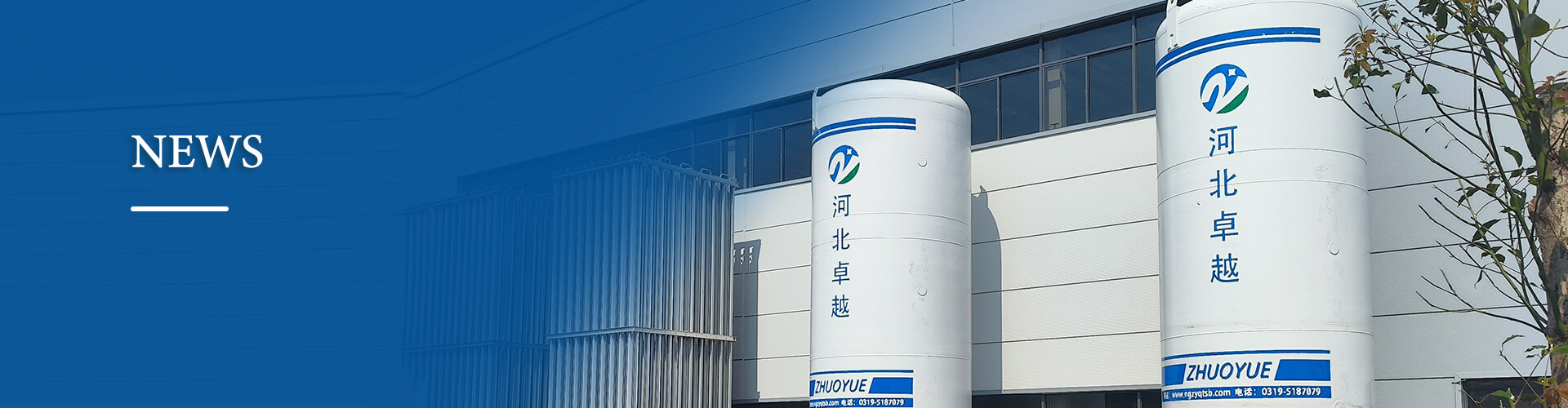
Cryogenic carbon dioxide storage tanks store liquid carbon dioxide and are suitable for low-temperature and medium-pressure conditions. The temperature is typically between -20°C and -35°C, and the pressure is 20 to 22 bars. Non – Cryogenic storage usually involves using normal-temperature high-pressure gas cylinders. Low-temperature storage tanks are suitable for businesses that require large-scale storage, higher density, and less frequent filling.
The choice between a Cryogenic carbon dioxide storage tanks store or non-low-temperature system mainly depends on your daily gas usage, available space, and budget.
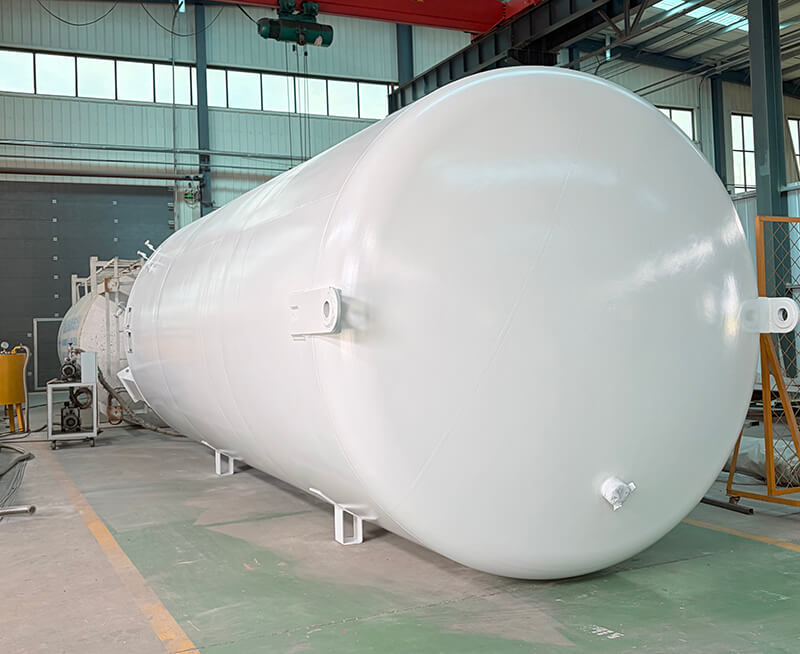
Cryogenic liquid carbon dioxide (LCO₂) storage tanks
Cryogenic storage tanks precisely control the low temperature and pressure to keep carbon dioxide in a liquid state. They are suitable for storing large amounts of gas and can significantly reduce the ground space occupied compared to high-pressure gas cylinder groups.
Applications: Large-scale manufacturing, food processing/freeze-drying, carbonation of beverages, and enhancement of greenhouse gases.
Advantages: When used in large quantities, they offer higher storage density and better economic efficiency, with significantly reduced filling frequency and significant supply chain benefits.
Disadvantages: They require a higher initial investment, require dedicated space, and have certain safety requirements.
Non – Cryogenic carbon dioxide storage
Non – Cryogenic storage usually refers to traditional high-pressure gas cylinders or multi-cylinder groups (MCPs). Carbon dioxide remains at room temperature but is under extremely high pressure.
Applications: Small-scale users, laboratories, small-scale welding, and situations with temporary or mobile applications that cannot install fixed storage tanks.
Advantages: The initial cost of equipment is lower, and it is convenient for transportation and carrying. If you frequently change business locations or need to use gas in different areas of the same facility, a single gas cylinder is very flexible and convenient.
Disadvantages: The operation is troublesome and the downtime is long; replacing gas cylinders will interrupt work. Frequent replacement of gas cylinders also increases manual operation and safety risks, and this is particularly evident when management is poor.
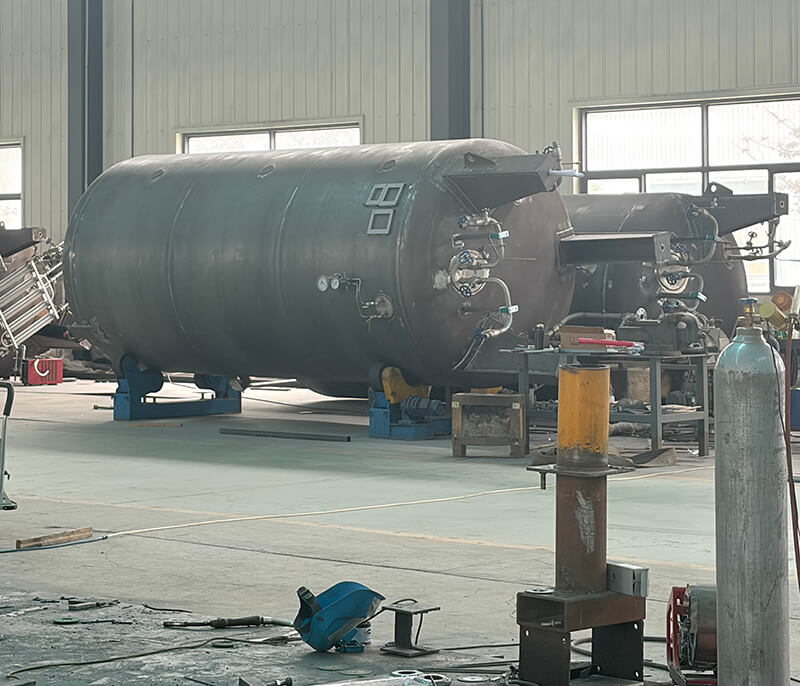
How to determine which system is more cost-effective and suitable for your business
To determine which system is more cost-effective and suitable for your business, you can evaluate based on the following criteria:
1.Volume and consumption: If you use a large amount of gas daily (such as for automated food packaging or large beverage filling), Cryogenic storage tanks have a lower unit cost and reduced delivery frequency, and you will quickly recoup the investment in the initial equipment.
2.Infrastructure and space: Large storage tanks (whether fixed or vertical design) require sufficient replacement space for trailers in your outdoor area. If your outdoor space is limited or you work in a smaller building, Non – Cryogenic gas cylinder groups are your only option.
3.Financial resources: If your business expands rapidly, smaller mobile micro-batch storage tank projects can sometimes be used as transitional solutions, allowing you to enjoy the benefits of cryogenic storage while avoiding the heavy construction or licensing burdens of large bulk tank facilities.
Before you select the carbon dioxide storage tank, it is recommended that you consult the engineers of Zhuoyue Gas Equipment. They will provide you with reference suggestions based on your applicable environment, usage, consumption volume and industry characteristics.