Previously, we discussed the basic logic for selecting the appropriate solutions. Many overseas customers of low-temperature gas equipment have reported that in their actual implementation and daily operation, they encounter many unexpected details that were not anticipated before – such as condensation on the tank surfaces in tropical regions, pressure fluctuations during multi-shift production, and supply matching deviations in different application scenarios. These fragmented practical aspects are precisely the key factors determining whether the storage system can operate stably for more than five years.
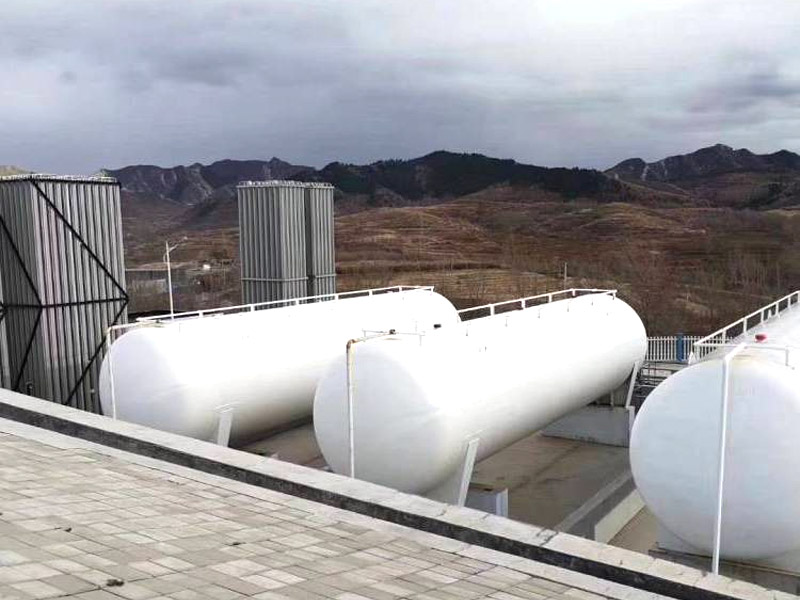
We have come across many food and beverage factories in Southeast Asia. The local environment temperature is consistently above 32°C, and the air humidity often exceeds 80%. Even for some liquid carbon dioxide storage tanks that were put into use only half a year ago, the outer tank surfaces began to have large areas of condensation. The water that flows down along the supports and reaches the ground even damages the nearby workshop cable trays. Later, after investigating the causes, it was found that it was not the insulation structure of the tank itself that was defective, but rather that no adaptation measures were taken for the high-temperature and high-humidity environment during installation: there were no heat-insulating supporting bases added at the bottom of the tank, and the metal supports directly connected to the outer tank in a rigid manner formed a “cold bridge”. The water vapor in the environment would continuously condense on the cold metal supports, and over time, it would also corrode the welds of the supports. The optimization solution for such scenarios is actually very simple. Just add a 10-centimeter-thick epoxy glass fiber insulation pad between the tank and the base support, and additionally wrap an aluminum foil reflective layer with waterproof properties on the outer layer of the outer tank. This will completely avoid the problem of condensation and dripping water. After some customers made the modifications, even during the hottest time of the day, the tank surface can remain dry without condensation.
There are also many large-scale carbonated beverage factories that operate 24 hours continuously. They previously encountered very troublesome problems: during the peak production period of night shifts, the output pressure of the storage tank would experience a brief and significant fluctuation, causing the bubble injection volume in the carbonation equipment to be unstable, resulting in inconsistent taste in the produced beverages, The proportion of defective products sometimes rises sharply.The root cause of these problems is mostly that the pressure regulation circuit of the storage system was not designed with a hierarchical structure, and only a single group of pressure reducers directly connected to the production line could respond to sudden large gas consumption. Our optimization solution for these customers was to install a secondary pressure stabilizing buffer tank at the output end of the storage tank, fully vaporize the liquid carbon dioxide coming out of the storage tank, and set the volume of the buffer tank to the 15-minute gas consumption during peak hours. Then, through a secondary precision pressure regulating valve, supply gas to each production line. After the renovation was completed, even when three production lines were simultaneously operating at full capacity, the pressure fluctuation during gas supply could be controlled within ±0.02 MPa, without affecting the bubble saturation of the products.
In response to the special compliance requirements of the food and beverage industry, the full-process traceability design of the storage system has now become a necessity. Many factories that export food products will be required by customs and customers to provide proof of the material of all equipment that comes into contact with food media, as well as the gas purity test records for the past half year. Now, the new generation of customized storage systems can integrate online micro-water and total hydrocarbon detection sensors in the gas outlet pipeline. All detection data and the operation parameters of the tank will be automatically synchronized to the cloud backend. The system will automatically generate a daily report that complies with HACCP standards. There is no need for manual recording and sorting. When auditing, directly export the complete electronic document, which can easily meet the compliance requirements without having to temporarily search for scattered paper-based detection reports.
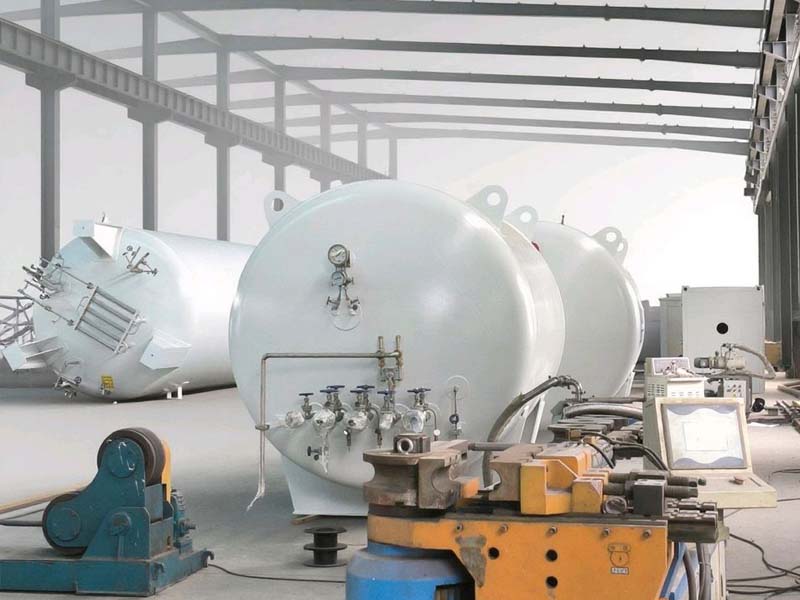
There are also two easily overlooked details in daily operation that directly determine the service life of the storage system. The first point is that after the tank is out of service for more than 72 hours, it cannot be directly and quickly pressurized upon restart. Instead, a small amount of food-grade carbon dioxide should be introduced for a “pre-cooling replacement” process. The temperature inside the tank should be gradually lowered to below -20℃ in three stages. Then, a large amount of liquid medium can be injected to avoid sudden temperature changes that might cause additional stress damage to the inner welds. The second point is about the outlet of the safety relief pipeline. It cannot be directly facing the workshop interior or the area where people pass through. It must be led to an outdoor position at a height of more than 3 meters above the ground. At the same time, a dust-proof cap to prevent rainwater backflow should be installed at the outlet to avoid rainwater flowing back into the tank during the rainy season and contaminating the subsequent stored liquid carbon dioxide.
For food and beverage manufacturing enterprises, the liquid carbon dioxide storage system is never a universal equipment that can be simply “purchased and installed for use”. From the initial scene adaptation and selection, to the detailed optimization during the installation stage, and to the daily standardized operation and maintenance, every small adjustment in each step will eventually translate into an improvement in the stability of the production end and a reduction in long-term operating costs.