
I. Basic Definition and Industrial Characteristics of Liquid Oxygen
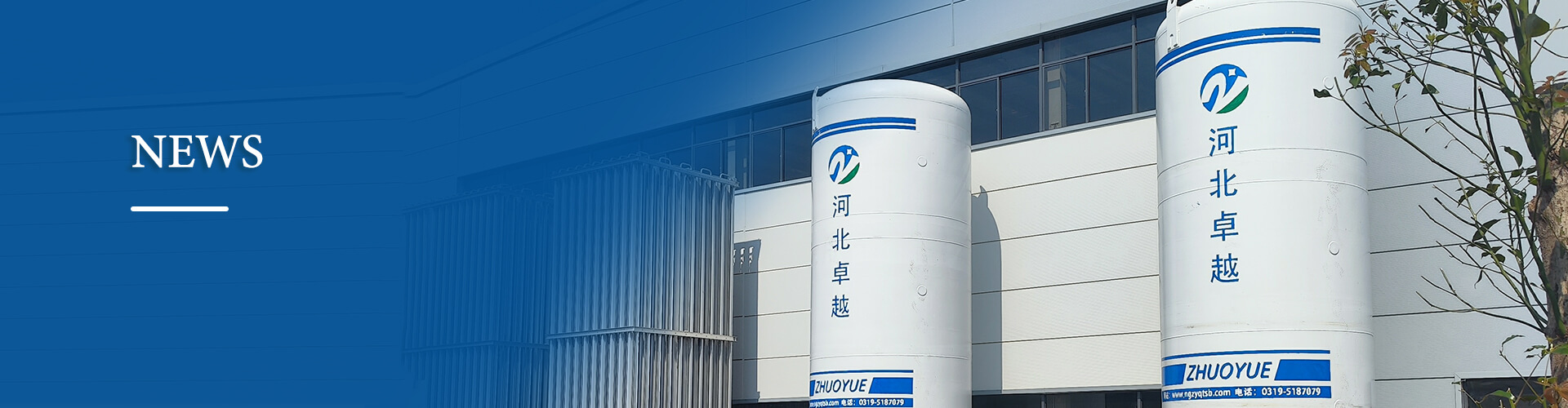
When overseas industrial customers first encounter projects involving cryogenic gases, the question they ask most frequently is: What exactly is liquid oxygen? And how is it different from ordinary gaseous oxygen? Let’s start with its physical form. In simple terms, liquid oxygen is the transparent blue liquid formed when oxygen is liquefied below -183°C. At standard atmospheric pressure, its density is approximately 1.14 tons per cubic meter. What truly sets it apart is the astonishing expansion ratio of 860:1. That is, when 1 cubic meter of liquid oxygen completely vaporizes, it can turn into 860 cubic meters of normal temperature gaseous oxygen. The volume being compressed to this extent naturally leads to a significant reduction in transportation and storage costs. In contrast, high-pressure gas cylinders for gaseous oxygen need to withstand pressures of several tens of megapascals, while liquid oxygen in the same volume container can carry hundreds of times more oxygen without requiring such high pressure. Precisely because of this, industrial gas stations, metal smelting, aerospace, medical oxygen supply, and other scenarios commonly use liquid oxygen as the preferred gas source. Once it comes into contact with combustible substances such as oil, wood chips, or organic lubricants, even without an open flame, it may form a sensitive explosive mixture under low-temperature conditions, which is the primary safety benchmark considered in the design of all liquid oxygen-related equipment.
II. The Standard Production Logic of Liquid Oxygen in Industrial Settings
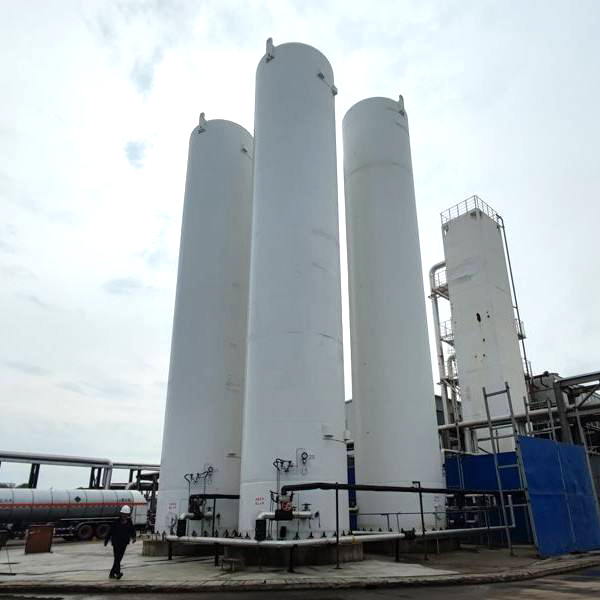
The mainstream production method for industrial-grade liquid oxygen is accomplished through a fully low-pressure air separation unit. The entire process is roughly divided into several steps: thoroughly removing dust, moisture, carbon dioxide, and acetylene-based hydrocarbons from the ambient air, cooling the air to the liquefaction temperature range using a turbine expander, and finally separating liquid oxygen from the air components in the distillation tower. The requirements for the purity of liquid oxygen vary significantly across different industries. For scenarios such as ordinary industrial welding and metal processing, a purity of 99.5% is sufficient. However, for medical-grade liquid oxygen, it needs to follow pharmaceutical standards, with even higher purity requirements. Every production process must be carried out under strict pharmaceutical-level control. As for the liquid oxygen used as a propellant in aerospace applications, the control standard for impurity content needs to be even higher, often being controlled at the level of one part per million. For most small and medium-sized industrial enterprises, it is more cost-effective to purchase ready-made liquid oxygen directly, along with local cryogenic storage tanks and vaporization equipment.
III. Core Technical Requirements for Safe Storage of Liquid Oxygen
The storage difficulties of liquid oxygen stem entirely from its ultra-low temperature property and strong oxidizing characteristic. Conventional ordinary carbon steel containers are completely unable to handle it – ordinary steel coming into contact with -183°C liquid oxygen will rapidly undergo low-temperature embrittlement and may crack even with slight external force. Currently, the mature liquid oxygen storage systems in the industrial field are all designed around the three core principles of “thermal insulation and cold preservation, material compatibility, and safe pressure relief”:
1. Material Selection: All cavities, pipelines, and valves directly in contact with liquid oxygen are made of austenitic stainless steel or aluminum alloy. These materials can still maintain sufficient structural toughness in the deep cold environment and will not experience brittle fracture risks. The surface of the materials undergoes strict degreasing and oil removal treatment to completely eliminate the risk of oxidation caused by organic residues.
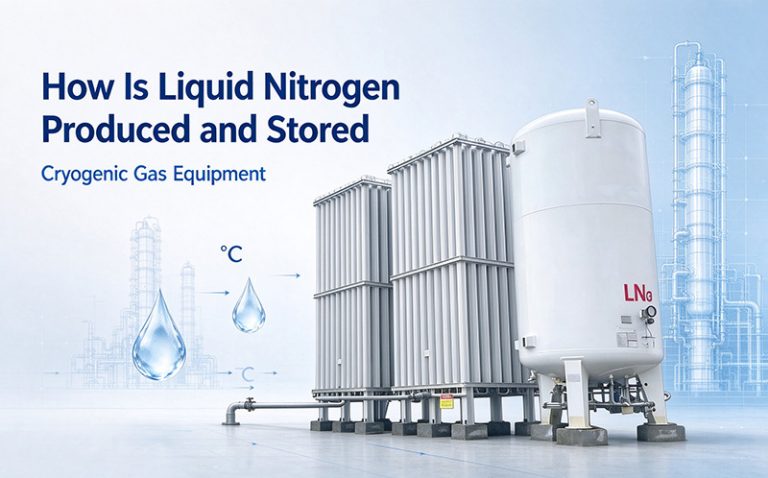
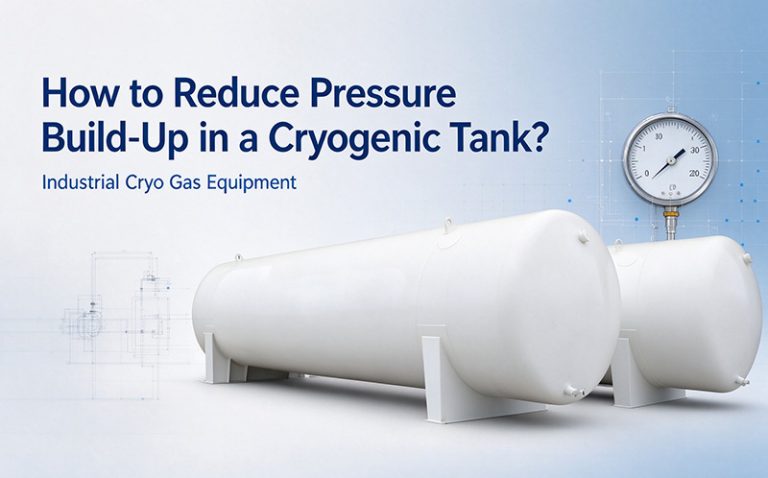
2. Thermal Insulation Structure: Most industrial liquid oxygen storage tanks almost all adopt a double-layer vacuum insulation structure. The inner container holds liquid oxygen, and the outer shell is a pressure-bearing shell. The vacuum between the two shells is filled to a high vacuum level, and it is also filled with perlite sand or multi-layer insulation paper to maximize the blocking of heat transfer from the external environment and significantly reduce the natural evaporation loss of liquid oxygen.
3. Safety Configuration: Each liquid oxygen storage container is equipped with two independent safety pressure relief valves, and a burst disc is provided as a redundant protection measure. Even if the equipment does not output liquid oxygen for a long time, a small amount of evaporated oxygen can be safely discharged through the pressure relief system, preventing abnormal pressure increase in the enclosed space. During normal use, the daily evaporation loss rate of compliant atmospheric pressure liquid oxygen storage tanks can be controlled below 0.3%, which can fully meet the storage cycle requirements of 7-15 days for small and medium-sized factories and gas stations.
IV. Main Storage Solution Selection for Different Scale Scenarios
We have worked with many overseas customers, who choose different liquid oxygen storage forms based on their own oxygen consumption scale. There is no absolute optimal solution; only a reasonable selection that suits the specific scenario:
•For workshops or laboratories with smaller oxygen consumption, a vertical cryogenic insulated gas cylinder with a volume of 175L-500L is generally selected, which is also known as a Dewar flask. A single cylinder can independently complete liquid oxygen storage and a small amount of vaporization output. It is very flexible in movement and installation, and no additional civil engineering is required.
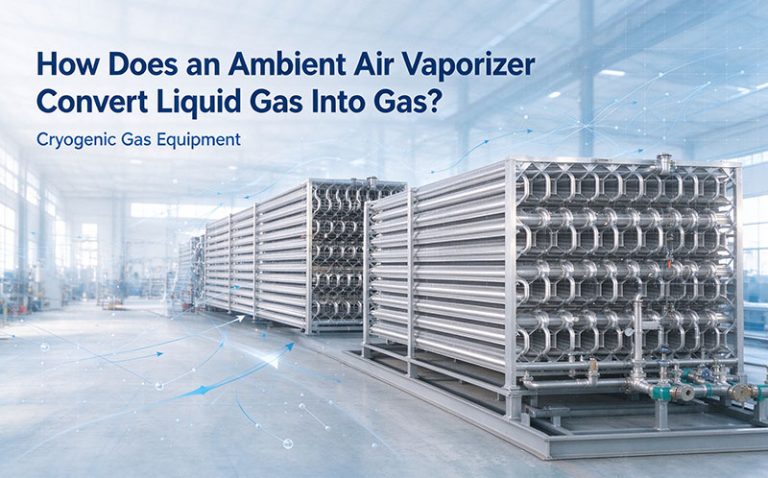
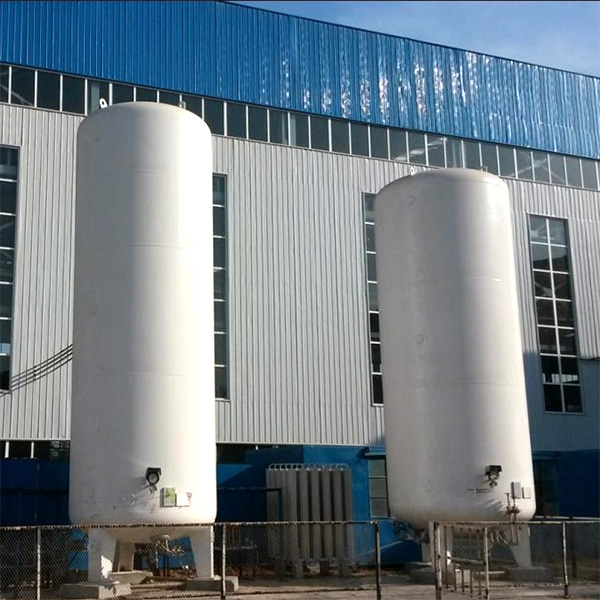
•For medium-sized industrial users, such as metal processing plants and food quick-freezing enterprises, a fixed vertical liquid oxygen storage tank with a volume of 5m³-30m³ is usually selected, combined with an air-cooled vaporizer. The stored liquid oxygen is vaporized into atmospheric pressure gaseous oxygen, and the gas is transported to various gas-consuming points through pipelines. The entire system can achieve 24-hour uninterrupted stable gas supply.
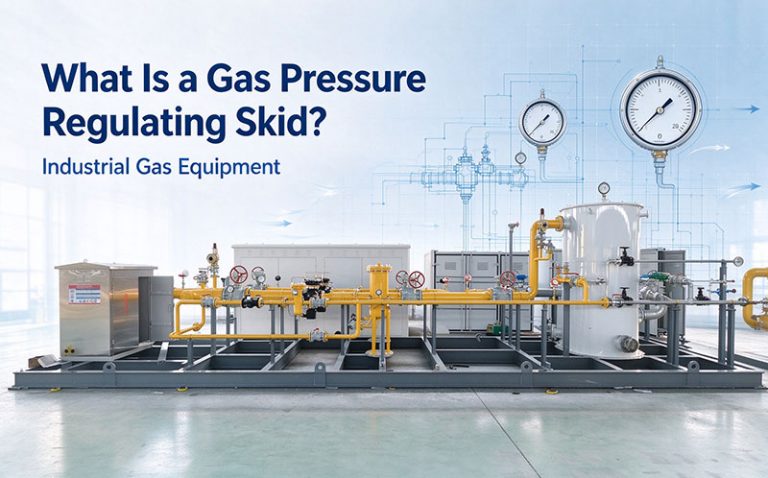
•For large gas production enterprises or centralized gas supply parks, large atmospheric pressure liquid oxygen storage tanks with a volume of 50m³ or more are selected, combined with a centralized pressure regulating and metering unit. The vaporization, pressure regulation, and flow measurement are completed uniformly, and then the gas is supplied to surrounding dozens of enterprises through the pipeline network, significantly reducing the cost per cubic meter of oxygen. All these storage equipment can be customized according to the local environmental temperature, gas pressure, and special requirements of the installation site.
V. Key Details Easily Ignored in Daily Operation
Many early failures of liquid oxygen storage systems are not due to the quality of the equipment itself, but rather due to the neglect of a few basic details during daily operation.
Firstly, regular checks should be conducted on the vacuum degree of the tank’s inner layer. Once the vacuum degree fails, the insulation performance will rapidly decline, and the evaporation rate of liquid oxygen will significantly increase. In severe cases, it may even cause the pressure relief valve to frequently activate. Only by re-pumping the vacuum can the equipment be restored to normal operation.
Secondly, all external pipelines connected to the liquid oxygen storage tank must have dedicated discharge ports. It is strictly prohibited to retain a large amount of liquid oxygen in the pipeline system to prevent the pressure in the pipeline from rapidly rising due to the heating of the liquid oxygen, causing an overpressure risk. During daily operation, operators must strictly avoid touching any liquid oxygen-related valves and interfaces with gloves contaminated with grease, avoiding safety hazards of oxidation and combustion from details.
For systems that operate continuously for a long time, it is recommended to clean the heat exchange fins of the vaporizer once every 6 months to avoid dust accumulation affecting the heat exchange efficiency of the air-cooled vaporizer and ensuring that the vaporization capacity during peak gas consumption periods can stably meet the demand.