

Working Principle of Environmental Air Gasifier: The Complete Conversion Process from Liquid to Gaseous State
For overseas buyers engaged in industrial gas applications, LNG storage and transportation, and cryogenic engineering, air-cooled gasifiers are indispensable core heat exchange equipment in many projects. Unlike heating-type gasifiers that require additional consumption of steam, electricity, or hot water, the environmental air gasifier uses the natural environment’s air as a heat source to safely and stably convert low-temperature liquid gas into gas of the required temperature for use. This article will break down the complete conversion process with clear logic to help you make more reasonable decisions in equipment selection, project design, and daily operation.
I. Core Design Logic of Air-Cooled Gasifier
The core design starting point of the air-cooled gasifier is to utilize the significant temperature difference between air and cryogenic liquid media to complete phase change heat exchange without consuming additional active energy.
- The entire equipment has no external heating elements, and during operation, it generates almost no additional energy consumption. Over a long period of use, it can significantly reduce the operating costs of the project;
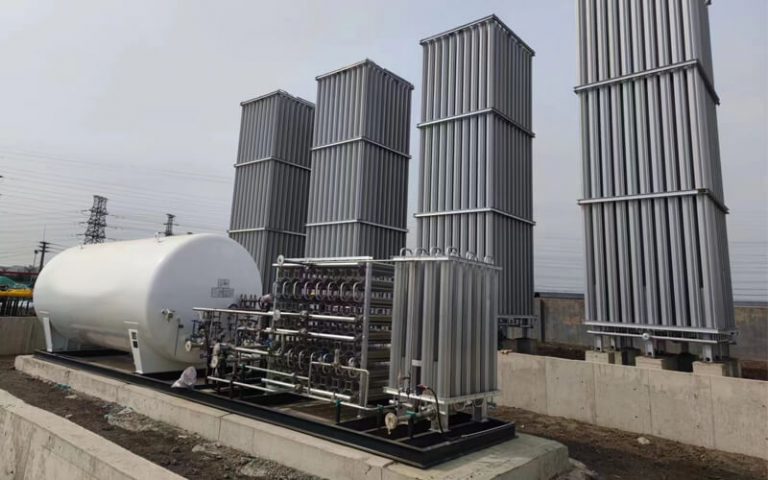
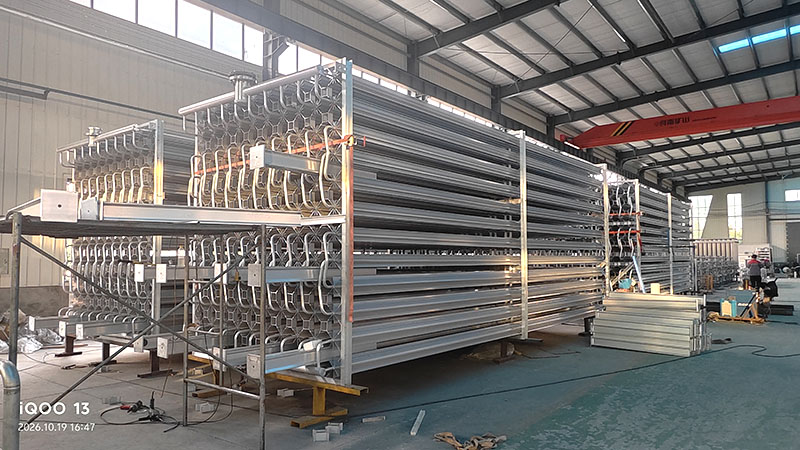
- Its main structure is composed of a large number of high-conductivity performance aluminum alloy finned heat exchange tubes. These fins greatly expand the contact area between the equipment and the air, allowing the efficiency of natural convection heat exchange to be fully enhanced;
- According to the current domestic industry group standards, conventional industrial air-cooled gasifiers are suitable for working conditions with a maximum working pressure greater than 0.1 MPa and a flow rate greater than 50 m³/h under standard conditions. Specialized gasifiers for different media also have corresponding detailed specifications, fully capable of meeting the basic requirements of most industrial gas projects.
II. Initial Absorption of Heat by Liquid Gas after Entering the Equipment
The entire conversion process begins when the cryogenic liquid gas enters the inlet of the gasifier. This is a key preheating stage before the phase change occurs.
- For cryogenic liquid gases such as liquid oxygen, liquid nitrogen, and LNG, when they come out of storage tanks or tankers, they are basically saturated liquids, with temperatures much lower than the normal temperature of the ambient air. When entering the equipment, the temperatures are generally within the range of -162°C to -196°C;
- The liquid medium enters the equipment through the bottom liquid collection pipe and is then evenly distributed to each independent finned heat exchange tube. The cryogenic liquid directly contacts the tube wall, and the ambient air on the outside of the tube immediately starts to transfer heat into the tube;
- During this stage, the temperature of the liquid gas will only slowly and slightly increase, far from the boiling and vaporization stage. The medium remains in a liquid state and flows continuously, and the problem of local overheating and premature vaporization that may cause pressure fluctuations will not occur.
III. Core Phase Change: Complete Conversion from Liquid to Gaseous State
When the liquid medium inside the tube absorbs the heat required for phase change, it enters the most critical gasification stage of the entire process.
- As the heat exchange continues, the cryogenic liquid inside the tube begins to boil, transitioning from a pure liquid state to a state of mixed liquid and gas, with its volume rapidly expanding hundreds of times within a short period;
- The finned heat exchange tubes with dense fins will, through a reasonable tube arrangement, allow the liquid and gas phases of the medium to continuously complete heat exchange with the outside air during upward flow, with the liquid component continuously being converted into gas, and the proportion of liquid in the two-phase flow continuously decreasing;
- Unlike other gasifiers that require contact heat exchange or forced circulation, the phase change process of the air-cooled gasifier is driven entirely by natural temperature differences. The flow rate and heat exchange intensity of the entire process will automatically adjust according to changes in the ambient air temperature, ensuring a very stable operating state.
IV. Subsequent Heating and Stable Output Stage of Gaseous Medium
The cryogenic gaseous medium that has undergone phase transformation will not be directly discharged from the equipment outlet. Instead, it will undergo a sufficient over-heating process before reaching a usable state.
- After complete vaporization, the temperature of the cryogenic gas is still much lower than the ambient temperature. It will continue to flow upward along the heat exchange tubes and further absorb heat from the air, gradually rising to a level close to the ambient normal temperature;
- This over-heating process is very important. It can prevent residual un-vaporized tiny liquid droplets from remaining in the output gas, preventing problems of liquid carry-over in the subsequent pipeline, and ensuring the safe operation of downstream gas-using equipment;
- Finally, the constant-temperature gaseous medium that has undergone sufficient heat exchange will converge to the gas collection pipe at the top of the equipment and be stably transported to the downstream gas-using system through the outlet pipeline. The entire conversion process is thus completed at this point.
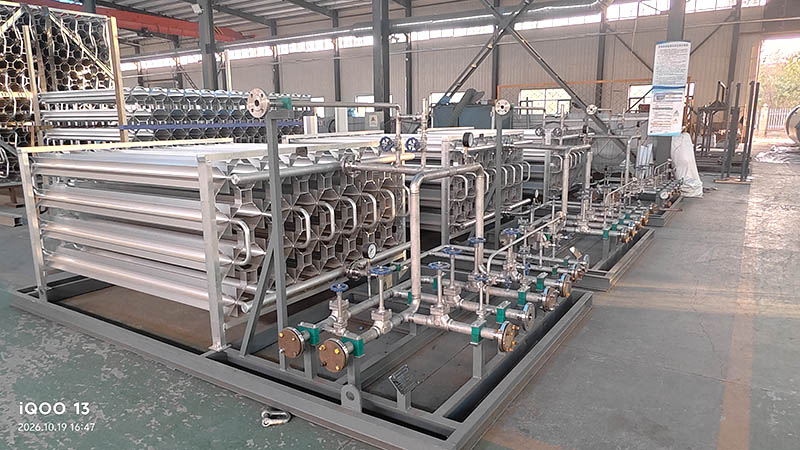
Ⅴ. Common Operating Conditions and Maintenance Considerations in Practice
For users of overseas projects, understanding the operating characteristics of the air-cooled gasifier can effectively extend the equipment’s service life and avoid unnecessary failures.
- When the equipment operates under high-load conditions for a long time, the surface of the heat exchange tubes will gradually form frost. The frost layer will to some extent reduce the heat exchange efficiency. This is why sufficient heat exchange capacity is reserved in the design of this type of equipment. In normal operating conditions, short-term frost formation will not affect normal gas supply;
- When using in areas with low ambient temperature and high humidity, the use of multiple equipment switching operation can allow the frosty equipment to have a natural defrosting period. There is no need for an additional complex heating and defrosting system;
- Daily maintenance only requires regular inspection of the sealing status of the pipeline joints, cleaning the dust and debris accumulated on the fins, and ensuring that the air can flow smoothly through the gap between the fins. This can maintain a stable heat exchange effect for a long time.
For many overseas industrial gas, cryogenic energy storage, and LNG application projects, the air-cooled gasifier, with its low energy consumption, easy maintenance, and stable operation characteristics, has become the preferred gasification solution. Understanding its complete conversion process not only helps you determine whether the equipment’s actual performance meets the standards, but also enables you to more accurately match the required equipment flow and specifications in the early design stage of the project.