
As a veteran professional in the field of cryogenic gas equipment, I have encountered numerous misunderstandings from customers when they first came into contact with liquid nitrogen: Some people directly used ordinary insulated buckets to store liquid nitrogen, and within less than half an hour, the container began to frost and deform; Others completely sealed the container filled with liquid nitrogen, and eventually almost caused an accident due to vaporization expansion. Many foreign customers, when they first sent in inquiries, would ask the first sentence: “What kind of container can you use for liquid nitrogen?” – This seemingly simple question actually directly relates to operational safety, liquid nitrogen loss, and long-term usage costs, and is also the basic knowledge that our cryogenic equipment service providers most want to explain to global customers.
Ⅰ. Containers that must never be used to store liquid nitrogen
First, clearly mark the red line. This can help you avoid 90% of safety hazards.
1.Ordinary glass containers: Liquid nitrogen reaches a temperature as low as -196℃. Ordinary glass will simply shatter under the rapid temperature difference, and the fragments and the cryogenic liquid will fly around, which can easily cause severe frostbite.
2.Ordinary metal cans with complete sealing: Liquid nitrogen will rapidly vaporize at room temperature, expanding by nearly 700 times in volume. The completely sealed containers have no space for pressure release, and a physical explosion will occur within a short period of time.
3.Regular plastic buckets and insulated buckets: These containers have not been optimized for deep cold environments in terms of materials. When in contact with liquid nitrogen, they will quickly become brittle and crack. The insulation effect is almost zero, and the liquid nitrogen will completely evaporate within a few minutes.
Ⅱ. Three Main Types of Liquid Nitrogen Storage Containers in the Industrial Field
Based on our practical experience in supplying products to global livestock, laboratory and medical customers, the currently compliant liquid nitrogen containers in the industry are mainly divided into three categories, each suitable for different usage scenarios:
1.Dewar Flask: It is a non-pressure container with a capacity ranging from 5 liters to 200 liters. The smaller capacity models can be directly drained for liquid extraction, while the larger ones need to be used in conjunction with a transfer tube. The commonly used aviation aluminum alloy Dewar flasks have a double-layer design with a high vacuum and multiple layers of insulation in the middle. The static storage time can reach over 50 days, making it highly suitable for small-scale laboratory liquid extraction and short-term sample storage. Many new customers mistakenly refer to pressurized cryogenic liquid nitrogen bottles as Dewar flasks. It is important to pay special attention to the distinction here. Non-pressure Dewar flasks must not have a sealed cover to lock them in place; instead, a natural exhaust gap must be retained.
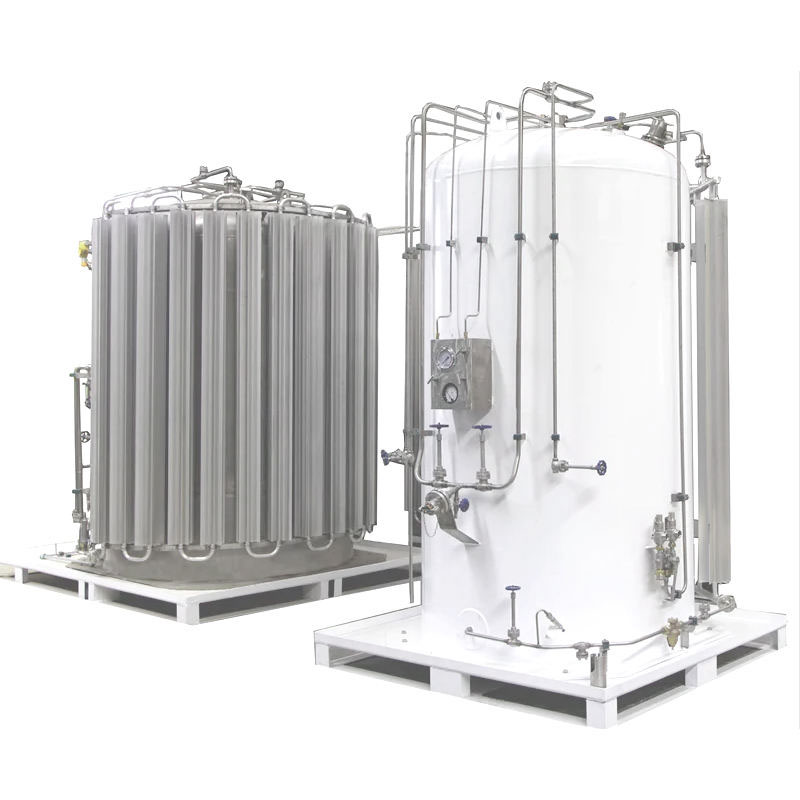
2.Pressure-bearing Cryogenic Liquid Nitrogen Cylinder: This is a pressure-bearing container with a vacuum jacket. It is equipped with a safety relief valve and a rupture disk as standard. The maximum working pressure can reach 350 psig, and the capacity ranges from 80 liters to 450 liters. Such containers are suitable for centralized gas supply scenarios in factories. They do not require frequent filling of the gas, and the built-in safety devices can automatically balance the internal vaporization pressure. There is no need for frequent manual opening of the cover for exhaust, making it a cost-effective choice for medium-sized production scenarios.
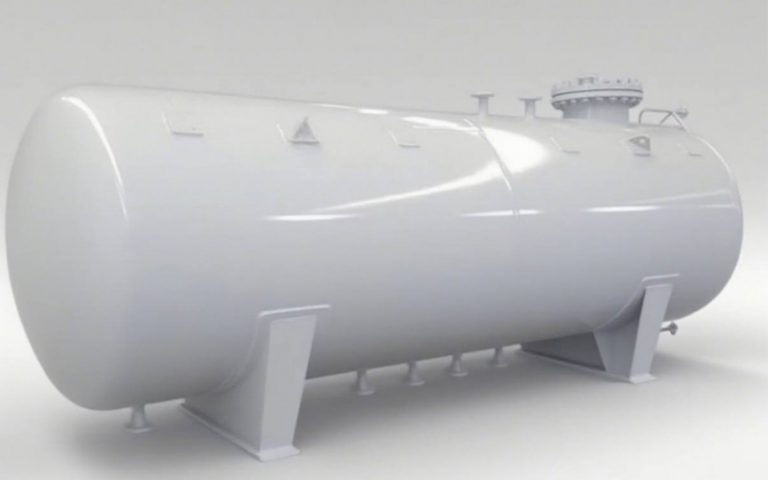
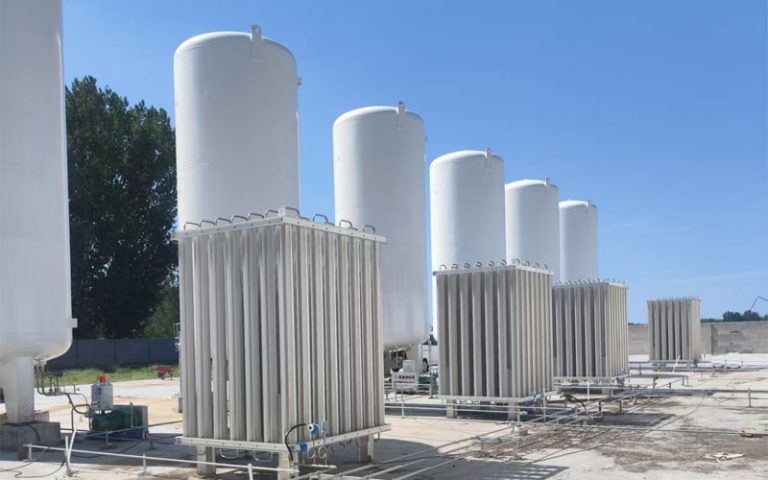
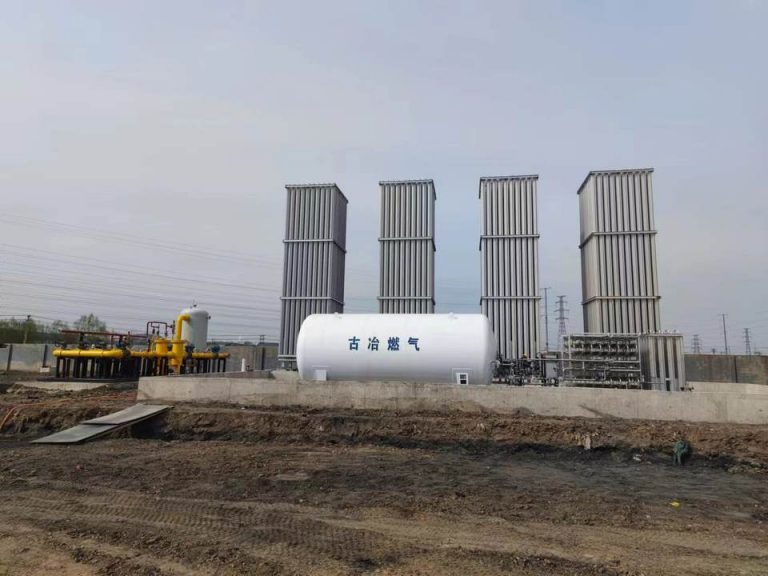
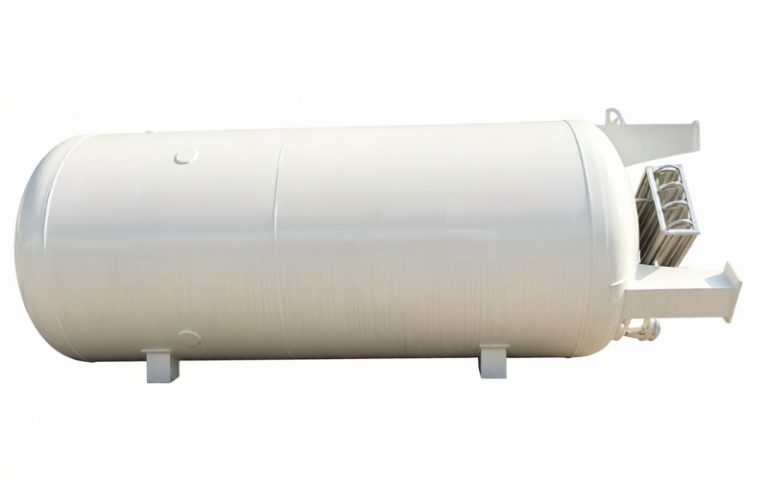
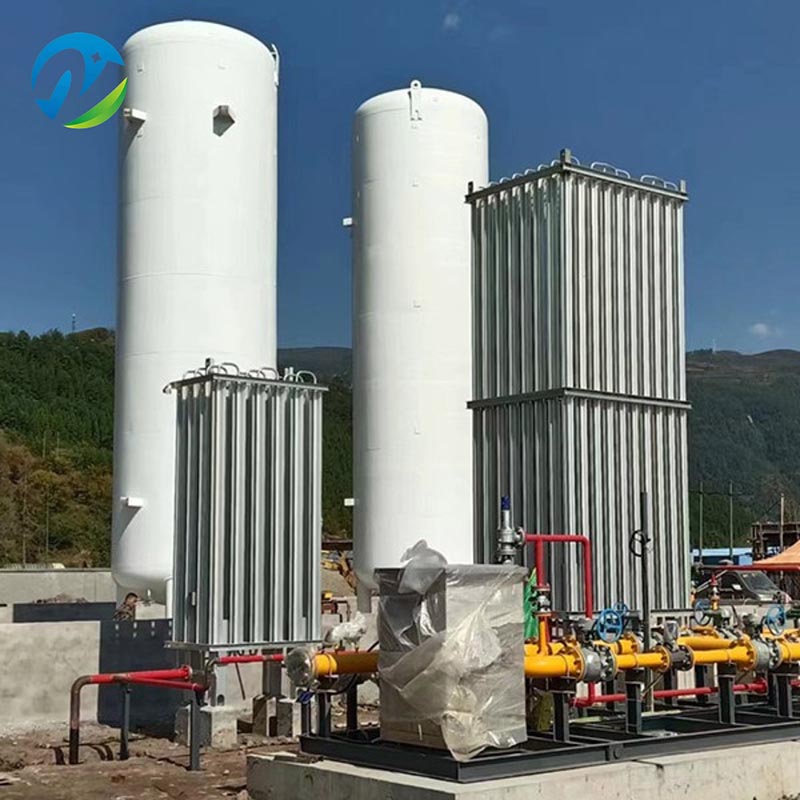
3.Fixed Low-temperature Liquid Nitrogen Storage Tanks: Their shapes are either spherical or cylindrical. They are completely designed and manufactured in accordance with ASME standards and are used as fixed storage devices for large-scale sites. These tanks are usually equipped with centralized pipeline output systems, and the natural evaporation loss of liquid nitrogen per day can be controlled at an extremely low level. They are suitable for customers such as biopharmaceutical factories and large-scale cold chain logistics parks, which have a high daily consumption of liquid nitrogen.
III. Practical Suggestions for Selecting Containers Based on Usage Scenarios
Many customers choose containers solely based on their capacity, only to find out later that they do not meet their actual needs. We have summarized three most practical selection criteria for export customers in different regions:
1.Short-distance road transportation: Choose liquid nitrogen tanks with shock-proof structures. The interior has been reinforced to withstand bumps, which can absorb road vibrations and protect the vacuum layer. Once filled with liquid nitrogen, they can be directly transported. This is highly suitable for the transfer of semen between livestock stations and the delivery of cross-regional biological samples.
2.International air transportation: Only dry liquid nitrogen transfer tanks are allowed. The inner liner has a core for adsorption. Before departure, fill the tank with liquid nitrogen and allow the adsorption material to fully absorb it. Then, remove all the free liquid nitrogen before departure. There should be no free-flowing liquid nitrogen inside the container. This fully complies with the security inspection requirements for both air and railway transportation and is currently the standard solution for transporting biological samples across borders.
3.Long-term sample storage in the laboratory: Preferentially select liquid nitrogen tanks ranging from 10 liters to 30 liters. The numbered trolleys make it convenient to categorize and access the samples. The accompanying protective covers can prevent damage to the tank from daily bumps and knocks. The high vacuum layer ensures a service life of over 5 years, and the overall cost for long-term use is much lower than that of frequently purchasing small-capacity simple containers.
Finally, we would like to remind all users that regardless of which type of liquid nitrogen container is chosen, it must be placed in an area with good ventilation and coolness, where the ambient temperature does not exceed 50℃. It must be kept upright throughout the process and must not be tilted, placed horizontally, or stacked. During operation, you must wear cold-proof gloves, safety goggles, and long-sleeved work clothes to avoid frostbite caused by direct contact of the cryogenic liquid with the skin. Zhuoyue Gas Equipment, as a supplier with extensive experience in cryogenic gas equipment, has provided liquid nitrogen container solutions suitable for different scenarios to over 30 regions worldwide. If you have any questions during the selection or usage process, you can contact our technical team at any time. We will combine your actual usage needs to provide the safest and most economical complete cryogenic storage solution.v