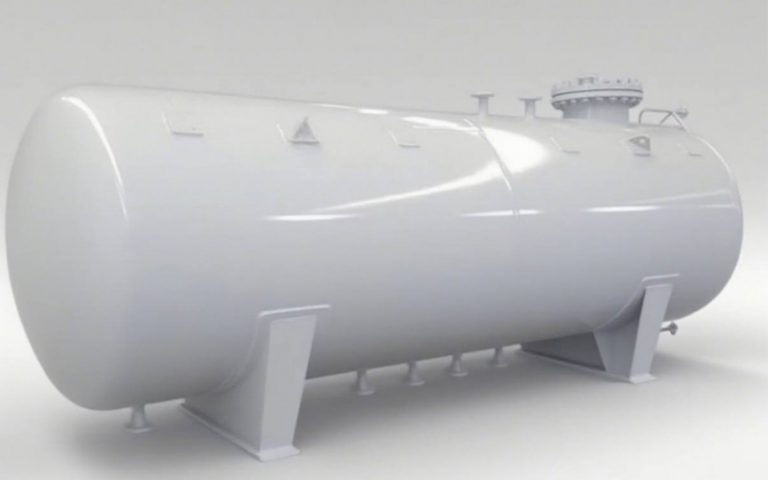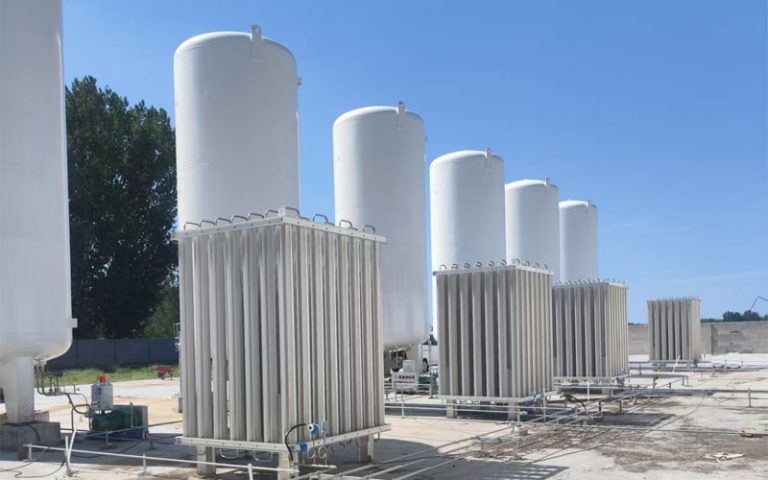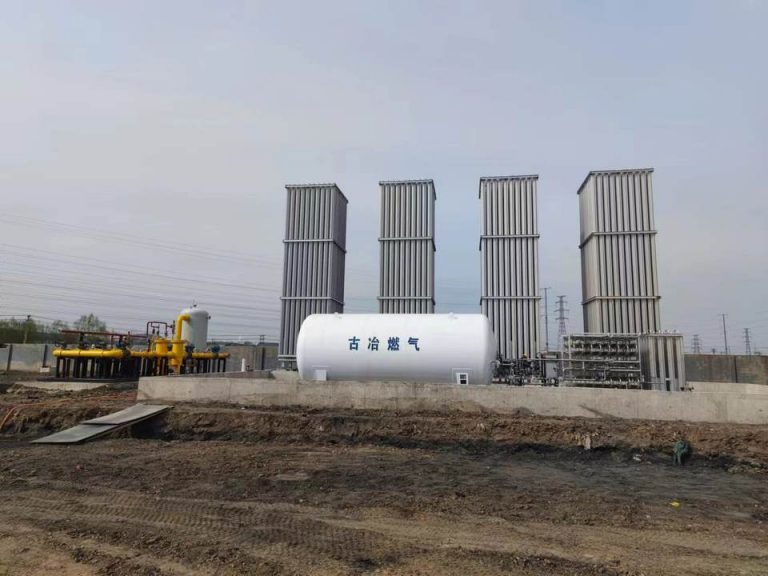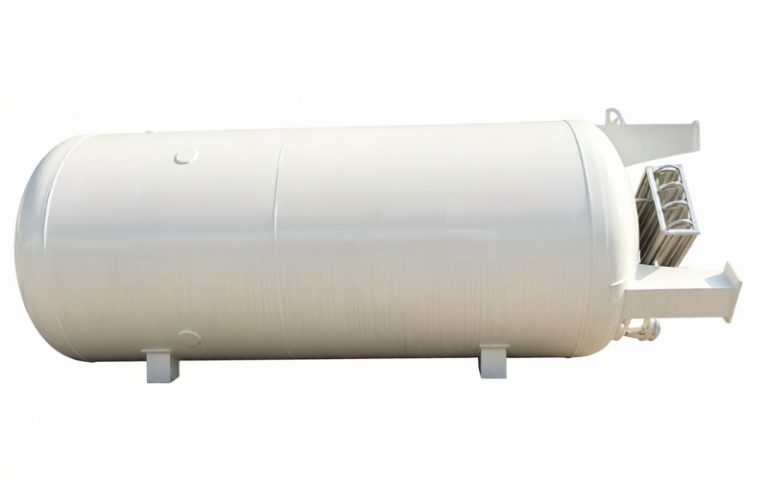
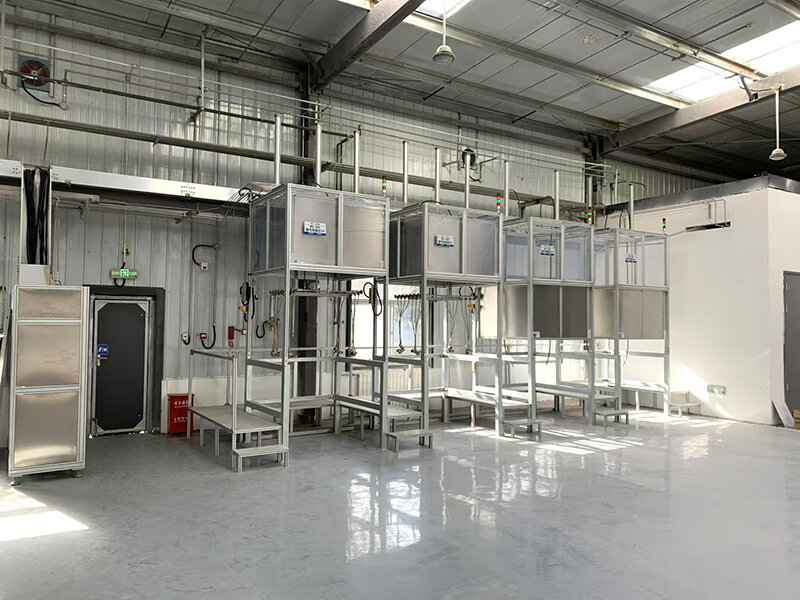
The basket-type filling system adopts an advanced modular design. The system can strictly control the filling pressure, flow rate and capacity. All gas cylinders can eventually be connected to the same filling pipeline, enabling the rapid filling of multiple gas cylinders.
Core Working Principle
This is a system that extracts liquefied gas from large storage tanks and distributes it through a multi-branch pipeline network consisting of pipes and valves to multiple storage tanks.
The process operates in four distinct phases:
1.Transfer & Pre-Cooling
Process:The liquid and gas are directly extracted from the liquid storage tank. The liquid is transported through vacuum insulated pipelines.
Working principle:Before sending the gas cylinders to the low-temperature liquid, pre-cool the intake pipeline to avoid potential safety hazards caused by flash evaporation .
2.Basket / Pack Connection
Filling process: The gas cylinder group is neatly placed in the filling system. The filling system is connected to the main pipeline through flexible low-temperature hoses or tail cables.
Fault detection: The filling system integrates isolation valves. When a single gas cylinder is detected to be faulty, it can shut off that specific faulty cylinder without interrupting the filling process of the gas cylinder group.
3.Pressurization & Phase Transition
Depending on the application, the system handles the product in two ways:
Inflation process:The liquid is first injected into the low-temperature evaporator through a high-pressure pump for evaporation.
At this point, the liquid pressure will increase to a high-pressure gas state, and then it is completed by being compressed into gas form for filling the gas cylinder.
Liquid filling:The liquid bypasses the evaporator and is directly injected into the low-temperature liquid storage tank by the pump. The liquid filling is completed.
4.Controlled Shut-Off
Process Description:During the filling process, the equipment will keep a record. Most of the time, an electronic scale is situated under each cylinder to carry out this step.
Technical Perspective: At the moment when a specific cylinder attains the predetermined weight or pressure level, the automatic control valve will disconnect the gas supply of that cylinder, thereby making the filling operation both safe and precise.
Key Safety and Design Features
Check valves are installed at the connection points of each cylinder to prevent backflow and cross-contamination. The principle is that when the pressure inside the cylinder is higher than that of the pipeline, backflow occurs, and the check valve can effectively prevent it.
The pressure relief device is equipped with pressure relief valves and rupture discs that comply with ASME/PED standards on the manifold to prevent the occurrence of overpressure.
The exhaust device and exhaust valve are used to safely discharge the evaporated gas and remove air or moisture from the pipeline, which is particularly important for the filling of active gases such as oxygen.
Material integrity: Because the manifold is going to be subjected to very low temperatures and a very high pressure environment, its parts are all made of materials that have special low-temperature resistance properties like bronze, Monel alloy, or stainless steel.
If you would like to learn more about the specific engineering and automation solutions used in these systems, please contact Nan Gong Zhuoyue Gas Equipment Company. We will provide you with customized design solutions tailored for the factory level.