

Core Role and Advantages of Natural Gas Pressure Regulators
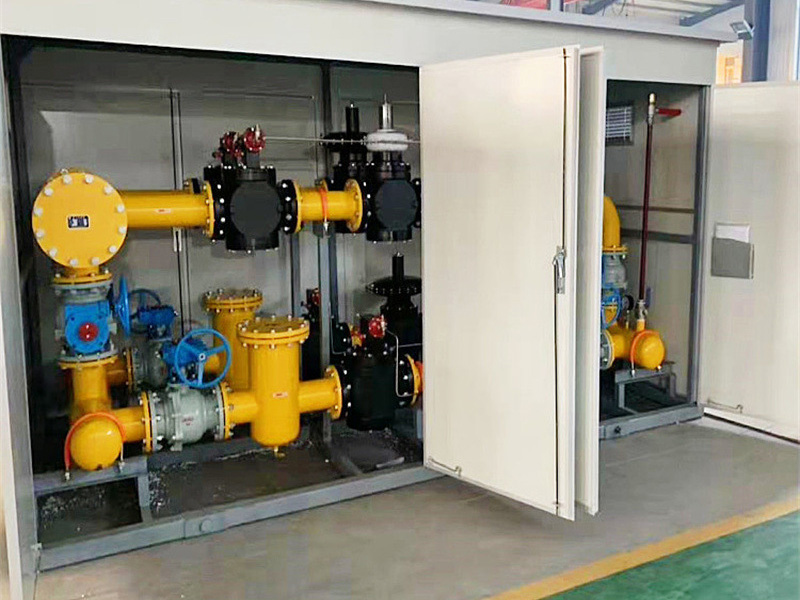
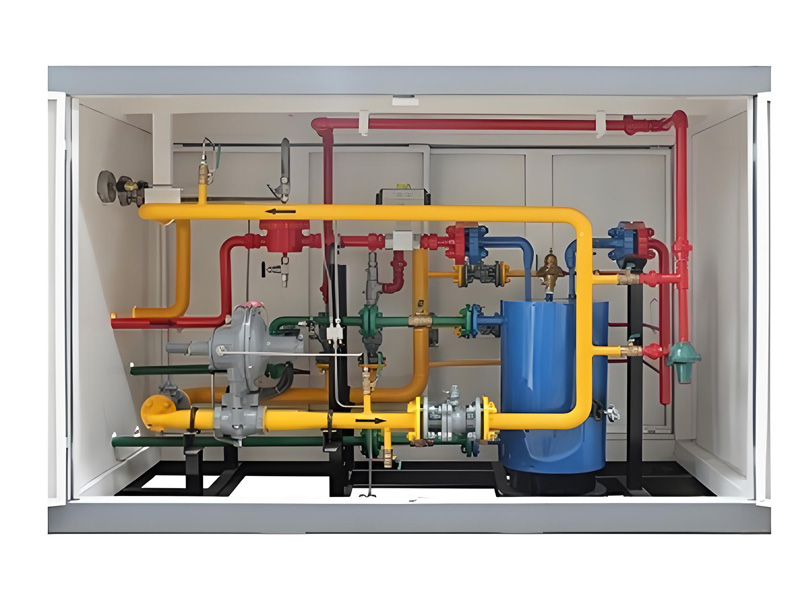
As a core supporting component in the field of low-temperature gas equipment, the natural gas pressure regulator is a key device that ensures the stable operation of the transmission and distribution system. It can convert the fluctuating high-pressure natural gas from the upstream into a stable low-pressure gas source that downstream equipment requires, playing an irreplaceable role in industrial kilns, CNG fuel supply, urban gas transmission and distribution, etc. Unlike pressure regulators that require external power or hydraulic drive, this passive design has particularly significant advantages in remote power-free stations and scenarios with extremely high explosion-proof requirements in chemical industrial parks. It completely avoids the risk of pressure regulation interruption caused by the failure of external power supply. Many foreign customers will repeatedly inquire about its actual operation logic during the selection process. Many customers from different countries will also raise targeted questions based on the local gas source characteristics of the station and the supporting conditions of the station, and even request the corresponding measured operation data under specific operating conditions as supporting materials for project compliance. Today, from the practical perspective of equipment service providers on the front line, we will thoroughly explain its working principle.
Working Principle of Direct-Action Pressure Regulators
The most common direct-action pressure regulator relies on a force balance logic for its operation. When the natural gas pressure regulating station is operating normally, high-pressure natural gas enters the chamber from the upstream inlet. It then passes through embedded sintered metal filter elements for a second filtration process, removing any residual welding slag or dust in the pipeline and preventing it from scratching the sealing surface. Then, the high-pressure gas flows through the variable throttling area of the valve port, reducing the pressure by narrowing the flow cross-section. The reduced-pressure gas enters the downstream exhaust chamber. The pressure in the exhaust chamber directly acts on the diaphragm. Above the diaphragm, there is a pre-set spring that provides reverse preload force. Once the exhaust pressure exceeds the set value, the diaphragm will be pushed upwards, and the valve stem will then close the valve port. As a result, the intake volume decreases and the pressure at the outlet also drops. Another situation is when the load suddenly increases. If the downstream equipment demands more air, the pressure in the exhaust chamber will drop. At this time, the spring will push the diaphragm downwards, and the valve port opens wider instead, allowing more gas to be replenished. In this way, the outlet pressure can always remain within the preset range. This structure has no complex intermediate components and is particularly convenient for maintenance, making it the preferred solution for small and medium flow scenarios.
Application of Indirect Acting Pressure Regulators with Pilot Mechanisms
In situations with high flow rates and high precision requirements, indirect acting pressure regulators with a pilot mechanism are more widely used. Instead of directly driving the main valve by the main diaphragm, this type of regulator uses a smaller pilot mechanism to sense the subtle changes in the outlet pressure. Then, the loading pressure output by the pilot mechanism drives the switching action of the main valve. The advantage of this design is a significant improvement in sensitivity. Even if there is a slight fluctuation in downstream gas usage, the regulator can respond quickly and will not experience significant pressure oscillations. This design is particularly suitable for scenarios with extremely high requirements for pressure stability, such as gas power stations and large industrial furnaces. In a project of a certain glass factory in Europe that we provided for, a pilot-type pressure regulator was selected. It has been in continuous operation for three years, and the deviation of the outlet pressure has always been controlled within 1%, fully meeting the constant temperature production requirements of the kiln.
The Importance of Front-End Pre-Treatment for Operational Stability
One point that many overseas customers tend to overlook is that the actual operational stability of the pressure regulator is directly related to the pre-treatment process at the front end. If the incoming gas upstream contains liquid or impurities, even the most precise pressure regulator will experience sealing leaks and unstable pressure within a few months. For each pressure regulator exported, Zhuoyue will provide a targeted pre-filtering solution as a companion, and also attach pressure adjustment guidelines for different operating conditions with the product, helping overseas customers avoid many operational difficulties.