

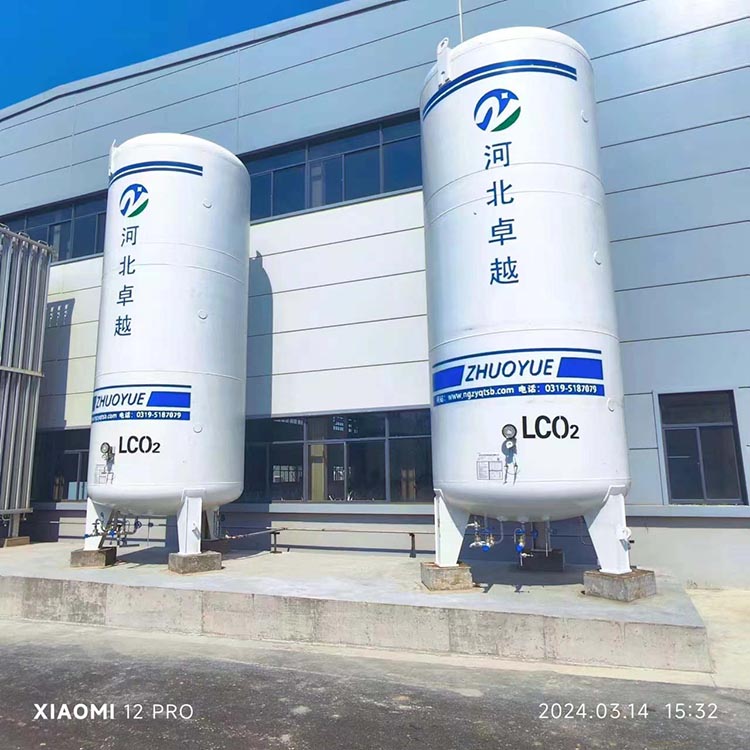
Carbon dioxide (CO₂) storage tanks work by keeping gas in a dense liquid state using specific, controlled temperature and pressure management. This technology can significantly reduce the size and achieve efficient storage in fields such as food and beverage, firefighting, and manufacturing. Liquid carbon dioxide has an extremely low temperature and therefore effective safety measures must be taken.
How CO₂ Storage Tanks Work
When the pressure exceeds (5.18 bar or 75 psi) and the temperature is lower than the critical value of 31.1℃ (88℉), the carbon dioxide can be stored in liquid form. This requires precise control of both temperature and pressure.
For industrial storage tanks: specialized low-temperature components will be incorporated in the design to ensure the stability of the system.
Inner Vessel: Typically constructed from stainless steel to withstand very low temperatures.
Vacuum insulation: A highly insulated layer or vacuum space is provided between the inner liner and the outer shell. This helps to reduce heat transfer and prevent the evaporation or freezing of liquid CO₂.
Pressure management: The automatic pressurization atomizer and built-in heater can naturally regulate the pressure of the storage tank to ensure a continuous and stable supply of gas or liquid.
Core Safety Principles
Ventilation and asphyxiation risk: Since carbon dioxide is denser than air and will sink into low-lying areas, it will remove the oxygen in these areas, which can easily lead to hypoxia and asphyxiation. Therefore, installing ventilation equipment and carbon dioxide alarms is particularly important in indoor spaces or enclosed areas where large quantities of carbon dioxide storage tanks are stored. When the oxygen concentration drops below the warning line, it can detect and alarm the leakage situation in time.
Temperature and frostbite risk: Frostbite is one of the key risks that need to be guarded against for carbon dioxide storage tanks. This is because when liquid carbon dioxide is rapidly released, it usually forms dry ice, and its temperature will drop sharply. If the skin accidentally comes into contact with it, it can easily cause severe frostbite.
Overpressure: If the cooling or pressure relief system of the storage tank fails, the carbon dioxide will rapidly heat up, causing the pressure to rise sharply, which is dangerous.Therefore, pressure relief valves and rupture discs are installed on the storage tank. Once the pressure exceeds the limit, they can safely release the steam.
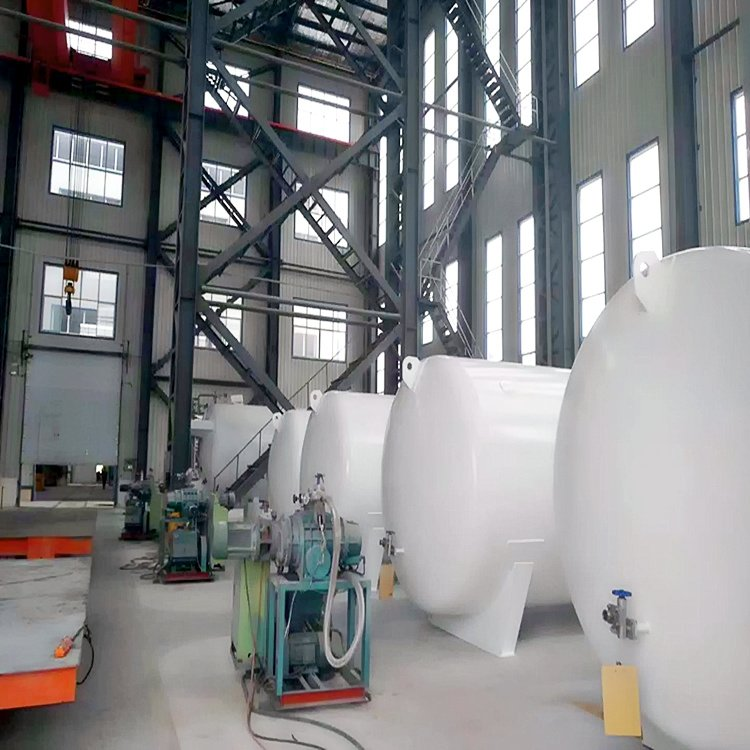
Proper Storage and Handling Best Practices
Stable vertical position: The gas cylinders or storage tanks for storing carbon dioxide must be securely fixed in a solid manner.The fixing points should be selected at about two-thirds of the height of the tank, leaning against a wall or on a trolley. This way, they will not tip over or roll.
Environment: Containers should be placed in a cool and dry place, avoiding direct sunlight, crowded areas, and local heat sources such as boilers and stoves.
Equipment usage: Regulators and hoses must be suitable for high pressure and low temperature. Do not open the gas cylinder valve too quickly to prevent the hose from knotting or freezing.
For detailed information on safe operation, leakage control and pressure loss incidents, please refer to the safety precautions for carbon dioxide gas cylinders.
If you are planning to deploy a carbon dioxide storage tank project, please tell us your usage volume and the operating environment. Zhuoyue Gas Equipment can provide you with customized solutions.