

Overseas Buyer’s Practical Guide: How to Accurately Calculate the Capacity of Cryogenic Storage Tanks
Ⅰ. First, clarify the core basic parameters
Before starting the calculation, you need to gather the basic information of these three core parameters. They are the prerequisites for all subsequent calculations, and without any of them, the final calculated capacity will deviate from the actual value.
Target storage medium characteristics: The density differences of different cryogenic media are significant. Liquid nitrogen is approximately 808 kg/m³, liquid oxygen is approximately 1141 kg/m³, liquid argon is approximately 1394 kg/m³, while liquid hydrogen is only 70.8 kg/m³. This item determines how much mass of the medium can be stored per unit volume.
Core requirements of working conditions: Daily gas consumption, the longest continuous supply time planned, and the maximum allowable installation space size on site. All three must be clearly defined. The basic capacity range of the storage tank is basically determined by them.
Boundary conditions for equipment design: The design working pressure and the maximum allowable liquid level belong to the parameters explicitly stipulated by industry safety regulations. The final effective capacity depends on which number it falls within, and these two factors play a direct role.
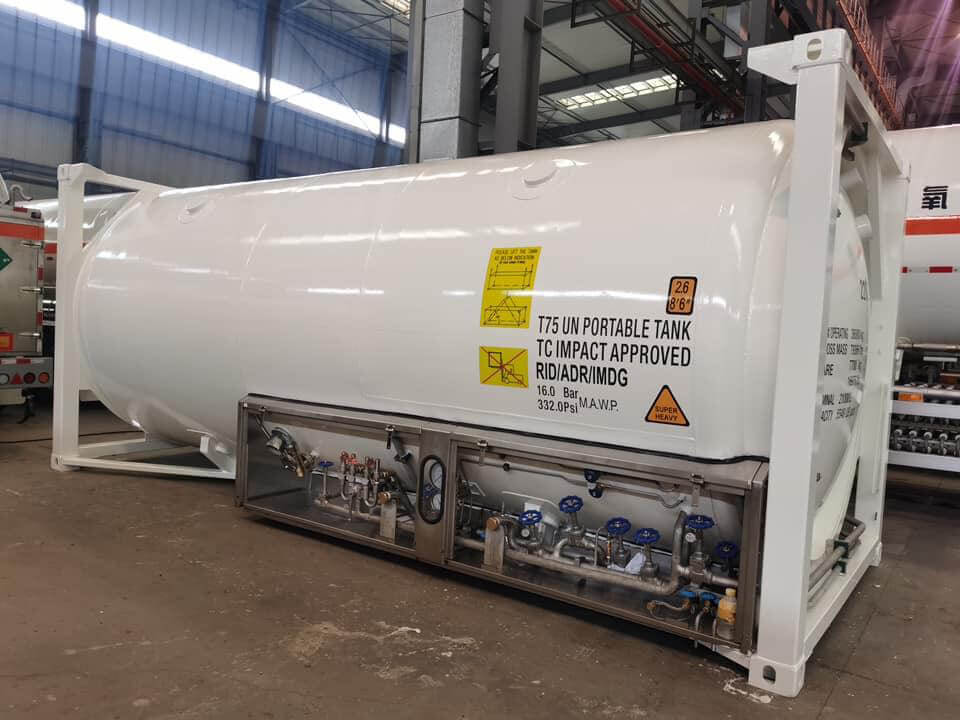
II. Basic Calculation of Geometric Volume
Geometric volume is the total physical volume of the tank body and is the underlying benchmark for all capacity calculations. Common vertical or horizontal low-temperature storage tanks mostly adopt the standard structure of “cylindrical barrel + elliptical/disc-shaped end caps”.
Formula for vertical storage tank geometric volume: Total volume = Cylindrical barrel volume + Volume of two end caps, where the volume of the cylindrical barrel = π × (Inner diameter of the barrel / 2)² × Height of the cylindrical section, and the volume of a standard elliptical end cap can be quickly obtained by looking up the industry-standard end cap volume coefficient in the table.
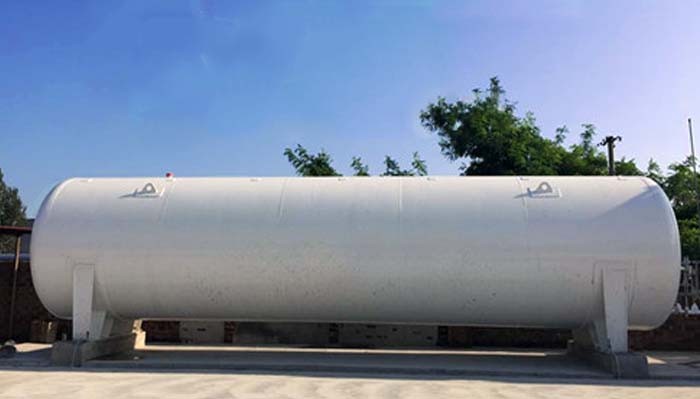
Formula for horizontal storage tank geometric volume: Total volume = Horizontal barrel volume + Volume of two end caps. Be sure to pay attention to the conversion relationship between the liquid level height and the corresponding effective volume when the tank is installed horizontally, to avoid liquid level reading errors when the tank is placed horizontally.
Practical Tip: Do not directly calculate the geometric volume using the external dimensions of the tank. You must request the actual inner diameter data from the manufacturer. Otherwise, due to the influence of insulation layer thickness and inner tank wall thickness, the calculated geometric volume may be larger.
III. Calibration of Effective Working Capacity
Geometric volume is not the actual capacity that can be used to store low-temperature media. For safety and operational stability considerations, multiple reserved margins must be deducted. This is also the most common pitfall for many overseas buyers.
Reserve for filling safety margin: According to the globally accepted safety regulations for low-temperature pressure vessels, the maximum filling liquid level of the low-temperature storage tank cannot exceed 90% of the total volume of the tank, and 10% of the gas phase expansion space is reserved to avoid overpressure risks when the medium is heated and pressurized.
Reserve for static evaporation loss: Different specifications of low-temperature storage tanks have fixed daily evaporation rate parameters. For example, a 10 m³ liquid nitrogen storage tank has a daily average evaporation volume of approximately 0.3%. You need to reserve the corresponding evaporation loss volume of the medium according to the planned longest static storage period to avoid a large amount of medium being emptied before use.
Reserve for dead volume at the bottom of the tank: There is a dead volume at the tank bottom’s piping and drainage outlet area that cannot be completely emptied. This usually accounts for 2%-3% of the total volume. This portion of the medium cannot be normally extracted and used and must be deducted from the effective working capacity.
IV. Reverse Verification of Actual Gas Demand
After conducting the initial calculation of the effective capacity, you also need to conduct a reverse verification based on your actual gas usage scenarios to ensure that the selected storage tank capacity fully meets the production and operation requirements.
First, convert the liquid effective capacity into standard gaseous volume: Taking liquid nitrogen as an example, 1 cubic meter of liquid nitrogen can be vaporized into approximately 695 cubic meters of gaseous nitrogen under standard conditions. Multiply this value by the effective liquid capacity to obtain the total gaseous medium volume that the storage tank can provide.
Divide the daily average gaseous consumption by the total gaseous volume to calculate the number of consecutive supply days that a single tank can support. This number must be greater than the longest supply cycle you have preset, and it must also match the medium transportation and distribution cycle on site to avoid situations where supply is interrupted and production is halted.
Special scenarios require adjustments: For scenarios with extremely high purity requirements for the medium, such as semiconductor and medical high-purity gas, an additional 15% of replacement and purging margin should be reserved to avoid introducing impurities when frequently refilling the tank, which could affect the purity of the gas.
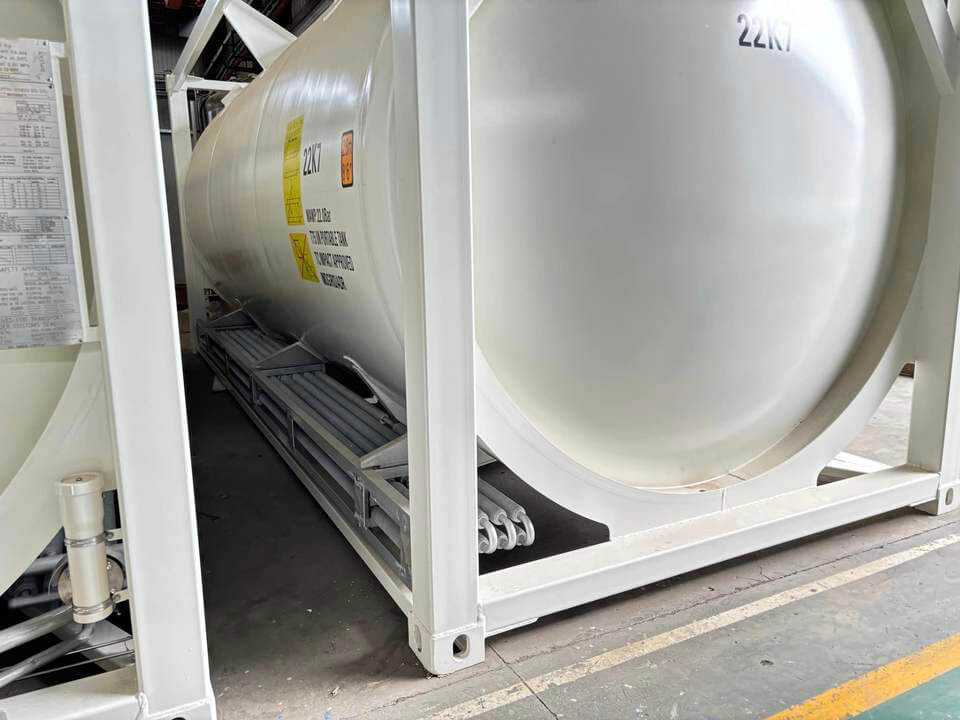
Ⅴ. Capacity Confirmation Techniques during the Procurement Phase
Many overseas purchasers have reported that the actual available capacity of the storage tanks upon arrival differs from the initial calculation. This is because no detailed confirmation was made during the procurement process.
Do not only rely on the “nominal capacity” claimed by the manufacturer. It is necessary to clearly indicate the “effective available liquid capacity” in the contract and require the manufacturer to provide a capacity verification report issued by a third-party institution to avoid using geometric volume to pretend to be the effective capacity.
If you have old storage tanks that need to be replaced on-site, you can quickly verify the actual effective capacity of the old tank using the “full tank weighing method”: Fill the tank completely with the medium and let it stand for 3 days. Record the weight of the full tank and the weight of the empty tank after emptying. The difference between the two divided by the liquid density of the corresponding medium will give you the most accurate actual effective capacity, which can be used as a reference for selecting the new tank.
For projects with special operating conditions, such as cryogenic hydrogen storage tanks for power vessels, it is necessary to further calibrate the filling level based on the design vent pressure and filling pressure to ensure there is sufficient safety buffer space at the highest working pressure.
The cryogenic storage tank capacity calculated through the above complete steps can fully match your production gas demand and strictly comply with global cryogenic equipment safety operation standards, avoiding the dilemma of “buying too large and wasting space and procurement costs, or buying too small and frequently refilling the tank affecting production”.
If you have specific operating parameters, the engineers at Zhuoyue can provide you with one-on-one capacity calculation services for free, helping you lock in the most suitable cryogenic storage tank specifications.