
Liquid nitrogen, liquid oxygen, liquid argon, LNG… These low-temperature liquids have wide applications in industrial and medical fields, but there is a fundamental problem in storing them: how to lock in the coldness for a long time at temperatures as low as minus 150 degrees Celsius or even lower. The answer is vacuum insulation. This technology is not complex, but getting every detail right is where the real gap between products lies.
The working principle of vacuum insulation
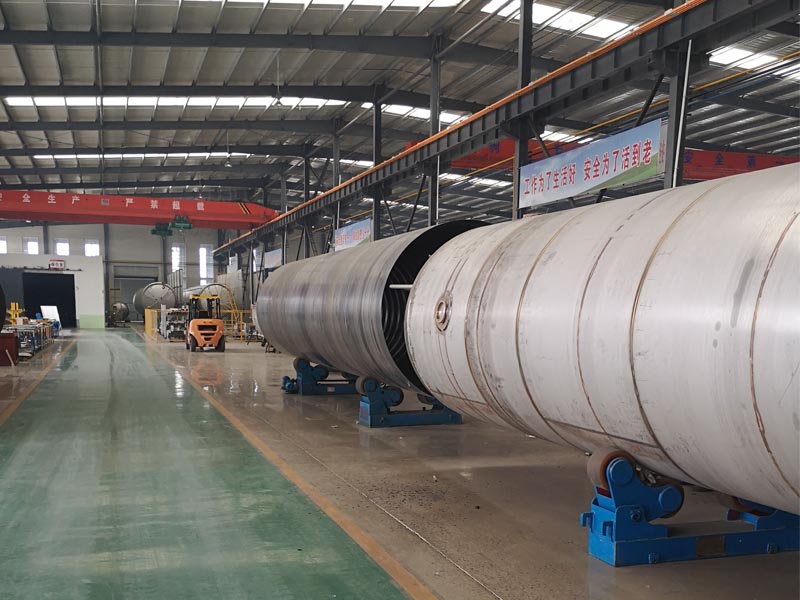
Low-temperature storage tanks usually adopt a double-layer container structure. The inner liner holds the liquid, the outer shell protects the inner liner and withstands external loads, and a sealed interlayer is left between them. During the manufacturing process, the factory uses vacuum pumps to reduce the air in the interlayer to an extremely high vacuum state, with the residual pressure generally controlled between 10⁻³ and 10⁻⁵ pascals.
When the pressure is this low, the number of gas molecules is extremely small, and the two main channels for heat transfer – thermal conduction and thermal convection – are basically blocked. For instance, placing a cup of hot water on the moon without air would result in much slower heat dissipation. However, the vacuum layer alone cannot solve all the problems; heat radiation can still pass through the vacuum space. Therefore, a multi-layer aluminum foil reflective screen needs to be laid in the interlayer, which is also known as the multi-layer insulation structure in the industry. Each layer of aluminum foil reflects the radiant heat back, and the more layers there are, the better the blocking effect. Usually, industrial storage tanks use 20 to 60 layers, and the specific number depends on the size, shape of the tank, and the customer’s requirements for evaporation rate.
The supporting structure and thermal bridge effect
The inner liner and the outer shell cannot be completely suspended; there must be supporting components to fix them together. But the problem arises – metal supporting components have strong thermal conductivity. If they are directly connected to the inner and outer walls, heat will flow along these “bridges” into the inner liner, forming what is called a thermal bridge effect. Once a thermal bridge occurs, the effect of vacuum insulation will be greatly reduced.
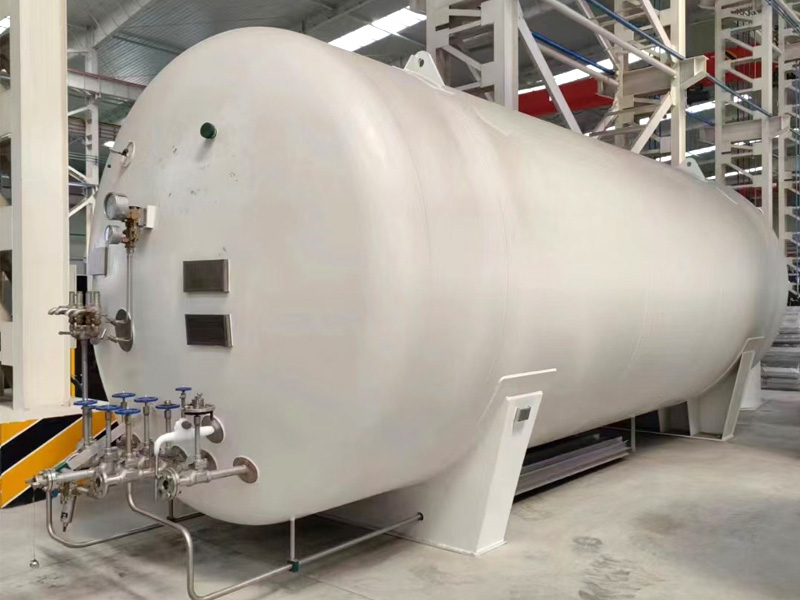
The regular practice is to use low thermal conductivity materials as insulation pads at the supporting points, or to use special materials with extremely low thermal conductivity as supporting rods, minimizing the impact of the thermal bridge. In the design of each storage tank, we calculate the position and number of supporting points based on the specific geometric shape to ensure structural strength without sacrificing insulation performance. Whether it’s a 500-liter vertical small Dewar flask or a 40-cubic-meter horizontal large storage tank, the treatment method is different, and simply adopting a set of solutions is not feasible.
The lifespan of the vacuum layer and common failure causes
Many customers are concerned about one question: How long can vacuum insulation last? Under normal use and without external damage, high-quality vacuum insulation layers can maintain for ten to twenty years without any problem. However, if the following situations occur, the vacuum may fail prematurely: tiny cracks in the weld seam causing slow air leakage, aging of the vacuum pipe sealing ring, and deformation of the interlayer caused by impact during transportation.
Once the vacuum degree drops, the daily evaporation rate of the storage tank will increase significantly, meaning the customer is losing products every day. Therefore, before each tank leaves the factory, we will conduct leak testing to ensure that there are no leakage points at the vacuum interface and weld seams. For models with an intake agent interface, if the vacuum degree decreases later, it can be restored by secondary vacuum pumping without scrapping the entire unit.
The selection of multi-layer insulation materials and process details
Multi-layer insulation materials are not just wrapped with a few layers of aluminum foil. The material itself must be resistant to low temperatures, not releasing gas, and not shedding powder. Otherwise, in the vacuum environment, it will release gas, which in turn will damage the vacuum degree. Common choices include coated polyester film and coated polyimide film; the former has a high cost-performance ratio, while the latter has better temperature resistance but is also more expensive.
The wrapping process is also crucial. There should be a small gap between each layer, not pressed too tightly, otherwise the contact between the layers will increase heat conduction. The lap joint method and tightness of each layer have specific requirements, relying entirely on the experience of the workers and the quality control system of the factory. Our workshop strictly adheres to this in our operations, from the material entry inspection to the completion of packaging, every step is recorded for future reference.
Several key indicators that need to be paid attention to in procurement
Engineers and project managers who purchase low-temperature equipment usually focus on several things: first, the vacuum retention time test report; second, the daily evaporation rate data under actual working conditions; third, whether the product has passed ASME, CE or local requirements certifications.
In addition, the standards for low-temperature containers vary from country to country. When exporting products to the Middle East, Southeast Asia, or South America, additional inspection requirements from the destination are often necessary. Preparing all the certification and testing materials in advance can save a lot of communication time back and forth.
Choose Zhuoyue Gas Equipment
Zhuoyue Gas Equipment has been deeply involved in the field of cryogenic liquid storage tanks for many years. Our product line covers liquid nitrogen storage tanks, liquid oxygen storage tanks, liquid argon storage tanks, and LNG storage tanks. Customization is supported for volumes ranging from small Dewar flasks of several hundred liters to large horizontal tanks of several dozen cubic meters. From inner tank welding, multi-layer insulation wrapping, support structure design to leak detection and factory delivery, every process is strictly carried out in accordance with international standards, and the quality of the entire process is traceable.
If you are looking for a technically solid and reliable low-temperature storage tank supplier for your project, please contact the Zhuoyue team. We will provide you with detailed technical solutions, performance parameters, and quotations based on your actual working conditions and usage requirements.