Three forms of LNG cryogenic storage tanks: Detailed explanation of vacuum tanks, mother-child tanks and atmospheric pressure tanks
As a professional supplier of cryogenic storage tanks, Zhangjiagang CIMC Shengdayin will explain to you the three main forms of LNG cryogenic storage tanks: vacuum tanks, mother-child tanks and atmospheric tanks. Each form has its unique design features and application scenarios. The choice of which one depends on your specific needs, especially the storage volume of LNG.
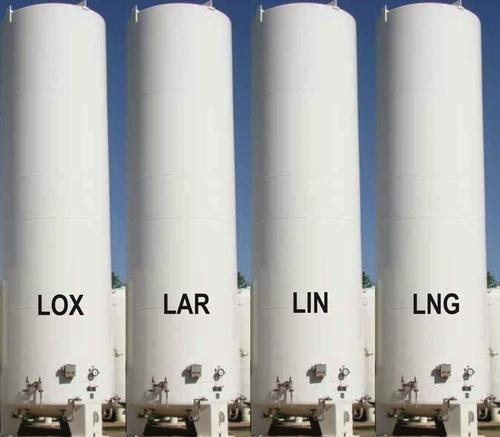
1.Vacuum Tank: The ideal choice for small LNG vaporization stations
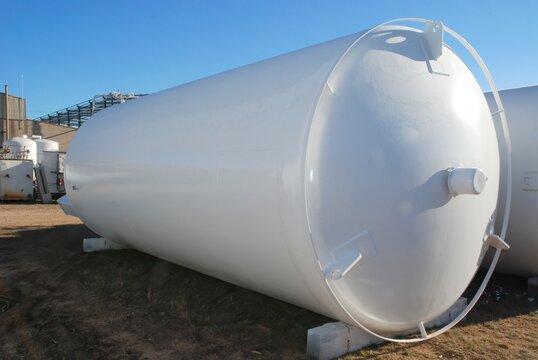
The vacuum tank is of a double-layer metal structure. The inner tank is made of low-temperature resistant stainless steel pressure vessel, while the outer tank is made of carbon steel. Fill the space between the two layers with insulating material and evacuate it to ensure excellent thermal insulation performance. This design enables the vacuum tank to be transported as a whole to the site after being manufactured and pressure-tested in the factory, and it is easy to install.
Features and advantages:
Applicable scale : the total storage volume of LNG is less than 1,000 cubic meters, and the largest single tank volume in China reaches 150 cubic meters.
Outstanding energy efficiency : The process flow is simple. Materials are conveyed to the gasifier by gravity flow with a booster, without the need for additional power equipment, significantly reducing energy consumption.
Widely applied : Vacuum tanks are commonly used in small LNG vaporization stations at home and abroad due to their high efficiency and reliability.
Ii. Mother and Child Tanks: A flexible solution for medium-scale storage
The child and mother tanks are composed of multiple low-temperature-resistant stainless steel inner tanks (child tanks) and a large carbon steel outer tank (mother tank). Insulating materials are filled between the inner and outer tanks, and dry nitrogen is introduced to prevent moisture from entering. The inner tank is prefabricated in the factory and then transported to the site, while the outer tank is installed on site.
Characteristics and Advantages
Applicable scale : suitable for LNG storage capacity ranging from 1000m³ to 5000m³, with the maximum volume of domestic single tanks being 250m³.
Nitrogen protection system : Liquid nitrogen equipment is required to maintain a dry environment in the interlayer and ensure the stable performance of the insulation material.
Process similarity : The gasification process flow is similar to that of vacuum tanks, but it adds a nitrogen management step, making it suitable for medium-sized storage and distribution stations that require flexible configuration.
Iii. Atmospheric pressure Tanks: The preferred choice for large-scale LNG projects
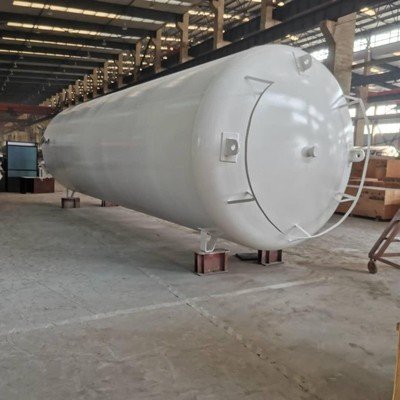
Atmospheric pressure tanks are designed in various ways. They can adopt bimetallic structures or have prestressed concrete as the outer tank. The forms include above-ground tanks and underground tanks. Most of the tanks with a capacity of less than 20,000 cubic meters are bimetallic tanks, and both the inner and outer tanks are manufactured on-site, resulting in a relatively long production cycle.
Features and advantages:
Operating parameters : design pressure 15KPa, temperature -162℃, flat-bottomed double-wall cylindrical shape, ensuring safety and stability.
Structural innovation : Independent design of inner and outer tanks to reduce heat conduction; The arch top of the inner tank needs to withstand the pressure of the insulation material and the internal gas pressure, and has high structural strength.
Thermal insulation optimization : Using perlite as the cold insulation material, dry nitrogen is filled to maintain a slight positive pressure, isolating the influence of moisture and atmosphere, extending the service life of the cold insulation material and enhancing the thermal insulation effect.
Moisture-proof design : The insulation structure pays particular attention to moisture-proof measures to prevent performance degradation.
Selection suggestion: Match the best form based on the storage volume
For small-scale projects (<1000m³) : vacuum tanks are preferred due to their high energy efficiency and quick installation.
Medium-sized projects (1000-5000m³) : mother and child tanks offer flexibility and nitrogen protection, suitable for medium-scale requirements.
Large-scale projects (>2000m³) : Atmospheric tanks, with their structural stability and thermal insulation performance, have become the preferred choice for large-scale LNG storage.
As a supplier of cryogenic storage tanks, Zhuoyue Gas Equipment is committed to providing you with the most suitable LNG cryogenic storage tank solutions. For further consultation or customized services, please feel free to contact us at any time.