27 February 2026 | Categories: Cryogenic Tank | Tags: cryogenic storage tank Zhuoyue
In the field of cryogenic gases, precision is not just a term; it is a stringent requirement. Understanding the temperature dynamics of cryogenic storage tanks is essential for operational safety, product integrity, and cost-effectiveness, regardless of whether you are storing liquid nitrogen, liquid oxygen, or argon gas at low temperatures.
This guide will provide a detailed explanation of all the information you need to know regarding the temperature range, monitoring techniques, and key safety procedures. (Estimated reading time: 5 minutes)
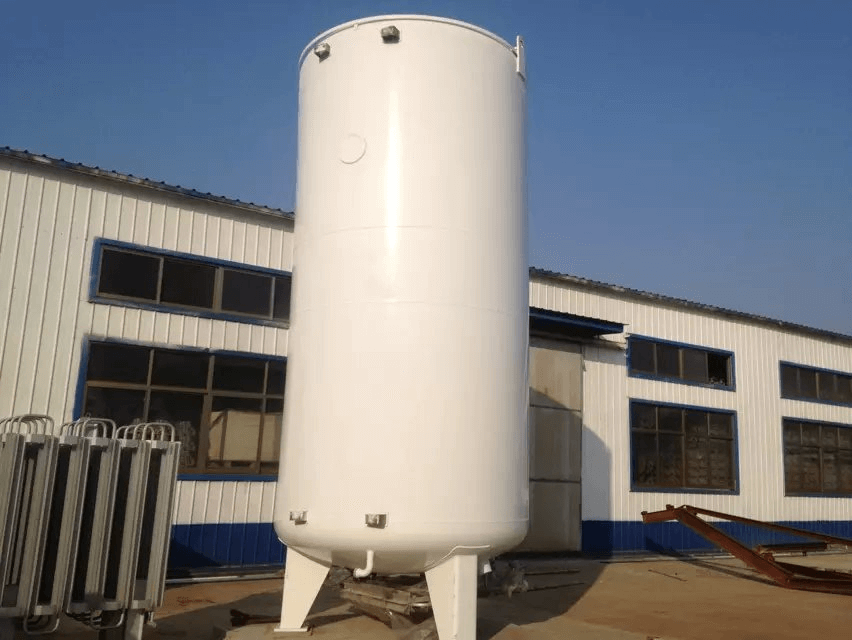
Understand the standard low-temperature temperature range
The first step in effectively managing a storage tank is to understand that different gases will liquefy at their specific boiling points when under atmospheric pressure. Although external environmental conditions may change, the temperature inside a properly functioning low-temperature container should be close to the boiling point of its internal substances and remain relatively stable.
Liquid nitrogen (LN2): The most common low-temperature refrigerant, with a boiling point of approximately -196°C (-321°F). It is widely used in food freezing, medical storage, and industrial cooling applications.
With a boiling point of roughly -183°C (-297°F), liquid oxygen (LOX) is essential for metallurgical and medicinal applications.
Liquid argon (LAr): Often used in welding and semiconductor manufacturing, with a temperature maintained at approximately -186°C (-303°F).
Liquid Helium (LHe): Used in superconducting and nuclear magnetic resonance imaging equipment, it requires the lowest temperature. Its boiling point is -269°C (-452°F).
The above temperature data are based on conventional data from academic research and practical applications and are provided for reference only.
It should be noted that these temperatures are not constant. As heat enters the storage tank through inevitable heat transfer methods, the liquid begins to boil, generating gas and increasing the internal pressure. Although it cannot totally stop heat penetration, a vacuum shell with superior insulating qualities (such as the one found in the exceptional storage tank) can reduce it as much as possible. Controlling the temperature and pressure increase that results from this is therefore crucial.
Why choose Zhuoyue to meet your Cryogenic requirements?
At Zhuoyue, we not only manufacture tanks; we also provide solutions for temperature stability issues. Zhuoyue’s cutting-edge vacuum insulation technology, which can successfully lower heat transfer, is used in our low-temperature containers.
If you have any requirements regarding low-temperature storage tanks, please contact us through our website. We will respond to you as soon as possible.