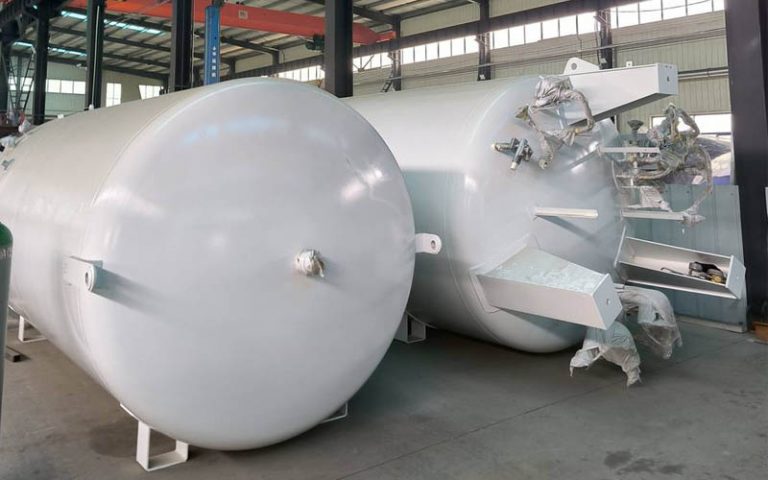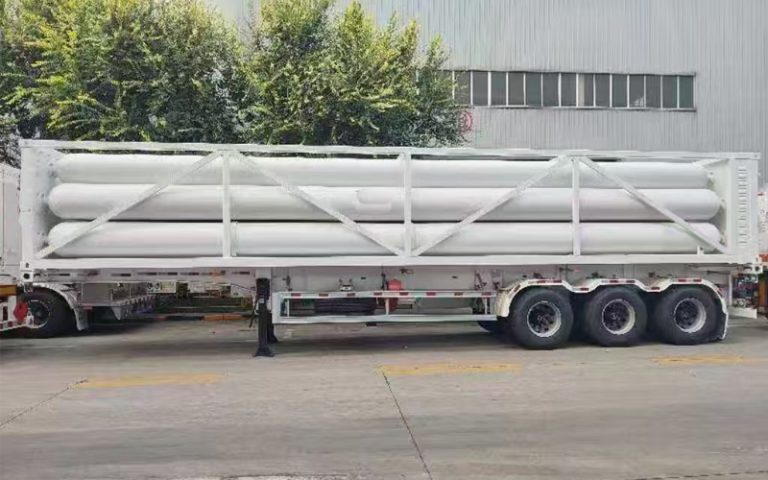

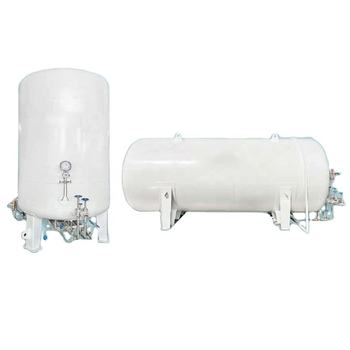
What is a double-layer structure cryogenic storage tank?
In many fields such as industry, electronics, medicine, aerospace and others, double-layered low-temperature storage tanks have already been widely used. For enterprises that use double-layer structure cryogenic storage tanks, it is particularly important to establish a scientific prevention and detection system management framework, as in extreme and high-pressure environments, there may be risks of leakage and structural damage.
The risk of leakage is its main risk
- The following are some common sources of leakage for low-temperature storage tanks.
- Cracks due to weld fatigue
- Seal aging makes leakages more likely.
- The failure of the inner layer vacuum led to a drop in the insulation performance and a rise in the evaporation rates.
- Corrosion and defects in valve components.
Even very small leaks can cause a big increase in evaporation (for example, a vacuum failure can lead to a 300% increase in boiling overflow). Besides, if oxygen leaks, it can cause an oxygen-rich fire to start.
What are the technologies for detecting leaks?
- Infrared thermal imaging helps detect any unusual high temperatures of the shell, pinpoint internal leaks or uninsulated spots.
- Pressure and liquid level monitoring: The automatic monitoring system is capable of sending out an alarm signal when detecting abnormal pressure drops or fluctuations in liquid levels.
- Stratified gas analysis: Detects the presence of low-temperature media or moisture in the stratified layer, and determines whether there is a leak in the inner or outer tank.
- Vacuum integrity monitoring:
- Determines external tank leaks through changes of the pressure of the stratified layer combined with helium inspection for positioning.
- Helium mass spectrometry leak detection:
- Has a detection sensitivity of 10⁻⁹ mbar·l/s, and is therefore suitable for detecting micro-pores and welds.
Preventive maintenance of low-temperature storage tanks
- Weekly and monthly routine inspections: Visual checks for corrosion, frost incidents, valve conditions, and verification of safety devices’ functionalities.
- Annual or bi-annual recurrent tests: Vacuum leakage tests, evaluation of protective coating, ultrasonic testing, calibration and servicing of measuring instruments.
- Every 3-5 years
- Major renovation: Thorough cleaning of the tank, extensive non-destructive testing, vacuum pump-up, structural repairs and issuing of compliance certificate.
- Other predictive measures: Installation of sensors that can record pressure, temperature, and vacuum levels in real-time; the collected data is analyzed with the help of AI for predicting possible malfunctions.
Standard and Compliance Requirements
The design and maintenance of these must meet the standards like ASME BPVC, API 650, and ISO 21007. Besides that, they should also adhere to environmental protection rules such as EPA LDAR and EU F-Gas.
We particularly recommend that you consult the local compliance department before selecting the storage tank, and choose a tank that meets the local regulatory requirements to ensure safe operation and compliance with audits.
Conclusion
Storage tanks can have their lifespans extended effectively, operational risks minimized, and safety and compliance ensured by implementing leak detection technology and a hierarchical maintenance strategy. Only through continuous investment in preventive maintenance can the low-temperature system be guaranteed reliable operation.