Five Crucial Considerations for Lab and Industrial Use in the Selection of a Liquid Nitrogen Dewar Container Do you need a suitable container to store liquid nitrogen in a lab or industrial setting? How do you ensure that you get a container that is safe, efficient, and affordable? There are various types of liquid nitrogen storage containers, from small tanks to large delivery systems. Here are five key considerations I have summarized for your convenience.
Prioritize Tank Capacity and Usage Frequency
First, comprehensively assess daily consumption to determine the appropriate volume. For laboratory applications—primarily storing biological samples or conducting small-scale experiments—static storage Dewars with capacities between 10 and 50 liters are generally sufficient, offering lower evaporation rates. However, for industries like food freezing or metal processing, we recommend tanks exceeding 100 liters with self-pressurization capabilities to support high-flow output. Note that oversized Dewars increase evaporation costs, while undersized tanks require frequent refills, potentially compromising efficiency.
Comprehensive Consideration of Application Scenarios
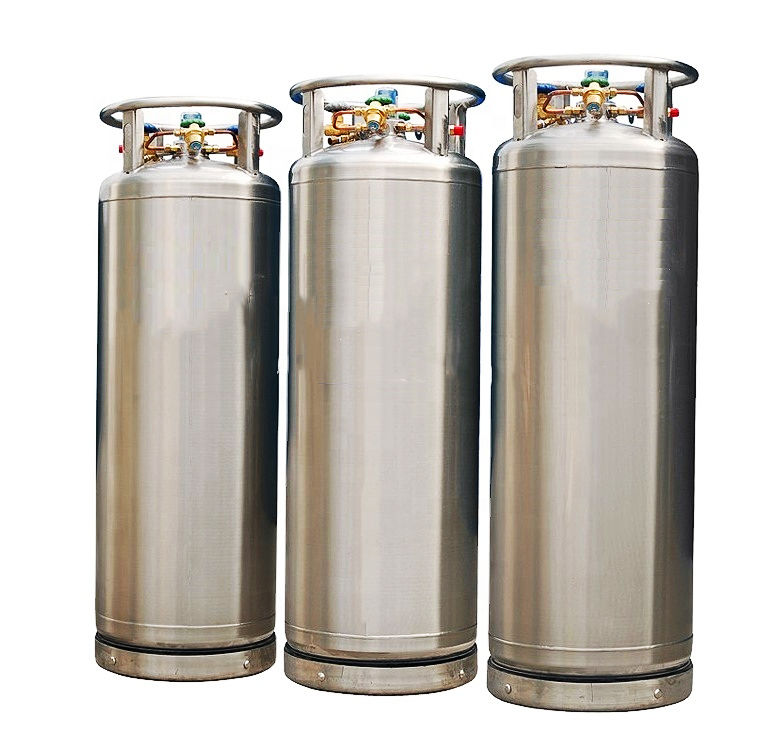
Note that not all Dewar vessels are identical. Static storage Dewars feature slender necks and ultra-efficient insulation, with daily evaporation rates as low as 0.2%, making them ideal for long-term sample preservation. However, these vessels cannot be used for liquid transfer, as their design is not suited for pressure-driven flow.
For applications requiring stable liquid nitrogen supply, select self-pressurizing Dewar vessels that expel liquid using evaporated gas.
If both storage and transport functions are needed, choose hybrid Dewar vessels with reinforced cushioning and shock-absorbing bases.
Consider Insulation and Material Quality
Thermal performance directly impacts long-term operating costs. Opt for Dewar flasks with multi-layer vacuum insulation and 316 stainless steel liners. These materials offer significantly superior corrosion resistance and thermal performance compared to standard alternatives. For laboratory use, prioritize Dewar flasks with certified low evaporation rates. For industrial outdoor environments, select models with weatherproof enclosures to effectively withstand temperature fluctuations.
Certifications and Functional Features
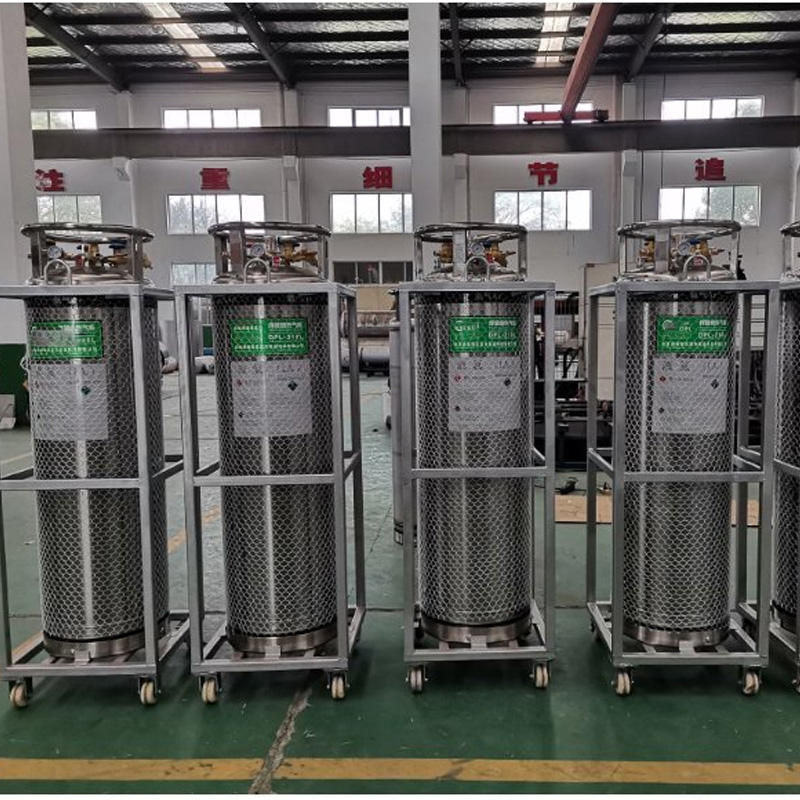
Nitrogen is a cryogenic hazardous substance, making storage safety paramount. Ensure your Dewar flask complies with ASME or CE standards, or relevant regional safety regulations. Critical safety features include:
- Automatic pressure relief valves activating at 0.15MPa
- Lockable lids to prevent accidental leaks
- Clear digital gauges for real-time pressure monitoring For laboratory environments, select Dewars with non-slip bases; in industrial settings, opt for models equipped with explosion-proof components.
After-Sales Support and Compliance Management
Partner with suppliers offering comprehensive after-sales service. Insulation degradation is the most common failure point—thoroughly review warranty terms with suppliers before purchase. Additionally, confirm the supplier can provide regular maintenance inspections. For example, annual vacuum pressure testing ensures the Dewar flask maintains optimal performance and complies with workplace safety regulations.
By considering these five factors in detail, you should be able to select a product that meets your specific needs. If you have further questions, consult Zhuoyue Gas Equipment’s professional cryogenic equipment experts to choose the right equipment based on your specific workflow.