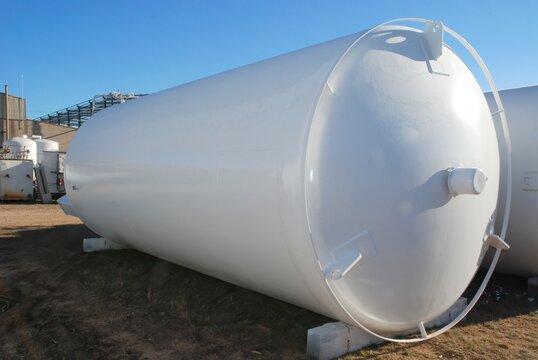

In the daily operation of low-temperature carbon dioxide storage tanks, the liquid level gauge, as a key monitoring device, its accuracy is directly related to production safety and efficiency. However, in practice, it is often the case that the readings of liquid level gauges are inaccurate. This issue not only affects operational decisions but may also pose potential safety risks. This article will delve into the main reasons for the inaccuracy of liquid level gauges and propose practical solutions.
The core reason for the inaccuracy of the liquid level gauge: the dual challenges of precision and the environment
1.The inherent characteristics and accuracy predicament of differential pressure level gauges
At present, differential pressure level gauges are commonly used in low-temperature carbon dioxide storage tanks. Its working principle is based on measuring the pressure difference between the liquid phase side and the gas phase side, and this differential pressure directly reflects the liquid level height. For liquefied natural gas (LNG) storage tanks, this differential pressure is extremely small, usually less than 20kPa, and is almost negligible compared to the gas phase pressure (a few kPa to 1MPa). This tiny pressure difference demands that the liquid level gauge have extremely high sensitivity, but it also brings about significant measurement fluctuations.
The fluctuation problem caused by sensitivity : Any slight change in pressure or temperature, such as gas fluctuations during the filling process or environmental temperature fluctuations, will cause the pointer of the liquid level gauge to swing violently, resulting in unstable readings.
Accuracy attenuation during long-term use : Over time, the mechanical and electronic components of the liquid level gauge gradually age, leading to the accumulation of measurement errors and a decline in accuracy. This attenuation is gradual and inevitable, and can only be mitigated by regular calibration or equipment replacement.
2.The amplification effect of environmental and operational factors
The influence of temperature fluctuations : In a low-temperature environment, temperature changes will directly affect the volume of internal components of the liquid level gauge, such as capillaries or sensitive diaphragms, thereby causing zero drift. For instance, the temperature difference between day and night may cause a significant deviation in the reading of the liquid level gauge within a short period of time.
Pressure interference during filling operation : When filling liquid, the pressure inside the storage tank changes frequently. Even if the operation is standardized, the reading of the liquid level gauge may fluctuate due to gas flow or pressure release. This kind of fluctuation will be amplified in small differential pressure measurements, further reducing the reliability of the readings.
The long-term effect of mechanical stress : the vibration and stress during the installation or operation of the storage tank are transmitted to the installation point of the liquid level gauge, which may cause the support to loosen or the sensor to shift. The long-term accumulation will lead to an increase in measurement error.
3.The direct effect of medium properties
The boiling phenomenon of carbon dioxide : in a container, the liquid phase of carbon dioxide may boil due to temperature changes, generating bubbles and local pressure fluctuations. These bubbles entering the sensor area will intensify the measurement deviation, especially during the filling or emptying process, when the reading of the liquid level gauge may be distorted due to changes in the medium state.
The dependence of dielectric constant : For capacitive level gauges, the dielectric constant of carbon dioxide (reflecting the medium’s response to an electric field) varies with temperature and concentration. This change directly affects the capacitance measurement value, causing zero offset, especially in an environment where the composition or temperature fluctuates frequently.
Response strategy: Centering on operation norms and equipment maintenance
1.Optimization at the operational level
based on the filling indicator valve : when filling liquid, the operator should prioritize relying on the physical signal of the filling indicator valve rather than the reading of the liquid level gauge. The full indicator valve usually directly reflects the liquid level state through mechanical structure, is less affected by the environment, and can be used as a more reliable basis for liquid level judgment.
Reduce interference during the filling process : Optimize the filling process, such as by using slow filling or phased operation, to reduce the impact of pressure fluctuations on the liquid level gauge. At the same time, avoid filling during periods of drastic temperature changes to reduce environmental interference.
2.Equipment maintenance and update
Regular calibration and verification : Establish a strict calibration cycle for the liquid level gauge. Through professional calibration tools and equipment, regularly adjust the zero point to compensate for the accuracy attenuation during long-term use. For instance, static calibration should be carried out every quarter, or a quick check should be conducted before each charge.
Equipment upgrade and replacement : Consider switching to a more stable type of level gauge, such as a radar level gauge or an ultrasonic level gauge. These devices do not rely on differential pressure measurement and are less affected by environmental fluctuations, making them particularly suitable for the high-precision requirements of cryogenic carbon dioxide storage tanks. For instance, radar level gauges measure liquid levels through electromagnetic wave reflection and are not affected by changes in medium properties, which can significantly enhance long-term stability.
3.Environmental and Medium Management
Temperature control : Enhance the insulation measures of the storage tank, such as using insulation materials or temperature control systems, to reduce the impact of environmental temperature fluctuations on the liquid level gauge. For instance, in extreme climate zones, external heating or cooling devices can be added to maintain a stable temperature in the storage tanks.
Medium state monitoring : By using auxiliary sensors to monitor the phase changes of carbon dioxide (such as temperature and pressure sensors), it can issue early warnings for boiling or bubble formation, allowing for timely operation adjustments and reducing interference with the liquid level gauge.
Conclusion: Balance precision and practicality
The inaccuracy of the liquid level gauge in low-temperature carbon dioxide storage tanks is the result of the combined effect of precision requirements and complex environments. By understanding the core reasons and adopting a comprehensive strategy of operation norms, equipment maintenance and environmental management, the reliability of measurement can be effectively enhanced and production safety can be ensured. In the future, with the development of the Internet of Things and intelligent sensor technology, the monitoring capabilities of liquid level gauges will be further enhanced, providing better solutions for the management of cryogenic storage tanks.