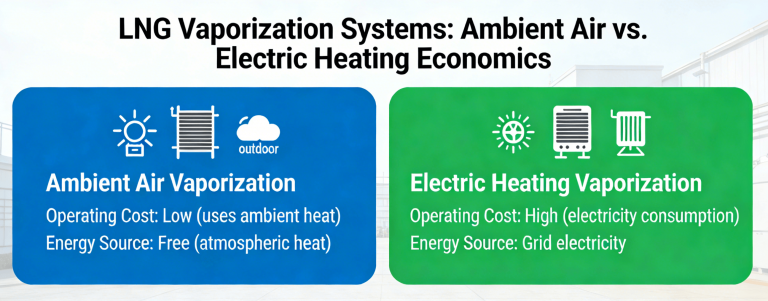

Low-temperature storage tanks are of vital importance in the storage of LNG, nitrogen, and oxygen. Precise size design is crucial for safety, efficiency and cost. This article outlines the key steps and core considerations.
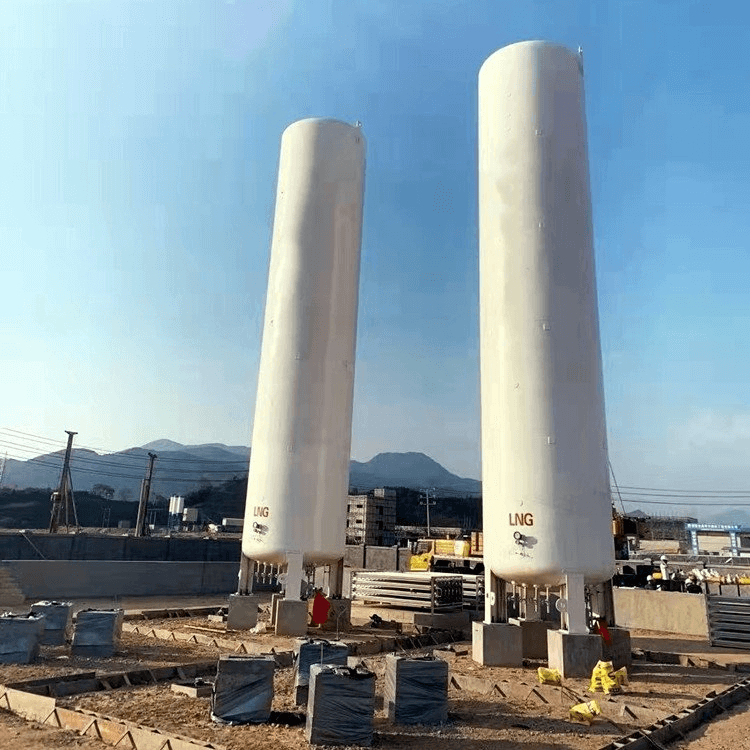
1.Understand the principle of low-temperature storage
Low-temperature fluids (such as LNG, nitrogen, oxygen) are liquefied below -150°C, with high density (LNG is approximately 600 times denser than gaseous state) and significant evaporation rate (BOR). Heat penetration causes the liquid to vaporize, affecting pressure and storage efficiency. The ideal gas law (PV = nRT) provides the basis, but needs to be modified for non-ideal behavior.
2.Clarify storage requirements
Purpose: Determine the flow rate, duration, and peak demand.
Calculate the average and maximum volume of daily consumption.
Replenishment frequency: Use the safety buffer to calculate the minimum capacity.
Frequency of replenishment: Determine the minimum capacity using the safety buffer.
Example: A factory consumes 1,000 liters of liquid nitrogen per day, replenishes every 10 days, and requires a 2-day safety margin. Therefore, the basic capacity is 12,000 liters.
3.Take evaporation rate (BOR) into account.
The BOR is influenced by a number of factors, including operating pressure, tank size, ambient temperature, and insulation performance. High-quality vacuum insulation can reduce the BOR to as low as 0.05% per day.
Example calculation: 10,000-liter tank, BOR is 0.5% per day, 10 days result in a loss of 500 liters, additional capacity is required for compensation.
4.Determine the necessary volume
The liquid volume formula is [V_{liquid} = \frac{Q \times T}{1 – (BOR \times T)} ]
V ≈ 12,766 liters for Q = 1,000 L/day, T = 12 days, and BOR = 0.5%.
To avoid expansion-induced overpressure, add 5–10% of the gas space (ullage): [ V_{tank} = \frac{V_{liquid}}{1 – U} ]
The entire volume, assuming U = 5%, is roughly 13,438 liters. 13,500 liters are obtained by rounding it off.
5.Pressure and Material Selection
Low-pressure tanks (0.5–1 bar): Suitable for large-scale long-term storage, low cost, and small boron content.
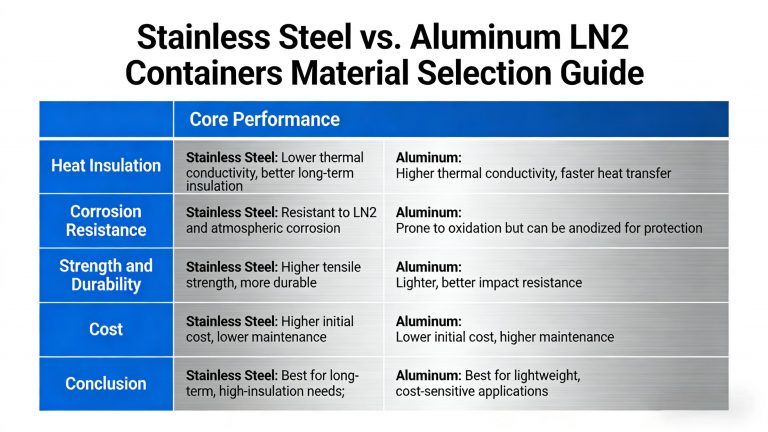
High-pressure tanks (10–200 bar): Used for portable equipment. The materials must be resistant to pressure and low temperatures, such as stainless steel or aluminum alloy.
Material selection: Carbon steel (for LNG), stainless steel (for oxygen), aluminum alloy (for portable tanks). Must comply with ASME or EN standards.
6.Selection of Can Type and Structure
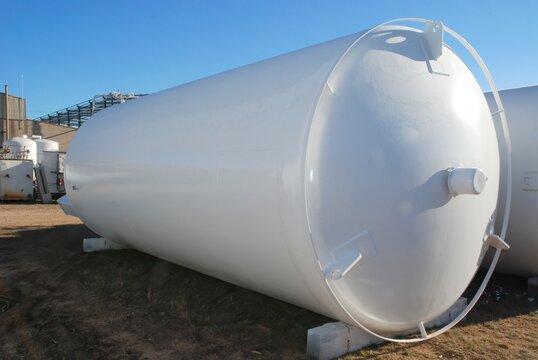
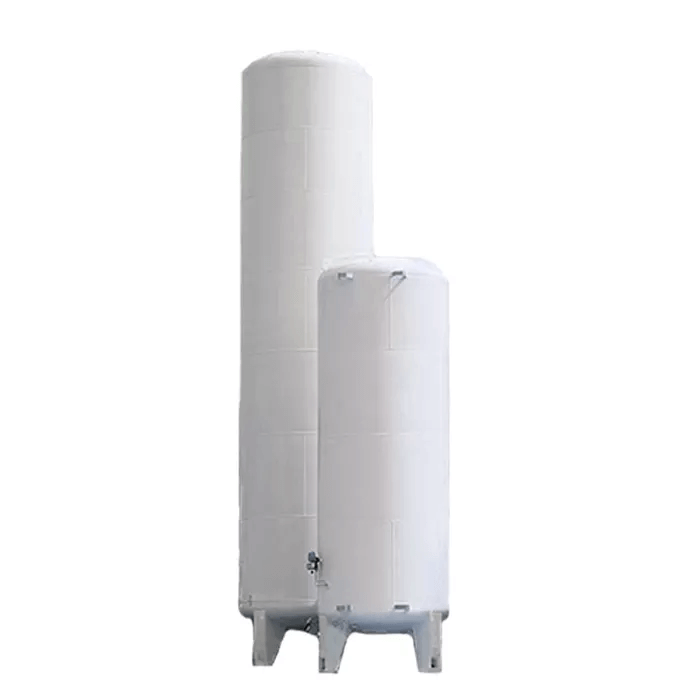
Vertical tanks: Small in size, suitable for large-scale fixed installations.
Horizontal tanks: Applicable when space is limited.
Double-layer vacuum tanks: Standard configuration, good insulation; single-layer is only used for short-term use.
Fixed vs Portable: Choose based on the usage scenario.
7.Cost and Efficiency Optimization
Select the right model to avoid excessive design.
Invest in high-quality insulation to reduce long-term losses.
Adopt a modular system to support expansion.
Reserve expansion space to facilitate future upgrades.
8.Final Verification
Recheck the calculations and recommend that they be reviewed by professional engineers.
Comply with local regulations and obtain the necessary permits.
Before operating, conduct BOR, leakage, and pressure tests to ensure dependability and safety.
Conclusion
The selection of low-temperature storage tanks requires comprehensive consideration of fluid properties, usage requirements, evaporation rate, pressure, materials and costs. Stable functioning, lower losses, and cost control are all possible with proper design. It is recommended to collaborate with professional suppliers to ensure the success of the project.