
With the advancement of technology, liquid carbon dioxide is increasingly being utilized in the industrial sector. The safe and effective use, storage and transportation of liquid carbon dioxide are crucial. Liquid carbon dioxide is not only used in traditional fields such as food preservation and welding protection, but also plays an important role in emerging scenarios such as carbon capture, utilization, and storage, and supercritical fluid technology. This article will systematically explain the storage technology of liquid carbon dioxide, as well as the working principle and design key points of cryogenic storage tanks. (Reading this article is expected to take 3 minutes.)
1.Challenges in the storage of liquid carbon dioxide
The critical temperature and pressure of carbon dioxide are -31.16℃ and 7.16 MPa respectively. This means that carbon dioxide needs to be subjected to high pressure at normal temperatures to remain in a liquid state. The traditional method of storing and filling gas cylinders with high pressure has low filling efficiency, high transportation costs, and high safety risks. Taking a beverage company in Zhejiang, China as an example, after adopting the low-temperature storage and transportation technology, the transportation efficiency increased by 40%, the unit energy consumption decreased by 25%, and it became the mainstream solution in the industry.
2.The core principle of the low-temperature storage tank
The low-temperature storage tank adopts a double-layer vacuum insulation structure to achieve stable storage of liquid carbon dioxide. The technical principle consists of three aspects:
Thermodynamic control system
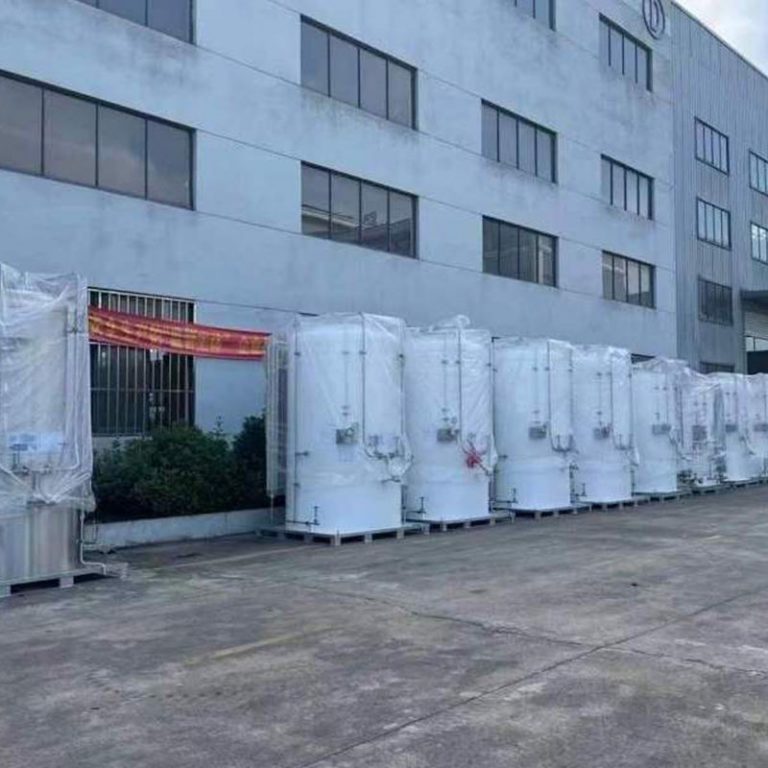
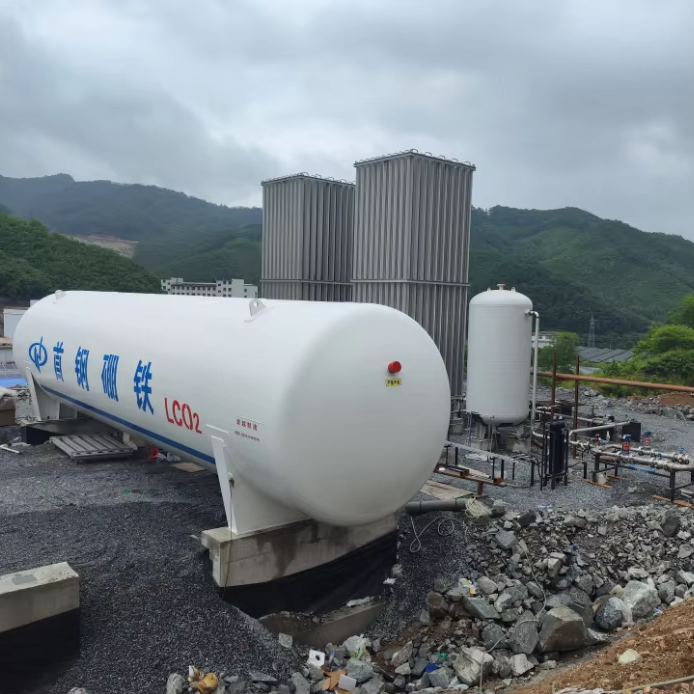
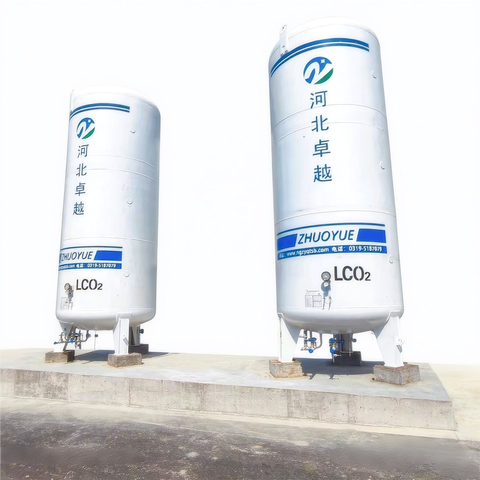
The liquid carbon dioxide storage tanks are mainly divided into two types: vertical or horizontal. The inner liner uses 16MnDR low-temperature steel, and the outer tank uses Q345R pressure vessel steel. The inner layer of the storage tank is filled with pearlite sand and evacuated to below 10⁻³ Pa. By effectively controlling the evaporation rate to be within 0.2% per day, for instance, in a food factory with a 500 cubic meter liquid carbon dioxide storage tank, the daily natural gasification loss will not exceed 1 cubic meter.
Dynamic Pressure Management System
When the flash evaporation of liquid carbon dioxide occurs, the pressure inside the storage tank will increase. At this point, the compressor will automatically start and re-inject the gaseous carbon dioxide into the purification system. Data from a CCUS project in a certain oilfield in China shows that this system can control the pressure fluctuation range of the storage tank within 1.8-2.2 MPa, reducing the pressure shock by 60% compared to traditional methods.
Intelligent safety protection design
The currently technologically advanced liquid carbon dioxide storage tanks are equipped with multiple temperature sensors and pressure interlock devices. When abnormal frosting is detected on the surface of the carbon dioxide storage tank or the pressure exceeds the threshold of 2.5 megapascals, the spray cooling system will immediately activate.The actual measurement data from a certain chemical enterprise in Hebei show that this mechanism has extended the safe operation period of the storage tank to over 8,000 hours.
3.Discussion on Technological Innovation and Industry Application
Future technological development trends of liquid cryogenic storage tanks:
Material Innovation: Utilizing a 9% nickel steel inner liner and a composite aerogel insulation layer, the design life of the storage tank is expected to exceed 30 years.
Modular Design: Developing a detachable tank structure, the weight of a single module for transportation has been reduced to 40 tons, breaking through the weight limit for road transportation.
Digital Monitoring: Integrating an IoT sensor network to achieve real-time visual control of parameters such as liquid level, pressure, and temperature.
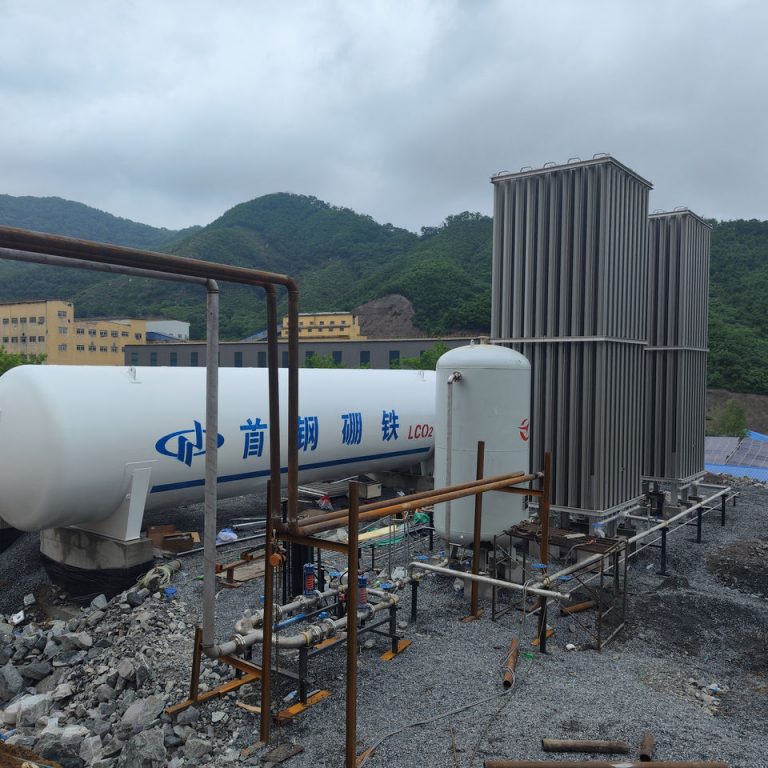
In the field of carbon sequestration, the Eriexi Subsiding Mountain Project of the North China Oilfield in China adopted a cluster of 2,000 cubic meters of low-temperature storage tanks, successfully injecting liquid carbon dioxide into a 2,800-meter-deep salt cave underground. The annual sequestration capacity reached 5 million tons. This study provided a technical paradigm for large-scale carbon sequestration and confirmed the low-temperature storage tanks’ dependability under harsh temperatures of -30°C.
4.A Guide to Low-Temperature Carbon Dioxide Storage Tank Selection:
Appropriate volume: To prevent rising expenses from frequent refilling, choose a standard size between 50 and 5,000 cubic meters depending on real usage requirements.
Thermal insulation performance: Depending on real usage requirements, select a powder insulation method or a vacuum multi-layer winding structure.
Compliance certification: Choose standards like ASME VIII-1 and GB/T 18442 that are in line with the country in which the product is really used.
With the acceleration of the global carbon neutrality process, the storage technology of liquid carbon dioxide is developing towards higher capacity, higher efficiency and greater intelligence. China Zhuoyue Gas Equipment Co., Ltd. offers dependable and secure cryogenic gas solutions by grasping the fundamentals of cryogenic storage tank technology. If you have any questions, you can contact us through the website and we will answer you as soon as possible.