Prioritizing the safety and compliance of cryogenic storage tanks is an unquestionable premise for businesses involved in the cryogenic gas storage tank industry. This guide will introduce you to the relevant regulations, safety procedures, and proactive strategies to ensure that your operations comply with the required compliance requirements.
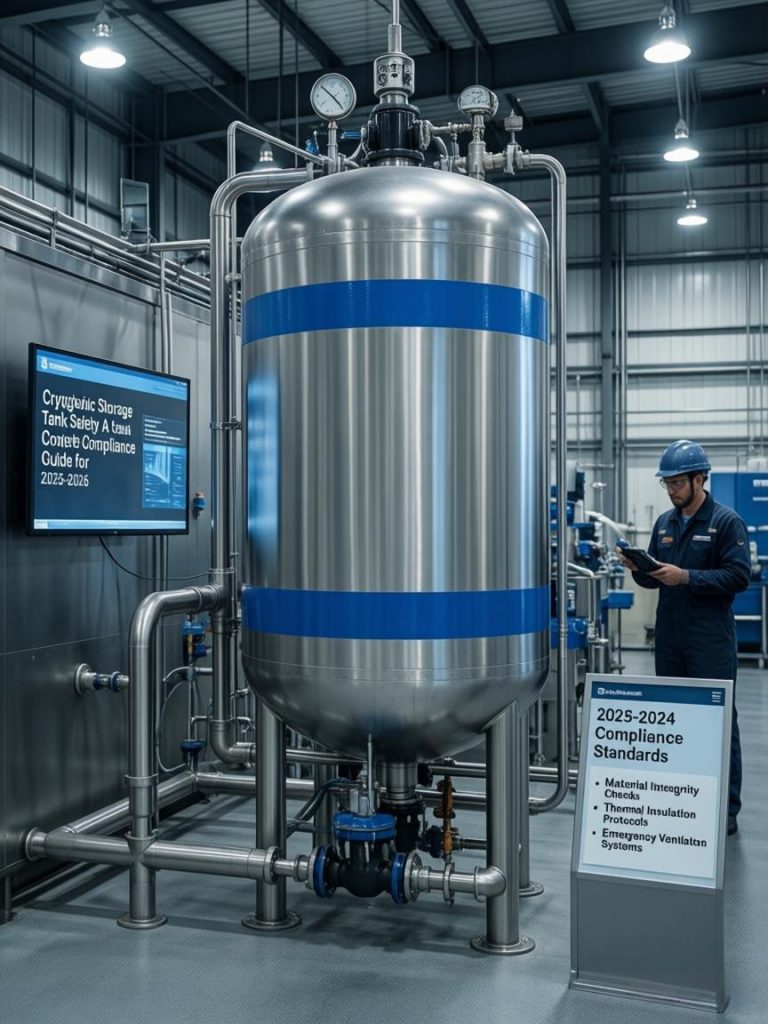
1.What are the risks of storing gases at low temperatures?
The working temperature of cryogenic liquids is lower than -150°C (approximately -238°F). Due to the presence of specific hazards, necessary safety measures must be taken. The main risks include:
Heat burns: If exposed directly to low-temperature liquids or the surface of a low-temperature storage tank, it can cause instant frostbite or tissue damage.
Asphyxiation: If in a confined space, the vaporized low-temperature gas will replace oxygen, creating a highly threatening environment.
Overpressure and rupture: Rapid heat transfer can cause the pressure in the storage tank to rise sharply, potentially exceeding the design limit of the tank.
Material fatigue: Repeated heat cycles and the long-term effect of low-temperature environments will gradually weaken the material of the storage tank, increasing the probability of failure.
Fully recognizing these dangers is the prerequisite for establishing a strong safety culture. By 2025, regulatory agencies such as OSHA in the United States, HSE in the United Kingdom, and the International Organization for Standardization (ISO) have updated their relevant safety guidelines, emphasizing that risk assessment is a fundamental element of low-temperature operations.
2.2025–2026 Global Compliance Standards
Proactive steps should be taken to address new concerns because the low-temperature storage regulatory framework is always being revised. The key updates for 2025 to 2026 include:
The Occupational Safety and Health Administration of the United States’ updated low-temperature safety requirements (Part 1910.146 of the 29 U.S. Federal Regulations)
In 2025, the US Occupational Safety and Health Administration (OSHA) released revised regulations requiring more stringent monitoring of the oxygen concentration in enclosed areas containing low-temperature storage tanks. In addition to visual and auditory alert devices, real-time gas detection systems must be deployed. It is vital to note that this standard sets more stricter training requirements, requiring all personnel who work with low-temperature liquids to complete annual certification courses covering hazard detection and emergency response.
ISO 11120:2025, Guidelines for Low-Temperature Storage Tank Design and Construction.
The most recent standard of ISO 11120 introduces new material testing procedures to ensure the lifespan of insulating materials and structural components of storage tanks when exposed to considerable temperature variations. Furthermore, the standard requires predictive maintenance via Internet of Things sensors that monitor temperature, pressure, and structural strength in real time.
Update on the “REACH Regulation” of the European Union.
The 2025 update to the “REACH Regulation” defines some low-temperature liquid vapors as “substances of very high concern” (SVHCs), resulting in tougher labeling and reporting requirements. Relevant firms must now provide SDS (Safety Data Sheets) in several EU language versions, as well as waste management strategies for contaminated low-temperature items.
3.Key safety regulations in operation
Compliance with relevant regulations is merely the minimum requirement. The crucial aspect lies in being able to actively implement these rules and norms:
3.1 Comprehensive Training Program
Carry out a continuous training program that combines learning with practical operation simulations. The training content should include:
The use of personal protective equipment (PPE), such as cold-weather protective gloves, masks, and insulated boots.
Emergency shutdown procedures and measures for dealing with leaks.
Rescue procedures in cases of insufficient oxygen.
Practices of Tank Inspection and Maintenance.
By 2026, the rise of artificial intelligence will drive the integration of artificial intelligence and learning platforms. These platforms can provide personalized learning paths, enhance learning outcomes, and ensure that trainees can master key skills proficiently.
3.2 Advanced Monitoring and Maintenance
With the rise of Internet of Things (IoT) technology, monitoring systems with IoT capabilities have become an indispensable tool in modern low-temperature operations. The key technologies include:
Pressure and temperature sensors: They can continuously monitor the internal condition of the storage tank to detect any abnormalities in a timely manner.
Leak detection system: Infrared cameras and gas sensors can detect very small gas leaks, thus avoiding the risk of oxygen replacement.
Predictive maintenance software: Artificial intelligence algorithms analyze sensor data to predict component failures, enabling planned maintenance and reducing downtime.
Most regulatory agencies also require a routine inspection by qualified professionals every 12 months. These inspections should include non-destructive testing (NDT) of the tank walls and valves to detect potential defects.
3.3 Emergency Response Planning
It is especially vital to develop a detailed emergency response plan (ERP) for low-temperature storage tanks. The plan should include:
Clear assembly areas and evacuation routes.
Contact Information for Local Emergency Services and Hazardous Material Response Teams
Protocols for minimizing leaks, decreasing fire threats, and saving personnel from oxygen-depleted environments
Frequent exercises to evaluate the plan’s efficacy, including recorded lessons learned to enable continuous progress.
To guarantee a coordinated response in catastrophe situations, OSHA recommended in 2025 that facilities conduct tabletop drills with local emergency responders at least twice yearly.
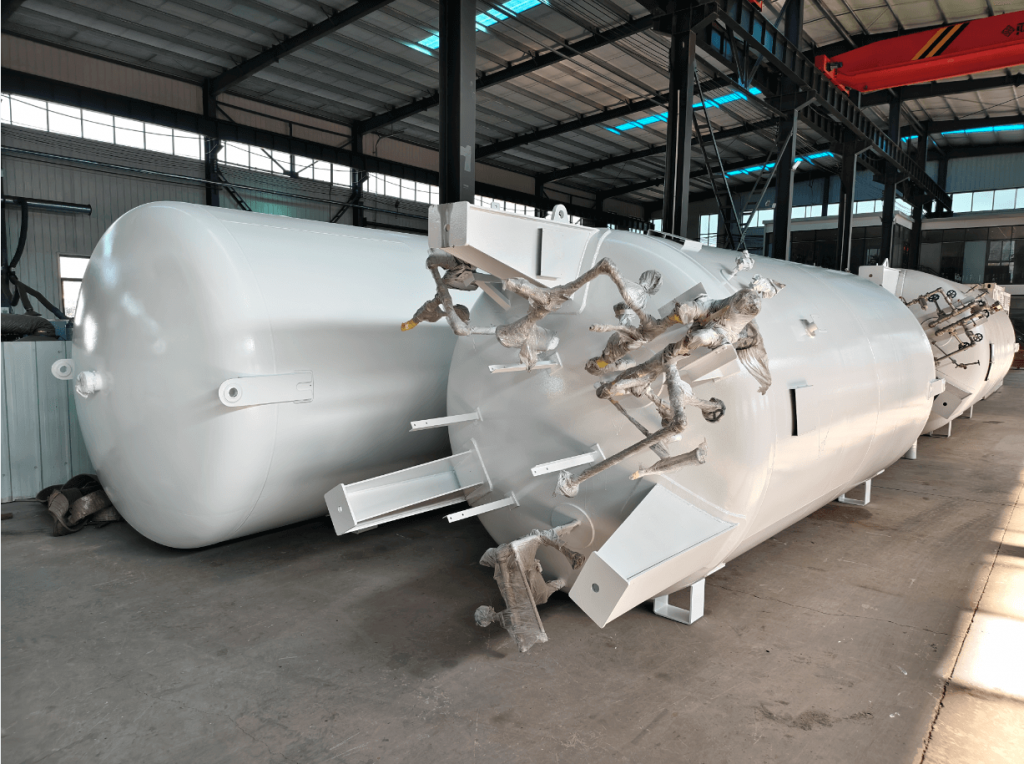
4.The selection of a low-temperature storage tank supplier is of great importance.
Choosing a reputable tank manufacturer is crucial for ensuring long-term compliance. When evaluating suppliers, the following points should be considered:
Certifications: Verify that the manufacturer adheres to ISO 11120, ASME, and local regulatory standards
Customization capability: The ability of suppliers to provide customized gas solution.
After-sales support: Suppliers that can offer continuous maintenance, training, and emergency response services.
Technological innovation: Prioritize those manufacturers that integrate IoT monitoring and predictive maintenance functions into their storage tanks.
By 2026, sustainability will also become an important consideration factor. Many leading suppliers have provided storage tanks with enhanced insulation systems, which can reduce energy consumption by up to 30%, meeting both the global net-zero emission goal and reducing operating costs.
Conclusion
When we are preparing for the regulatory environment from 2025 to 2026, we should actively learn about the latest standards, implement advanced safety procedures, and foster a culture of continuous improvement. This will enable enterprises to reduce risks, protect employees, and ensure the stability of operations. In the field of low-temperature processing, safety is not just a requirement – it is also an investment in the future of the enterprise.
Zhuoyue Gas Equipment specializes in providing solutions for low-temperature gas equipment. If you have any requirements for customized solutions, please contact us and we will reply to you as soon as possible.