

Insulation layer of cryogenic liquid storage tank – Composed of aluminum foil paper and glass fiber paper. a The aluminum foil of the cryogenic liquid storage tank should be made from pure aluminum through multiple rolling processes. It should have good mechanical properties, with appropriate matching of tensile strength and elongation. The surface should be free from oxidation, bright and clean. The thickness of the aluminum foil is: 0.006 – 0.009mm, and the width is 850mm. b Glass fiber paper of the cryogenic liquid storage tank – The padding layer between the aluminum foil layers. The whiteness of the paper surface is above 80%, without grease or oil stains, and not prone to cracking. The thickness of the glass fiber paper is: 0.015 – 0.02mm. Its width should be 40 – 50mm wider than the aluminum foil.
Wrapping tape – Aluminum foil tape or alkali-free glass fiber tape
a. The width of the aluminum foil tape is 19mm;
b. The width of the alkali-free glass fiber tape should be 50-70mm.
c. Other technical requirements for the insulation layer materials should comply with the provisions of the GB3198 standard.
Drying and degreasing of low-temperature liquid storage tanks: Baking of aluminum foil sheets: Before winding, punch air holes on the rolled aluminum foil sheets. The purpose is to facilitate exhaust during vacuum pumping in the future (the diameter of the air holes is 4-6mm, arranged irregularly, and the spacing between adjacent holes is 150mm). After punching the air holes, the entire rolled aluminum foil sheets of the low-temperature liquid storage tank are placed in the oven for drying. The drying temperature is 100℃ – 105℃. After the oven temperature rises to 100℃, it should be continuously baked for 120 hours. Then, the oven temperature should be lowered to 50℃ for storage. The total drying and storage time of the aluminum foil sheets in the oven should not exceed 168 hours before they can be used. Therefore: The time for the main oven should be planned before winding. The time for placing the aluminum foil sheets in the oven, the time for the oven to rise to 100℃, the baking time, and the storage time should be recorded.
Aluminum-coated polyester film strips for low-temperature liquid storage tanks should be dried and degreased in the oven before use (the drying temperature is 60℃ – 75℃). Within the specified drying temperature range, the drying time is 18 – 24 hours. Before using the glass fiber cloth strips for packaging the low-temperature liquid storage tank, they should undergo degreasing treatment at a high temperature of 550℃ – 600℃ (about 8 – 10 minutes). After degreasing, the glass fiber cloth becomes white, and its fat content should be less than 0.25%. After degreasing, the glass fiber cloth should not become brittle and still have good strength. The total drying and storage time of the aluminum foil sheets in the oven should not exceed 168 hours before they can be used. Therefore: The time for the main oven should be planned before winding. The time for placing the aluminum foil sheets in the oven, the time for the oven to rise to 100℃, the baking time, and the storage time should be recorded. The polyester thread used for sewing the low-temperature liquid storage tank also needs to undergo degreasing treatment.
Ⅰ.Coiling and assembly of cryogenic liquid storage tanks
1.Insulation Layer: Aluminum Foil – Glass Fiber Paper Composite Structure
The insulation layer of the cryogenic liquid storage tank is designed with a composite structure of aluminum foil and glass fiber paper. Both materials must meet strict technical standards to ensure the insulation effect and structural stability.
1.1 Insulation Aluminum Foil
The insulation aluminum foil is made from pure aluminum and is processed through multiple rolling processes. The core requirements are as follows:
Performance indicators: Excellent mechanical properties, reasonable matching of tensile strength and elongation, capable of withstanding winding operations in low-temperature environments;
Surface condition: No oxidation phenomenon, maintaining a bright and clean appearance, enhancing thermal reflection efficiency, and reducing heat loss;
Size specifications: Thickness controlled within 0.006 – 0.009mm, width standardized at 850mm, facilitating construction and adhesion.
1.2 Insulation Glass Fiber Paper
As a buffer layer between the aluminum foil layers, the function of the glass fiber paper is to optimize the uniformity of insulation and enhance the integrity of the structure. The technical parameters are as follows:
Appearance and purity: Whiteness ≥ 80%, no oil or grease residue, good toughness, and not prone to cracking;
Size requirements: Thickness is 0.015 – 0.02mm, the width should be 40 – 50mm wider than the matching aluminum foil to ensure full coverage and sealing at the seams;
Compatibility: Compatible with the aluminum foil material, maintaining flexibility and stable insulation performance under low-temperature conditions.
II. Specifications for Binding Straps
The binding tape is used to fix the insulation layer and should have strong adhesion, high temperature resistance or tensile strength. Two types of materials can be selected:
Aluminum foil tape: The width is uniformly 19mm, and it has strong adhesion with the aluminum foil insulation layer and excellent sealing effect;
Unalkali glass fiber tape: The width range is 50-70mm, with high tensile strength and high temperature resistance, suitable for fixing thick insulation layers;
Compliance requirements: All insulation layers and binding tape materials must comply with the technical regulations of the GB3198 standard.
III. Drying and De-fatting Treatment: Pre-treatment before winding
The core purpose of pre-treatment is to remove moisture and oil from the material to prevent any adverse effects on the insulation performance or structural stability. The following process must be strictly followed:
3.1 Aluminum Foil Baking Process
Pre-treatment steps: Before winding, punch air holes on the rolled aluminum foil to facilitate subsequent vacuum exhaust; the air hole specifications are a diameter of 4-6mm, arranged irregularly, with an adjacent air hole spacing of 150mm;
Baking parameters: Place the rolled aluminum foil after punching into the oven, heat it to 100-105℃, and keep it at this temperature for continuous baking for 120 hours;
Insulation and usage: After baking, adjust the oven temperature to 50℃ for insulation and standby; from the start of heating to the end of insulation, the total duration should not exceed 168 hours. If exceeded, it needs to be reprocessed;
Record requirements: Detailed records are required for the time of aluminum foil entering the oven, the time taken to heat to 100℃, baking duration, insulation duration, etc., to facilitate quality traceability.
3.2 Drying of Aluminized Polyester Film Strip
Processing Requirements: Before use, place it in an oven for drying. The oven temperature should be controlled at 60-75℃, and it should be dried for 18-24 hours within this temperature range to completely remove residual moisture.
3.3 Degreasing of Glass Fiber Braided Tape
Degreasing parameters: Treat the braided tape at a temperature range of 550-600°C for 8-10 minutes to remove the oil from the tape;
Quality standard: After degreasing, the braided tape should be white, with a fat content of ≤0.25%, and maintain flexibility without cracking or loss of strength.
3.4 Delightening of Polyester Thread
Mandatory requirement: The polyester thread used for sewing must undergo simultaneous delightening treatment to prevent contamination of the insulation layer by oil.
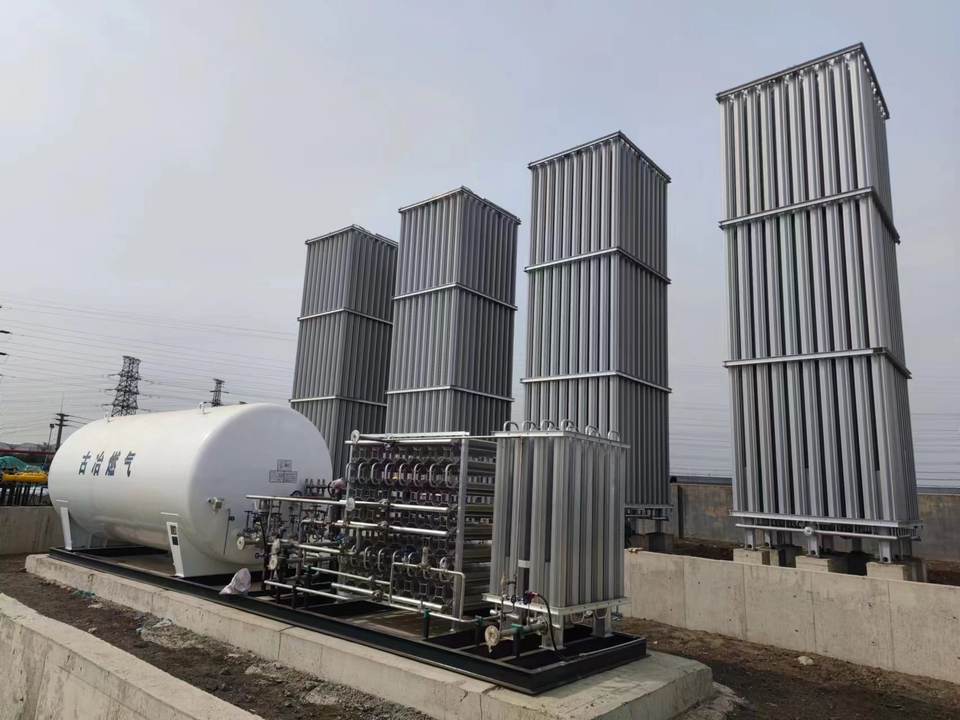
IV. Compliance and Quality Assurance
All the above-mentioned process steps and material specifications strictly follow the GB3198 standard to ensure the insulation performance, structural stability and operational safety of the cryogenic liquid storage tank after the winding assembly. During the actual construction, each process must be strictly controlled to ensure that the materials meet the standards and the operations are carried out in accordance with regulations, thereby guaranteeing the long-term stable operation of the storage tank.