
When it comes to industrial gases, carbon dioxide (CO₂) stands out in particular. Whilst nitrogen and oxygen are relatively stable, carbon dioxide is a substance that can exist in both liquid and gaseous forms, and its state is highly susceptible to changes in temperature and pressure.
For facility managers and plant operators, storing large quantities of carbon dioxide is not merely a matter of complying with regulations. In addition to its environmental hazards, a release of carbon dioxide caused by a valve leak or a ruptured seal disc poses an immediate risk of suffocation to nearby personnel.
This guide moves beyond generic advice. We are going to look at the engineering realities of CO2 tank storage, the specific spacing requirements you need to know, and how to maintain your cryogenic equipment to avoid costly downtime.
The Physics of the Hazard: Why CO2 is Different
To store CO2 safely, you must understand what is happening inside that tank.
Liquid carbon dioxide is typically stored at a temperature of approximately -31°C (-24°F) and a pressure of 300 psi. However, unlike other cryogenic refrigerants, the triple point of carbon dioxide lies almost at atmospheric pressure. Consequently, if the pressure inside the tank drops significantly (for example, due to a leak or improper venting), the liquid carbon dioxide will not only boil but may also solidify into dry ice.
This is precisely what can occur during pneumatic refrigeration processes, leading to blockages in pressure relief valves and exhaust pipes.Then when the tank is heated, this dry ice sublimates very quickly which results in a sudden very high pressure that is capable of breaking the vessel.
The point is that a storage system should be able to keep pressure from going too low in the same way that it keeps pressure from going too high.
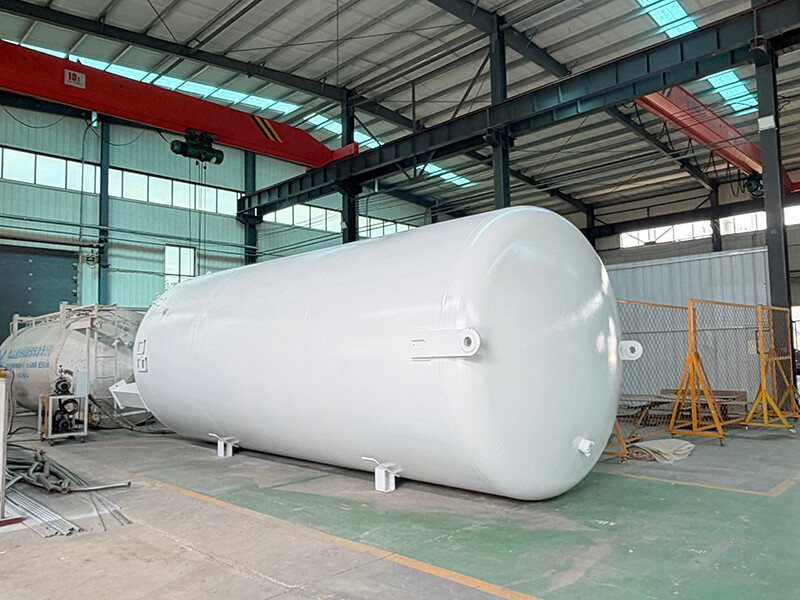
CO2 tank Critical Storage Location & Spacing Standards
Where you place your CO2 tank is the single most important decision you will make. The Compressed Gas Association (CGA) and NFPA 55 provide strict guidelines, but in practice, here is what you need to prioritize:
1.Ventilation is Non-Negotiable
Since CO2 is denser compared to air, it tends to accumulate at low-lying areas in case of a leak, not dispersing or going up. Examples of such areas are basements, pits, or trenches.
Absolute NO = Storing CO2 cylinders in a closed, poorly ventilated space.
Proper Method = When indoor storage cannot be avoided (though highly discouraged), it is necessary to have uninterrupted.
2.The “Combustibles” Buffer Zone
CO2 tanks container pressurized gas. Carbon dioxide is not a flammable gas in itself; however, if a cylinder containing carbon dioxide is exposed to a source of ignition (such as a fire involving other combustible materials), the cylinder may be subject to a BLEVE (boiling liquid expanding vapour explosion) or suffer mechanical failure due to overpressure. Standards require that a minimum distance of 20 feet (6 metres) be maintained from combustible materials, flammable liquids or sources of ignition.
Barrier: A minimum 30-minute rated fire wall is required if you are not able to maintain the distance.
3.Traffic and Physical Protection
In factories, accidents such as forklift trucks colliding with and damaging the valves of carbon dioxide storage tanks are all too common.
The steps you should follow are as follows: install sturdy concrete barriers or steel fencing around the tanks. These barriers should be positioned so that they neither obstruct maintenance access nor are placed so close that they risk being struck by vehicles.
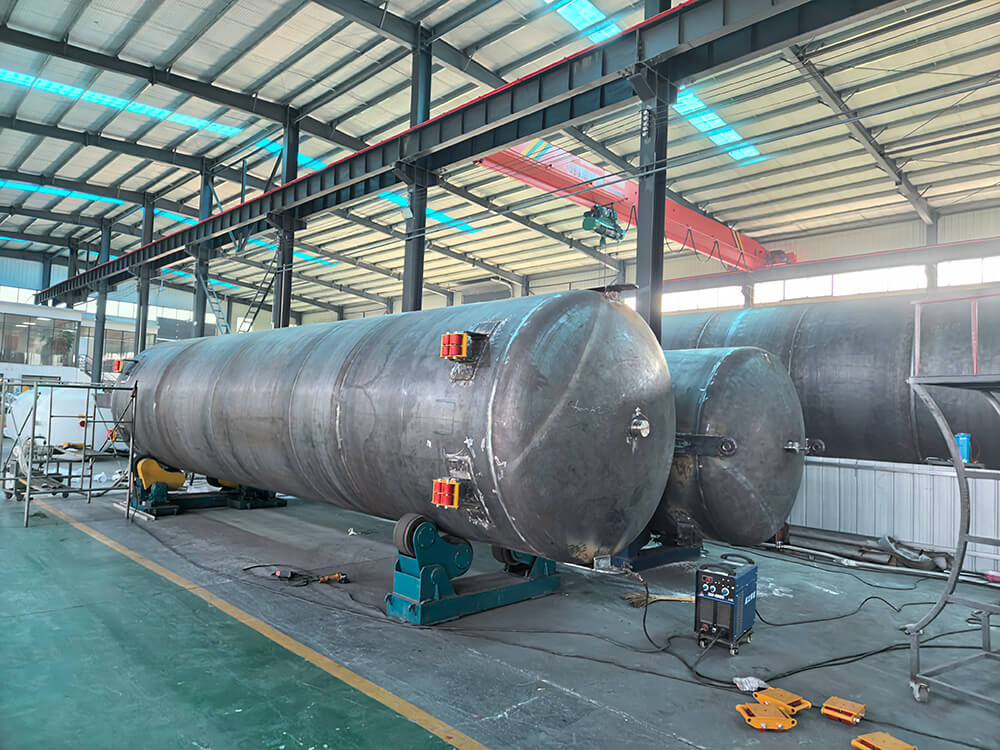
Key components: containers, valves and pressure relief devices
As an equipment supplier, we frequently encounter situations where, although the equipment is technically ‘installed’, the use of substandard components creates safety hazards during actual operation.
The Pressure Relief Valve (PRV)
This is your last line of defense.
Sizing: The PRV must be sized according to the specific surface area of your tank (API 520/521 standards). An undersized valve will not vent fast enough during a fire scenario.
Redundancy: For critical industrial applications, a dual-relief valve manifold is recommended. This allows you to change out a faulty valve without taking the tank offline or depressurizing the system.
Rupture Discs
Used in conjunction with relief valves, rupture discs provide a fail-safe. Ensure the disc is rated for the correct burst pressure. A common mistake is using a disc rated for high-pressure gas storage on a low-pressure liquid tank.
Piping and Insulation
Use vacuum-jacketed piping (VJP) where possible. Standard foam-insulated pipes will eventually absorb moisture, leading to corrosion under insulation (CUI) and significant heat gain, which increases tank pressure and product loss (venting).
Operational Safety: The Human Element
Even the best equipment fails if operated incorrectly. Here are three operational protocols that save lives:
Never Trap Liquid: This is the golden rule of cryogenics. If you close a valve on a section of pipe filled with liquid CO2, the liquid will expand as it warms up. The pressure will rise exponentially until the pipe bursts. Always install thermal relief valves on piping sections between isolation valves.
Monitor the “Heel”: Never let the tank run completely empty. Maintaining a “heel” (a small amount of residual liquid) keeps the tank cold. If the tank warms up completely, the cooldown process upon refilling puts massive thermal stress on the vessel and piping.
Regular Leak Testing: Use leak detection fluid (Snoop) on connections. Do not rely on frost accumulation as your only indicator—by the time you see frost on the vacuum jacket, the vacuum is likely lost, and the tank is venting heavily.
Summary Checklist for Compliance
Before you sign off on your storage facility, run through this quick checklist:
[ ] Location: Is the tank outdoors or in a well-ventilated area?
[ ] Signage: Are “No Smoking” and “Confined Space” signs clearly visible?
[ ] Barriers: Are bollards installed to protect against vehicle impact?
[ ] Grounding: Is the tank properly grounded to prevent static discharge?
[ ] Access: Do emergency responders have clear access to the tank?
Conclusion
Safety in CO2 storage is not a one-time setup; it is an ongoing commitment to maintenance and vigilance. By respecting the physical properties of the gas and adhering to strict spacing and hardware standards, you protect your most valuable assets: your people and your plant.
For custom cryogenic storage solutions, tank inspections, or vacuum-jacketed piping specifications, contact our engineering team today. We don’t just sell tanks; we engineer safety.