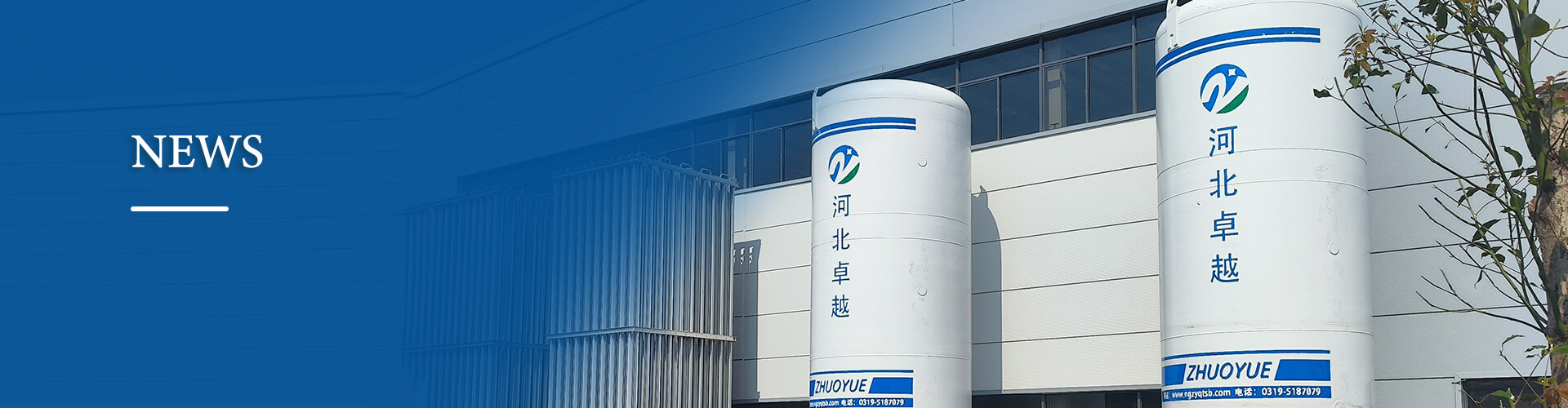
Liquefied natural gas (LNG) storage tanks, as high-pressure and cryogenic equipment, must be operated strictly in accordance with safety regulations. The following are the core precautions and leakage emergency plans for the later operation to ensure the safety of personnel and equipment:
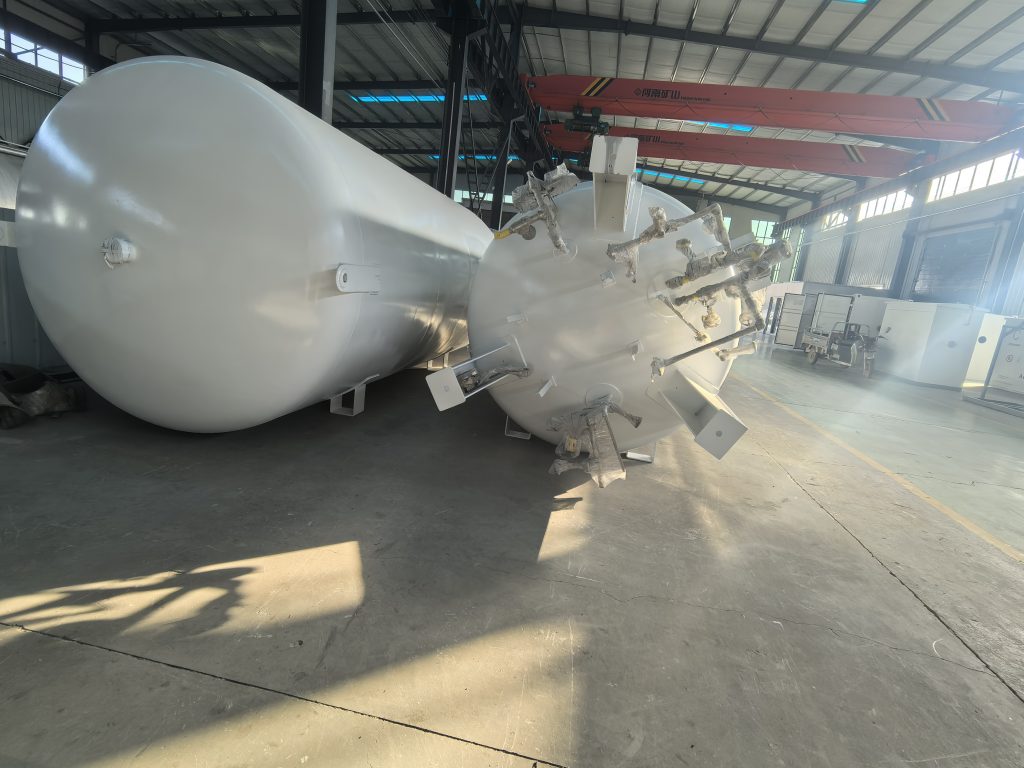
I. Emergency Response to leakage
Frostbite treatment :
Immediately carry out local disinfection and apply frostbite ointment or erythromycin ointment for anti-inflammation.
Avoid contact with water to prevent infection and seek medical attention as soon as possible.
Leakage disposal :
Operators must wear anti-freezing protective gear (goggles, anti-freezing gloves, protective clothing) to protect exposed skin.
- The first step: Close the upstream valve to cut off the source of leakage.
- Step 2: Cease on-site operations, set up a cordon area, and evacuate vehicles and irrelevant personnel.
- Step 3: Extinguish open flames in the filling area and prohibit the use of electronic devices. If a fire breaks out, call 119 for help immediately and use a dry powder fire extinguisher to put it out under safe conditions.
Ii. Daily Operation Precautions
Tank switching :
Before switching, ensure pressure balance and give priority to operating adjacent or in the same group of storage tanks.
Filling operation :
Operators must wear anti-static clothing, anti-freezing gloves and face masks to avoid static sparks.
Tanker unloading :
When unloading, do not move the vehicle to prevent the loading and unloading hoses from breaking and causing leakage.
Pipeline management :
When there is LNG in the pipeline, the valves at both ends must not be closed simultaneously to avoid sudden pressure increase.
Summer protection :
When filling, apply sunscreen to your face and neck or use physical shielding to prevent heat radiation burns.
Prohibited behavior :
It is strictly prohibited to strike, heat or spray water on the frozen parts to prevent the equipment from cracking or exploding.
Liquid level monitoring :
The liquid level of the storage tank should be maintained at ≥15% during operation to prevent the empty tank from absorbing heat and causing overpressure.
Self-boosting system :
When operating manually, full supervision is required and leaving the post is strictly prohibited.
Make sure the pressure reducing valve is closed when starting to avoid pressure loss of control.
runfunc: 0; algolist: 0;
multi-frame: 1;
brp_mask:0;
brp_del_th:0.0000,0.0000;
brp_del_sen:0.0000,0.0000;
motionR: 0;
delta:1;
bokeh:1;
module: photo;hw-remosaic: false;touch: (-1.0, -1.0);sceneMode: 13107200;cct_value: 0;AI_Scene: (-1, -1);aec_lux: 234.04416;aec_lux_index: 0;albedo: ;confidence: ;motionLevel: -1;weatherinfo: weather???, icon:1, weatherInfo:102;temperature: 35;zeissColor: bright;
Why choose our LNG storage tank solution?
- Safety first : Integrated intelligent pressure monitoring and automatic shut-off valve to reduce the risk of human operation.
- Compliance design : compliant with international security standards, certified by a third party.
- Efficient operation and maintenance : Provide a remote monitoring system to issue real-time warnings for leakage or abnormal pressure.
Consult an expert at immediately for customized LNG tank operation training and equipment support!